
Ownership / Wheels & Tyres
Wheels & Tyres
The Triumph Stag was originally fitted with 185 HR 14 tyres (some with 175 HR 14) on 14-inch wheels, with published pressures of 26 psi front and 30 psi rear, checked cold. The archive has not verified that figure against the factory handbook itself. On a classic, tyre age and condition matter as much as pressure, perished or old tyres are dangerous regardless of tread.
Verify before you set: treat the sizes and pressures on this page as a guide. Cross-check against your car's own handbook and the current tyre manufacturer's recommendation for modern rubber. The archive has not verified the 26/30 figure against the factory handbook itself.
Original tyre & wheel sizes
The Stag left the factory on 14-inch wheels. Most cars wore 185 HR 14 rubber; a smaller number were built with the narrower 175 HR 14. Early cars can be tube-type; later cars are tubeless, confirm which yours are before you order tyres.
| Item | Detail |
|---|---|
| Standard fitment | 185 HR 14Fitted to the majority of Stags from the factory. |
| Alternative period fitment | 175 HR 14A smaller number of cars left the works on this size. |
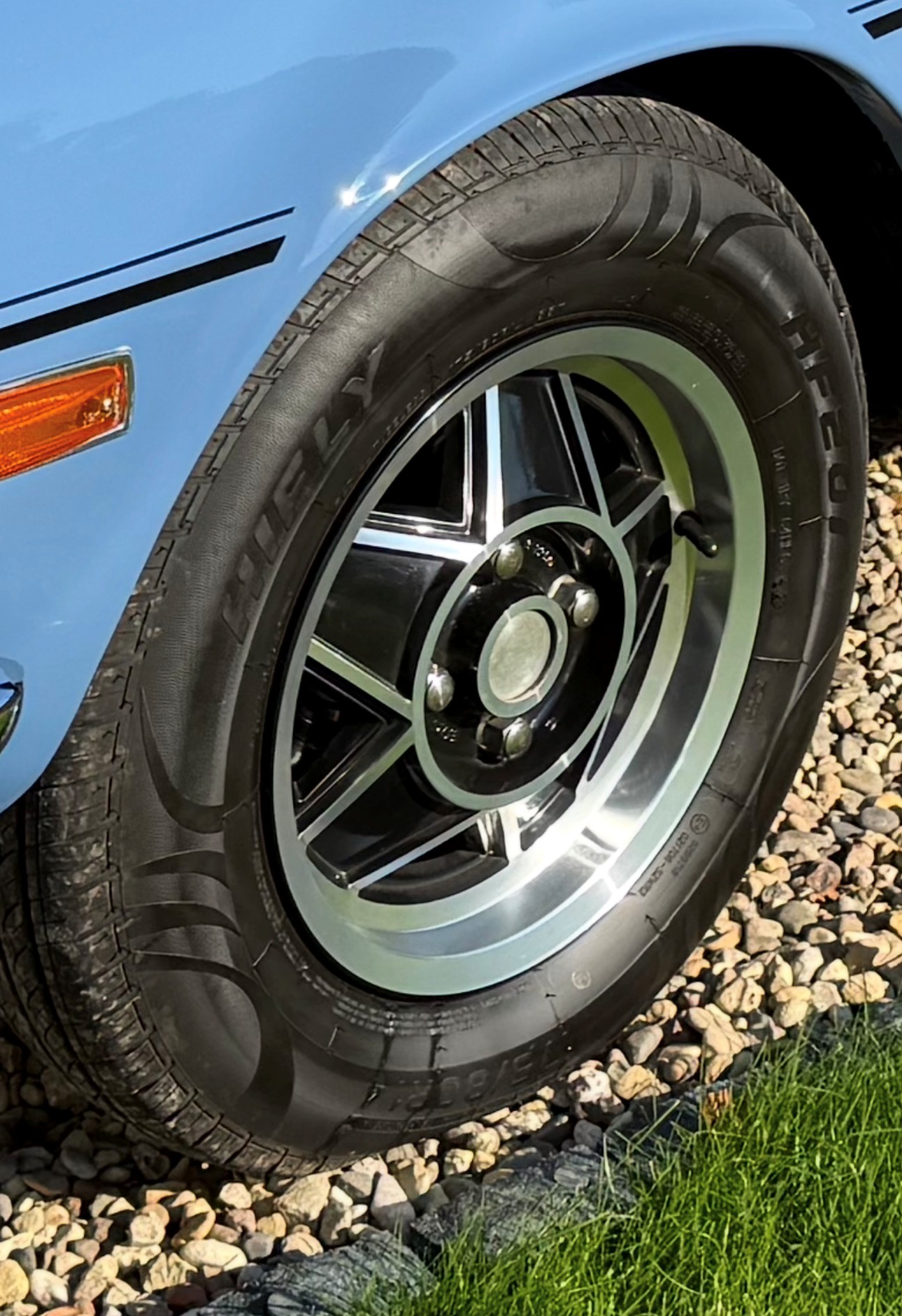
| Wheels | 5.5J × 14Steel road wheels or GKN alloys, depending on specification. |
| Tube-type vs tubeless | Both existEarly cars may use tube-type wheels requiring inner tubes; by 1977 tubeless was standard. Confirm which your car has before fitting new tyres. |
Modern equivalents
Modern tyre coding has moved on from the original H-rated 185 HR 14 designation. The sizes below are what Stag owners commonly fit today. Period-appropriate classic radials from a specialist classic-tyre supplier give the right look and preserve the handling character. Going too wide, especially at the front, spoils the Stag's steering feel.
| Modern size | Notes |
|---|---|
| 185/80 R14 | Closest to the original 185 HR 14 profile. |
| 185/70 R14 | A common lower-profile fit on 14-inch wheels. |
| 195/75 R14 | Slightly wider option, still on the original wheel size. |
| 195/60 R15 | Popular when owners have moved to 15-inch wheels. |
Recommended pressures (cold)
All pressures are measured with the tyres cold, before driving, or within about a mile. Hot tyres read artificially high and will mislead you.
| Condition | Pressure |
|---|---|
| Published recommendation | Front 26 psi · Rear 30 psi (cold)Published by Rimmer Bros and period Michelin fitment data. The archive has not verified it in the factory handbook itself. |
| Common owner preference | Front 28 psi · Rear 30 psi (cold)Many find 26 psi front makes the tyre look flat and the steering feel heavy. This is an owner adjustment, not the factory figure. |
| Sustained high-speed / fully laden | No figure established hereThe archive has not found a factory figure for these conditions. Check your own handbook and the tyre manufacturer's guidance. |
| Front-to-rear relationship | Keep rear 2–4 psi higher than frontThe published 26/30 figure has the rear 4 psi higher than the front. |
Modern radials may require different pressures from period tyres. Follow the tyre manufacturer's guidance where it differs.
Routine tyre maintenance
01. Check pressures fortnightly, cold
Check pressures at least fortnightly and before any long journey, always with cold tyres for an accurate reading. Don't forget the spare, check its pressure too, so it is actually usable when you need it.
02. Age and condition over tread depth
Because a Stag covers low annual mileage, tyres typically perish with age long before the tread wears out. Check the DOT date code on the sidewall, the last four digits give the week and year of manufacture (for example, "2419" means week 24 of 2019). Treat any tyre over roughly ten years old as due for replacement regardless of tread depth, and sooner if there is any sidewall cracking, crazing or hardening.
03. Inspect sidewalls and tread
Look for sidewall cracks, perishing, bulges or blisters, any of which mean the tyre must come off the car. Check tread depth against the UK legal minimum of 1.6 mm across the central three-quarters of the tread and around the whole circumference; on a classic, more than the legal minimum is sensible.
04. Read uneven wear as a diagnostic
Wear in the centre of the tread points to over-inflation. Wear on both outer edges points to under-inflation. One-sided or feathered wear points to tracking / alignment out of specification or worn suspension components. Fix the cause before you fit new tyres or the same wear will reappear.
05. Balance and align after any change
Have wheels balanced and the tracking / alignment checked after fitting new tyres, or if the car develops a vibration or pulls under braking. Small errors in geometry are amplified by the Stag's soft ride.
06. Storage and lay-up
If the car is going to sit for an extended period, prevent flat spots either by inflating the tyres a few psi above normal for storage, or by moving the car periodically so a different part of the tread carries the weight. See Storing Your Classic Car for the wider routine.
07. Renew tubes with tube-type wheels
If your car has tube-type wheels, renew the inner tubes at the same time as the tyres. A tired tube inside a fresh tyre is a false economy and can chafe against the new casing.
Wheels & tyres FAQ
What tyre pressures should a Triumph Stag run?
The published cold pressures are 26 psi front and 30 psi rear. The archive has not verified that figure against the factory handbook itself. Many owners prefer 28 psi front to sharpen the steering, but that is owner practice rather than a factory figure. The archive has not found factory figures for sustained high-speed driving or a full load, so check your own handbook and the tyre manufacturer's guidance.
What size tyres does a Triumph Stag use?
The standard factory fitment is 185 HR 14 on 5.5J × 14 wheels (steel or GKN alloy). A smaller number of cars were fitted with 175 HR 14. Common modern equivalents include 185/80 R14, 185/70 R14, 195/75 R14, and 195/60 R15 for owners running 15-inch wheels. Period-style classic radials are recommended for correct looks and handling.
How old is too old for classic car tyres?
Because a Stag typically covers low annual mileage, tyres perish with age long before the tread wears out. As a working rule, treat any tyre over roughly ten years old as due for replacement regardless of tread depth, and sooner if there is any sidewall cracking, crazing or hardening. Read the four-digit DOT date code on the sidewall to find the week and year the tyre was made.
Should I fit tubes or tubeless on a Stag?
It depends on the wheel. Early Stags may have tube-type wheels, which must be run with inner tubes; later cars, by 1977, were tubeless. Do not fit a tubeless tyre without a tube to a tube-type wheel, the bead seat is not designed to seal. Confirm which wheels your car has before ordering tyres, and if tubes are needed, renew the inner tubes whenever you renew the tyres.
Related
Sizes and pressures on this page are a guide. Always verify against your own handbook and the tyre manufacturer's current recommendation for the exact tyre fitted to your car.