
The Car / Transmission
Triumph Stag Transmissions: Manual, Overdrive and Automatic
The Triumph Stag was offered with two transmissions: a four-speed manual gearbox with optional Laycock overdrive on the top two ratios, and a Borg-Warner 35 three-speed automatic. Both drive the rear wheels. Neither is inherently fragile when properly maintained, but the automatic has no overdrive, so it is more relaxed around town and busier on the motorway; the manual with overdrive is the better long-distance choice.
At a glance
| Item | Specification | Notes |
|---|---|---|
| Manual gearbox | 4-speed manual | Optional Laycock overdrive on 3rd and 4th gears. |
| Automatic gearbox | Borg-Warner 3-speed automatic | No overdrive; an option throughout the production run. |
| Drive layout | Rear-wheel drive |
The 4-speed manual & overdrive
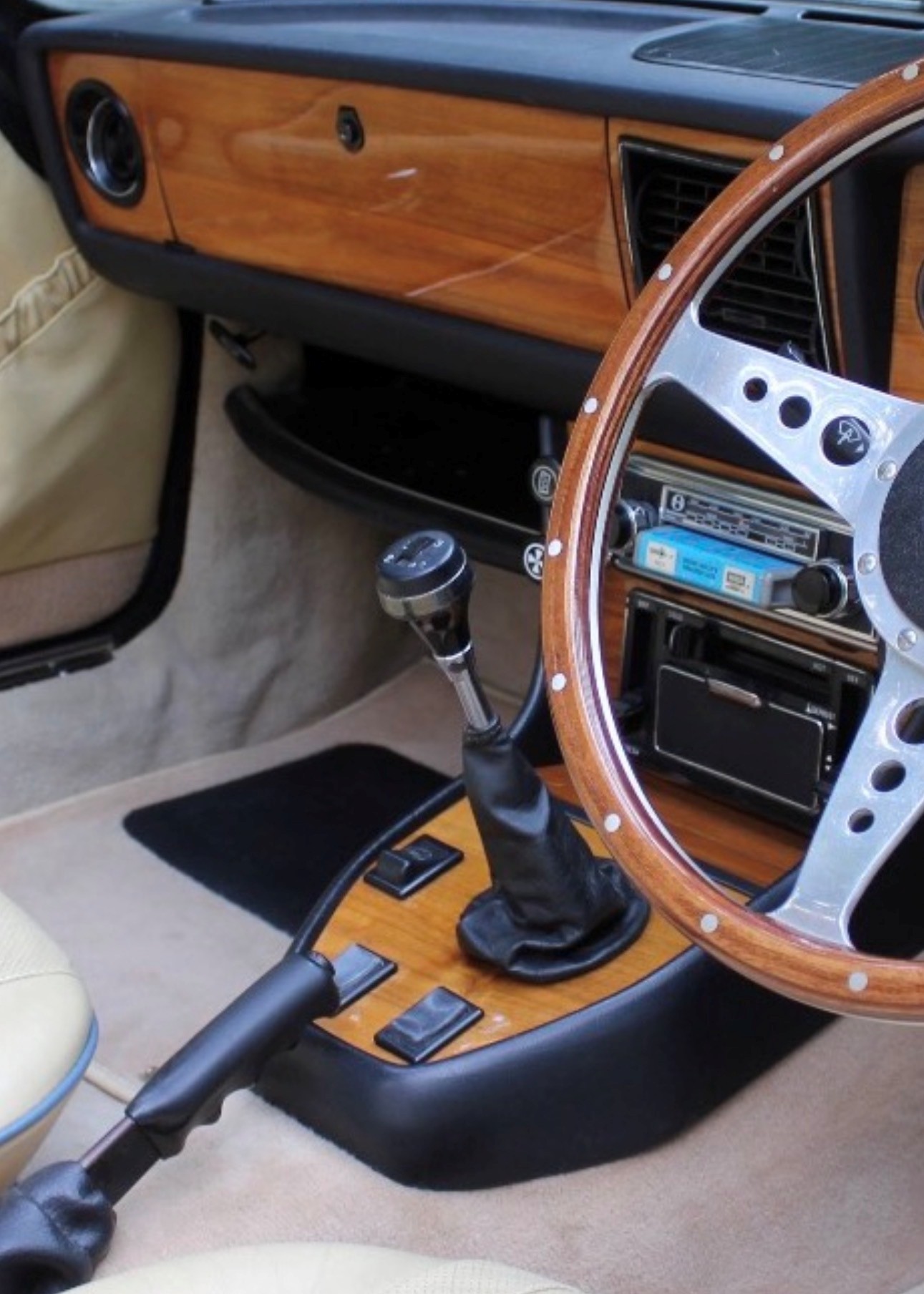
The manual Stag uses a four-speed gearbox. The key option is the Laycock overdrive, which operates on 3rd and 4th gears. Engaging it drops engine speed at a given road speed, making motorway cruising quieter and less thirsty.
On the road you engage overdrive with a dashboard switch or stalk. A healthy unit gives a clear mechanical click and an immediate drop in revs. It should disengage just as cleanly.
Common issues are electrical rather than mechanical: a failed relay, a sticking solenoid, or low oil in the overdrive unit. If the electrics and oil level are good and the unit still will not engage, the overdrive itself needs specialist attention.
The Borg-Warner 35 automatic
The optional automatic is the Borg-Warner 35, a three-speed torque-converter unit. It was a popular choice for a luxury grand-tourer and suits the Stag's relaxed character around town.
The important thing to understand is that this gearbox has no overdrive. On the motorway the engine revs higher than a manual with overdrive in top gear. That is simply the character of the unit, not a fault.
A well-maintained Borg-Warner 35 should shift smoothly and kickdown promptly. Fluid level and condition are the first checks; any slurred, flared or harsh shifts, or reluctance to kick down, are signs that a specialist inspection is needed before the problem becomes a full rebuild.
For the full comparison, automatic-specific buying checks, fluid and servicing, and what each transmission does to values, see manual vs automatic.
Driving characteristics
Manual with overdrive
Best for regular motorway use. Overdrive on 3rd and 4th keeps revs down and the V8 quieter at speed. The gearchange is direct and the driver has more control over engine load.
Borg-Warner automatic
Best for relaxed town and A-road driving. The torque converter masks low-speed work and suits the Stag's touring brief. Plan for higher revs on fast motorway runs; keep the fluid and kickdown in good order.
What to check before buying
These checks are drawn from the archive's buying-guide data and apply equally on a test drive.
01.Manual + overdrive: confirm engagement
On the road in 3rd and 4th, operate the overdrive switch. You should hear a distinct click and feel the revs drop at a steady throttle. Disengaging it should raise revs again.
Red flag: No engagement, or engagement only intermittently. Start with switch, relay, solenoid and oil level; if those are good, it is likely an overdrive rebuild.
02.Automatic: shift quality and kickdown
The Borg-Warner 3-speed auto should shift cleanly up and down under load and kick down promptly when you press the throttle.
Red flag: Slurred, flared or bangy shifts, or reluctance to kick down, automatic rebuilds are specialist work and not cheap.
03.Rear-end behaviour under power
On a quiet road, apply power in a gentle bend and lift off. Any distinct lurch or lash from the rear is a drivetrain issue, not a gearbox one.
Red flag: Pronounced rear 'twitch' worn rear half-shafts or UJs. A modern CV-jointed conversion cures it but is a significant spend.
Maintenance in brief
For the manual, the overdrive oil level and the electrical switch, relay and solenoid are the routine items. For the automatic, fluid level and condition are the first things to inspect; any shift irregularity should be diagnosed by a specialist before it escalates.
Both transmissions are well understood by Stag specialists and most parts and rebuild services are available. The key is not to ignore early warnings: a clicking overdrive, a delayed shift, or a rising whine are all cheaper to address promptly than after a failure.
Frequently asked questions
- Is the Triumph Stag automatic reliable?
- Yes. The Borg-Warner 35 three-speed automatic is a well-understood unit that shifts cleanly and kicks down promptly when fluid level and condition are maintained. Slurred, flared or harsh shifts, or a reluctance to kick down, indicate a specialist inspection is due before a full rebuild is needed.
- What automatic gearbox does the Triumph Stag use?
- The Triumph Stag automatic uses the Borg-Warner 35, a three-speed torque-converter automatic. It was optional throughout the 1970 to 1977 production run and has no overdrive.
- Does the Triumph Stag automatic have overdrive?
- No. The Borg-Warner 35 automatic has no overdrive, so the engine turns at higher revs on the motorway than a manual with overdrive engaged. This is the character of the gearbox rather than a fault.
- Manual or automatic, which Triumph Stag should I buy?
- For regular motorway use choose the four-speed manual with Laycock overdrive: overdrive on 3rd and 4th keeps the V8 quieter and more economical at speed. For relaxed town and A-road driving the Borg-Warner automatic suits the Stag's touring brief, at the cost of higher motorway revs.
- How does the Laycock overdrive work on the Triumph Stag?
- The Laycock overdrive operates on 3rd and 4th gears of the four-speed manual gearbox. Engaged via a dashboard switch or stalk, it drops engine speed at a given road speed. A healthy unit gives a clear mechanical click and an immediate drop in revs, and disengages just as cleanly.
- Why is my Triumph Stag overdrive not engaging?
- Most overdrive faults are electrical rather than mechanical. Check the dashboard switch, relay, solenoid and the oil level in the gearbox first. If those are all correct and the overdrive still will not engage, the unit itself needs specialist attention.
Editorial note: this guide is built only from verified archive facts. Production split between manual and automatic cars, and specific gearbox ratios, are omitted until primary-source documentation is available.