
How-To & Repairs / Fuel/Carburettors
Balancing and tuning the twin Strombergs
How to balance and tune the twin Zenith-Stromberg 175 CD carburettors fitted to the carburetted Stag: getting everything upstream right first, matching the airflow the two carburettors draw, then setting mixture. A balanced pair transforms low-speed running, throttle response and fuel economy.
Tools needed
- Carburettor balancing meter (airflow gauge), the single tool you cannot do this properly without
- The correct mixture-adjustment tool for Zenith-Stromberg CD carburettors, which holds the air-valve hub while the needle is moved
- Long thin screwdrivers and a small spanner set for the throttle-stop and linkage screws
- A length of clean hose used as a stethoscope, for listening for air leaks
- Dashpot oil of the grade given in the workshop manual, and a small oil can
- A reliable tachometer if the car's own is suspect, since idle speed is set to a figure
- Timing light, for confirming the ignition side before you start
- Optional but worth having: an exhaust gas analyser, or a Colortune plug for a cylinder-by-cylinder check
- Fresh air filter element, or the existing one cleaned
Parts needed
- Dashpot oil to the grade specified in the workshop manual
- Air-valve diaphragms, if inspection shows they are perished, split or hardened
- Any gaskets and seals disturbed during inspection
Warnings
- Never turn the needle adjuster without holding the air-valve hub still. Turning one against the other tears the diaphragm, which is exactly why a special tool exists.
- Do not force the mixture-adjustment tool, the wrong tool damages the metering needle carrier.
- The engine will be hot and running, with a spinning fan and a live ignition system. Keep hands, sleeves, hair and the balancing meter's hose clear.
- Keep the workspace tidy and free of ignition sources; carburettors mean petrol vapour.
- No jet sizes, needle numbers, clearance figures, idle speeds or dashpot oil grades are printed here. Confirm all of them against the official workshop manual for your engine number and market.
What is fitted, and what balancing actually means
The carburetted Stag runs a pair of Zenith-Stromberg 175 CD carburettors, one per cylinder bank. They are constant-depression instruments: a single air valve rises and falls on a rubber diaphragm to keep the air speed over the jet roughly constant, so the mixture stays right across the range rather than being correct at one throttle opening and compromised everywhere else. A damper in the top of each carburettor, filled with light oil, controls how quickly that valve can rise.
Balancing means making the two carburettors draw the same amount of air as each other at the same throttle position. It is not the same as setting mixture, and it comes first, because mixture set on an unbalanced pair is mixture set on a moving target.
It matters more on this engine than on a four-cylinder car with twin carburettors, because each carburettor here feeds four cylinders, a whole bank of the V8. If one carburettor is drawing more than the other, one bank is effectively running a different engine from the other: different air, different fuelling, different power. The result is the classic badly-set-up Stag, lumpy at idle, hesitant off the line, thirsty, and never quite smooth however much the mixture screws are fiddled. Two carburettors that fight each other cannot be tuned out with mixture.
The order of work, and why nothing here is optional
Carburettors are the last thing you touch, not the first. A carburettor can only meter fuel into the air the engine actually draws, and it cannot correct for a spark at the wrong moment, a valve that is not sealing, air arriving somewhere it should not, or fuel arriving short. Every one of those faults produces symptoms that feel exactly like carburettor trouble, which is why so many Stags have been tuned repeatedly and are still not right.
Work through this list in order and confirm each before moving on. If any of it is wrong, stop and fix it, because tuning around a fault simply hides it somewhere less convenient.
- Mechanical condition. Compression even across all eight cylinders. A carburettor cannot make up for a cylinder that is not sealing.
- Valve clearances. Set to the workshop manual figure for your engine. No clearance figure is printed here, confirm it against the manual for your engine number and market.
- Ignition. Plugs, leads, cap, rotor and contacts or electronic module in good order, then the timing set. Remember the Stag is timed on cylinder No. 2, not No. 1. See the ignition timing guide linked below.
- Air leaks. Worn throttle spindles and bushes, perished manifold gaskets and cracked vacuum hoses all let unmetered air in, and they defeat every adjustment made downstream. This is the single most common reason a Stromberg pair will not come right.
- Fuel supply. A clean tank, a pump delivering properly, sound flexible hoses and a clean filter. Starvation under load reads as a weak mixture and cannot be cured with the needle.
- Air filters. A choked element changes the airflow the carburettors see, so balance done with a dirty filter is balance done twice.
- Engine fully warm. Not warm-ish. Everything below assumes normal running temperature.
Diaphragms, needles and the common failures
On a Stromberg, the air-valve diaphragm is the critical part, and it is where every diagnosis should start. It is a thin rubber sheet sealing the air valve into its chamber, and a pinhole, a split, or rubber gone hard with age will upset the mixture and defeat every adjustment you try to make afterwards. Lift each air valve, inspect its diaphragm for perishing, splits and hardening, and if in any doubt renew it. This is not a counsel of perfection, it is the difference between a set-up that holds and one that never comes right.
The needle hangs from the air valve and meters fuel as the valve rises. On adjustable-needle Strombergs the needle height is set from the top of the dashpot, and here comes the warning every Stromberg owner needs: never turn that adjuster without holding the air-valve hub still, because turning one against the other twists and tears the diaphragm. That is precisely why a special tool exists for the job. On fixed-needle emission-specification carburettors the needle is not adjustable and mixture is set at a base orifice instead, from below.
The rest of the common-fault list is short and unexotic: worn throttle spindles and bushes drawing air, which is the classic age-related fault and is cured by re-bushing rather than by adjustment; a sticking air valve, from a dirty chamber, a binding diaphragm or a bent needle; an empty or wrong-grade damper, which reads as flat throttle response and takes thirty seconds to check; a sticking or leaking float valve, causing flooding or starvation; and a temperature compensator jammed open. Do not print or guess needle numbers or jet sizes for your car. Specifications vary by market and by year, and the workshop manual or the Stag Owners Club is the place to confirm what yours should carry.
Modern fuel, and what it does to a Stromberg
Ethanol-blended petrol is harder on old rubber and on some older gasket materials than the fuel these carburettors were designed around, which matters here because a Stromberg's most vulnerable part is a rubber diaphragm. When rebuilding, use ethanol-tolerant diaphragms, seals and flexible hoses rather than whatever is cheapest. Modern fuel also goes off in the float chambers of a car that is used occasionally, leaving deposits that cause sticking float valves and blocked passages after a lay-up. The full picture, including what to do about storage and which fuels to look for, is on the E10 page linked below.
Steps
01. Confirm everything upstream, then warm the engine fully
Work through the order-of-work list above and satisfy yourself that compression, valve clearances, ignition, air leaks and fuel supply are all right before a spanner touches a carburettor. Then run the engine to full normal operating temperature.
Warning:If the engine will not hold a steady idle at all at this stage, stop. That is a fault to find, not a tuning problem to adjust around.
02. Inspect the diaphragms
Before any adjustment, lift each air valve and inspect its diaphragm for splits, pinholes, perishing and hardening. Renew anything doubtful. Every Stromberg set-up starts here, and skipping it wastes the rest of the afternoon.
Warning:Never turn the needle adjuster without holding the air-valve hub still, or you will twist and tear the diaphragm.
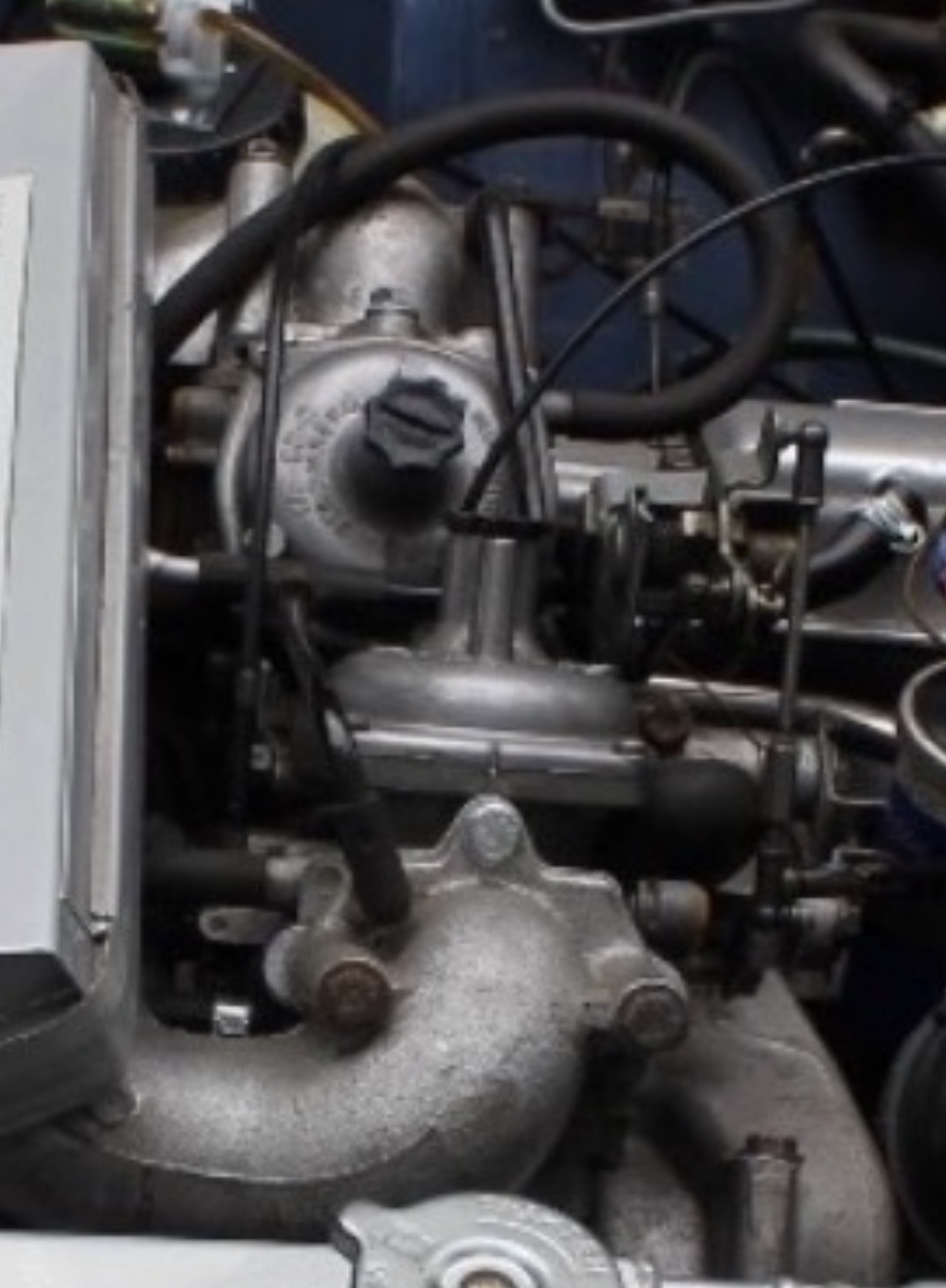
Stromberg carburettor close-up. The dashpot and air-valve chamber on a Zenith-Stromberg 175 CD, the diaphragm lives under the top cap. 03. Check the air valves rise and fall freely
With the damper removed, lift each air valve with a finger and let it go. It should drop back freely and seat cleanly. A sticky or dull drop points to a binding diaphragm, a dirty chamber or a bent needle, all of which must be dealt with before tuning.
04. Top up the dampers with the correct oil
Check and top up both dashpots to the level and with the oil grade given in the workshop manual. The grade is not a detail: it sets how quickly the air valve can rise, and therefore the enrichment you get on a snapped throttle. Both carburettors must have the same oil at the same level.
05. Disconnect the throttle linkage between the carburettors
The two carburettors cannot be set independently while they are tied together. Free the interconnecting linkage so each throttle can be adjusted on its own, noting how it came apart.
06. Measure and equalise airflow at idle
With the engine warm and idling, seat the balancing meter over each carburettor intake in turn and read the airflow. Adjust the throttle-stop screws until both draw the same, at the idle speed given in the workshop manual. Without a meter, a length of hose held to each intake will let you compare the hiss by ear, which is better than nothing and worse than a gauge.
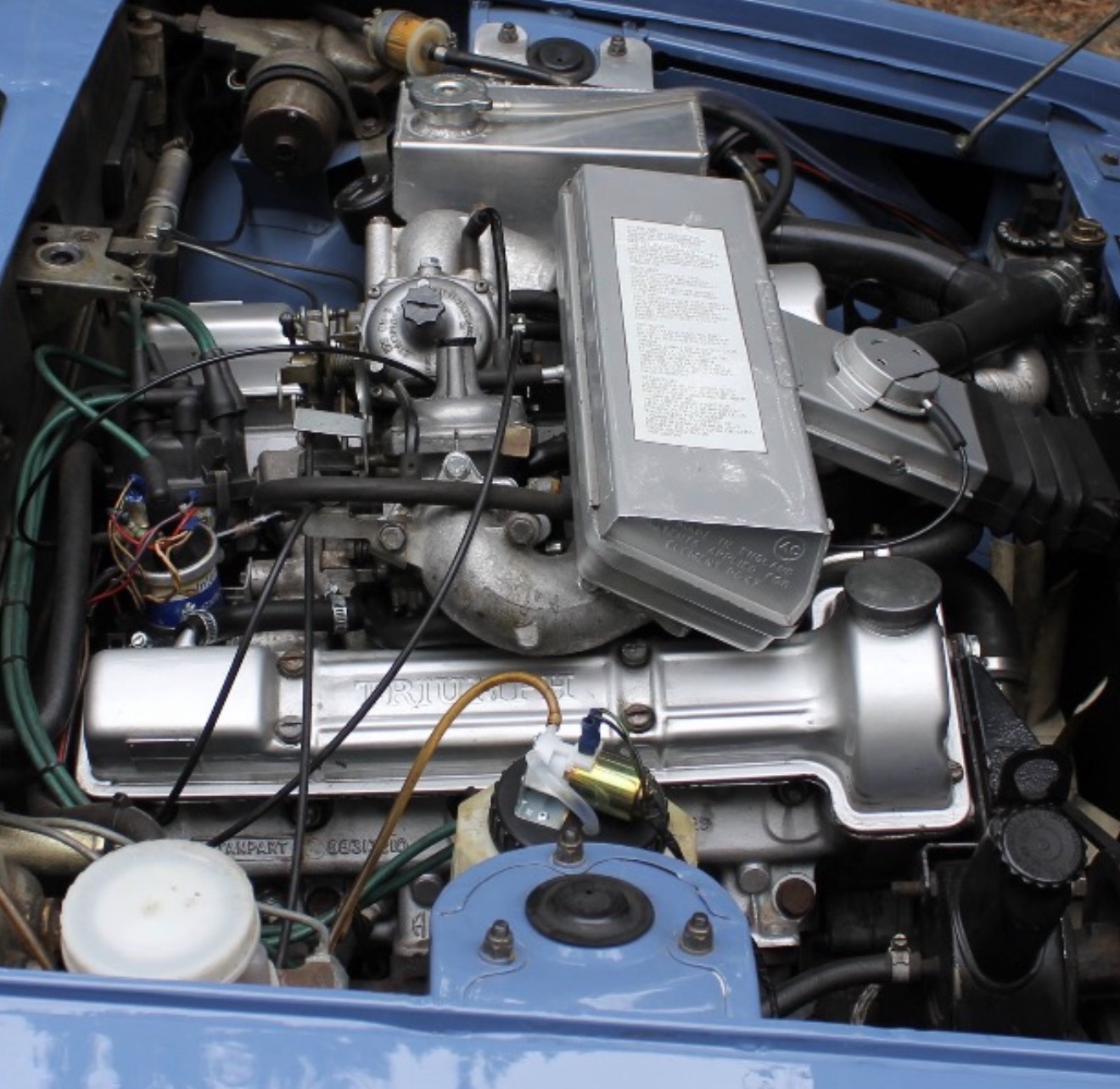
Twin Strombergs in the engine bay. The pair of carburettors, one feeding each bank of the V8, with the throttle linkage between them. 07. Set the mixture on each carburettor in turn
On adjustable-needle carburettors, raise or lower the needle a little at a time with the proper tool: raising richens, lowering weakens. Test as you go by lifting the air valve a whisker with the engine warm and idling. Revs that rise and stay up mean too rich; revs that drop or stumble mean too weak; a slight rise that settles straight back means it is right. Treat both carburettors the same way. On base-orifice emission types, the mixture screw does the same job from below, clockwise leaner.
- Owner-uploaded photo slot
Mixture adjustment tool in place. The correct mixture-adjustment tool engaged in the carburettor. 08. Reconnect the linkage and re-check the balance
Reconnect the interconnecting linkage so both throttles open together, without either being pulled off its stop as you do it. Re-measure the airflow on both carburettors. Balance and mixture interact, so expect to go round the loop once or twice before nothing needs touching.
09. Blip the throttle and settle everything
Snap the throttle open and shut several times to let the linkage and the air valves settle, then re-check idle speed, balance and mixture. Small final adjustments at this stage are normal and are the difference between a tune that holds and one that drifts within a week.
10. Check the result objectively, and drive it
The lifting test judges the mixture at idle under no load only. An exhaust gas analyser at the tailpipe, or a Colortune plug watched cylinder by cylinder, confirms what the method got close to: on the Colortune, yellow is rich and a clean blue is about right. Then drive the car. Pulling cleanly under load, without hesitation or running on, is the test that matters.
When a Stromberg problem is not a Stromberg problem
If a clean mixture will not come however you set the needle, stop adjusting and start looking for a fault. Most of the complaints laid at these carburettors' door originate elsewhere, and the giveaway is that the symptom does not respond sensibly to adjustment.
- Idle high, erratic, or impossible to set: air leaking past worn throttle spindles or a failed manifold gasket, not mixture.
- Runs well cold and badly hot, or stumbles under load when hot: look at fuel supply and underbonnet heat, including vapour lock, before the carburettors.
- Misfire that moves around or worsens under load: ignition, HT leads or plugs. A carburettor fault is usually consistent.
- Flat throttle response with no other symptom: empty or wrong-grade damper oil, thirty seconds to check.
- Uneven running after a lay-up: stale fuel and a sticking float valve rather than a set-up that has drifted.
- Persistent overheating blamed on a rich mixture: this engine has its own well-documented cooling weaknesses, and they are covered separately on this site.
When to leave it alone and take it to somebody
There is no shame in this, and it is frequently the cheaper route. Take the car to a specialist if the throttle spindles are worn and need re-bushing, if the carburettors need stripping and rebuilding rather than adjusting, if you do not have a balancing meter and the correct mixture tool, if the car is fuel-injected or has been converted to another carburettor type, or if you have been round the sequence twice and it still will not come right. Somebody who sets these up for a living carries the tools, the gas analyser and the pattern recognition, and will usually find in twenty minutes what an owner has chased for a month.
Equally, know what you are handing over. A tuner who reaches straight for the mixture screws without checking timing and air leaks is going to hand you back the same car.
Common questions
- What carburettors does a Triumph Stag have?
- The carburetted Stag runs twin Zenith-Stromberg 175 CD carburettors, one feeding each bank of the V8. They are constant-depression, variable-choke instruments, where a single air valve rises on a rubber diaphragm to keep the air speed over the jet roughly constant. Some Stags are fuel-injected or have been converted to other carburettors, so confirm what is actually on your car before ordering anything.
- How do you balance twin Strombergs on a Triumph Stag?
- Get everything upstream right first: compression, valve clearances, ignition timing, air leaks and fuel supply. Warm the engine fully, check the diaphragms, top up both dampers with the correct oil, then disconnect the linkage between the carburettors. With a balancing meter over each intake in turn, adjust the throttle-stop screws until both draw the same airflow at the manual's idle speed. Set the mixture on each, reconnect the linkage, and go round the loop again until nothing needs touching.
- Why does my Stag idle badly even after tuning the carburettors?
- Most often because something upstream is wrong. Worn throttle spindles letting unmetered air in are the classic cause on carburettors of this age, and no amount of mixture adjustment will cure them. Ignition timing, a failed manifold gasket, a cracked vacuum hose, a split air-valve diaphragm or fuel starvation all produce the same feel. If the idle does not respond sensibly to adjustment, it is a fault to find rather than a setting to change.
- How do you know if a Stromberg diaphragm has failed?
- Symptoms are poor and erratic running that will not respond properly to mixture adjustment, often with a flat spot. The check is visual: lift the air valve and inspect the diaphragm for pinholes, splits, perishing and rubber that has gone hard. If there is any doubt, renew it. This is the first thing to check on a Stromberg, not the last.
- What oil goes in Stromberg dashpots?
- A light oil, to the level and grade given in the Triumph workshop manual for your car. No grade is printed here, because specifications vary and the wrong figure would change how the air valve rises and therefore how the engine responds to the throttle. Confirm it against the manual or ask the Stag Owners Club. Whatever it is, both carburettors get the same oil at the same level.
- Is E10 petrol bad for Stromberg carburettors?
- Ethanol-blended fuel is harder on old rubber and some older gasket materials than the fuel these carburettors were designed for, which matters when the most critical component is a rubber diaphragm. Use ethanol-tolerant diaphragms, seals and flexible hoses when rebuilding, and be aware that modern petrol degrades in the float chambers of a car left standing, which causes sticking float valves after a lay-up.
- Should I convert my Stag to Webers or SUs?
- Usually not. Properly rebuilt and balanced Zenith-Strombergs are cheaper and generally sweeter than a conversion. Webers in particular can be too much carburettor for a standard engine, need a choke linkage fabricated and rejetting, and bring tuning problems of their own. Fix what is there before replacing it.
- What tools do you need to tune Strombergs?
- At minimum, a carburettor balancing meter and the correct Zenith-Stromberg mixture-adjustment tool, which holds the air-valve hub while the needle is moved. Add a timing light for the ignition work beforehand, long thin screwdrivers, dashpot oil of the correct grade, a reliable tachometer, and a length of hose for listening for air leaks. An exhaust gas analyser or a Colortune plug is optional and makes the final check objective.
Related reading
Related faults
No directly linked fault-finding entries yet.
Figures and procedures should be confirmed against the official Triumph workshop manual; for safety-critical or specialist work, consult a specialist.
The reference behind this guide
This guide tells you how. These pages tell you what and why.
More guides
- Cooling system overhaul and upgrade (Cooling)
- Coolant flush and corrosion protection (Cooling)
- Replacing the timing chains, what the job involves (Engine)
- Setting the ignition timing (Ignition)
- Rust inspection walkthrough (Bodywork)
- Curing the "Triumph twitch" rear driveshafts, UJs and the CV upgrade (Driveline)
- Overdrive won't engage, Laycock A/J-type troubleshooting (Transmission)
- Hot-starting and vapour lock (Fuel/Carburettors)
- Head gasket failure and seized head studs (Engine)
- Freeing seized brakes and brake overhaul (Brakes)
- Lucas electrics, earths, connectors, charging and gauges (Electrical)
- Converting a Stag from automatic to manual (Transmission)