
Tuning Guide
How a carburettor works
By Jon Cosson
A carburettor has one job: mix petrol and air in the right proportion, across every condition from cold idle to full throttle. Here is how it actually does it: and what makes the Stag’s Zenith‑Stromberg different from the carburettors on its rivals.
The basic idea, the venturi
An engine draws air in; the carburettor sits in that airflow and adds fuel to it. The trick is the venturi, a deliberate narrowing in the air passage. Air speeds up through the narrow point, and faster‑moving air has lower pressure. That drop in pressure draws petrol up out of a jet into the airstream, where it breaks into a fine mist. A throttle butterfly, linked to your foot, controls how much air gets through, and so how fast the engine runs.
The hard part, keeping the mixture right
An engine wants roughly fifteen parts air to one of petrol by weight, but its appetite varies enormously, idle to full throttle, cold to hot, steady cruise to a sudden stamp on the pedal. Delivering the right proportion at every point is the whole art of carburettor design, and it is why more than one type exists.
Two families of carburettor
Fixed‑venturi (fixed‑jet)
The venturi is a fixed size, so the carburettor needs several separate fuel circuits, idle, main, accelerator pump, cold‑start, each with calibrated jets. Solex, Weber and Zenith fixed‑jet carburettors work this way; the AC Aceca’s Solex is one.
Constant‑depression (variable venturi)
The venturi changes size automatically to keep the airspeed, and so the suction at the jet, roughly constant. A single jet with a tapered needle does the metering and compensates for itself. Both the MG’s SU and the Stag’s Zenith‑Stromberg are this type, cousins that share one clever idea.
How the Stromberg does it
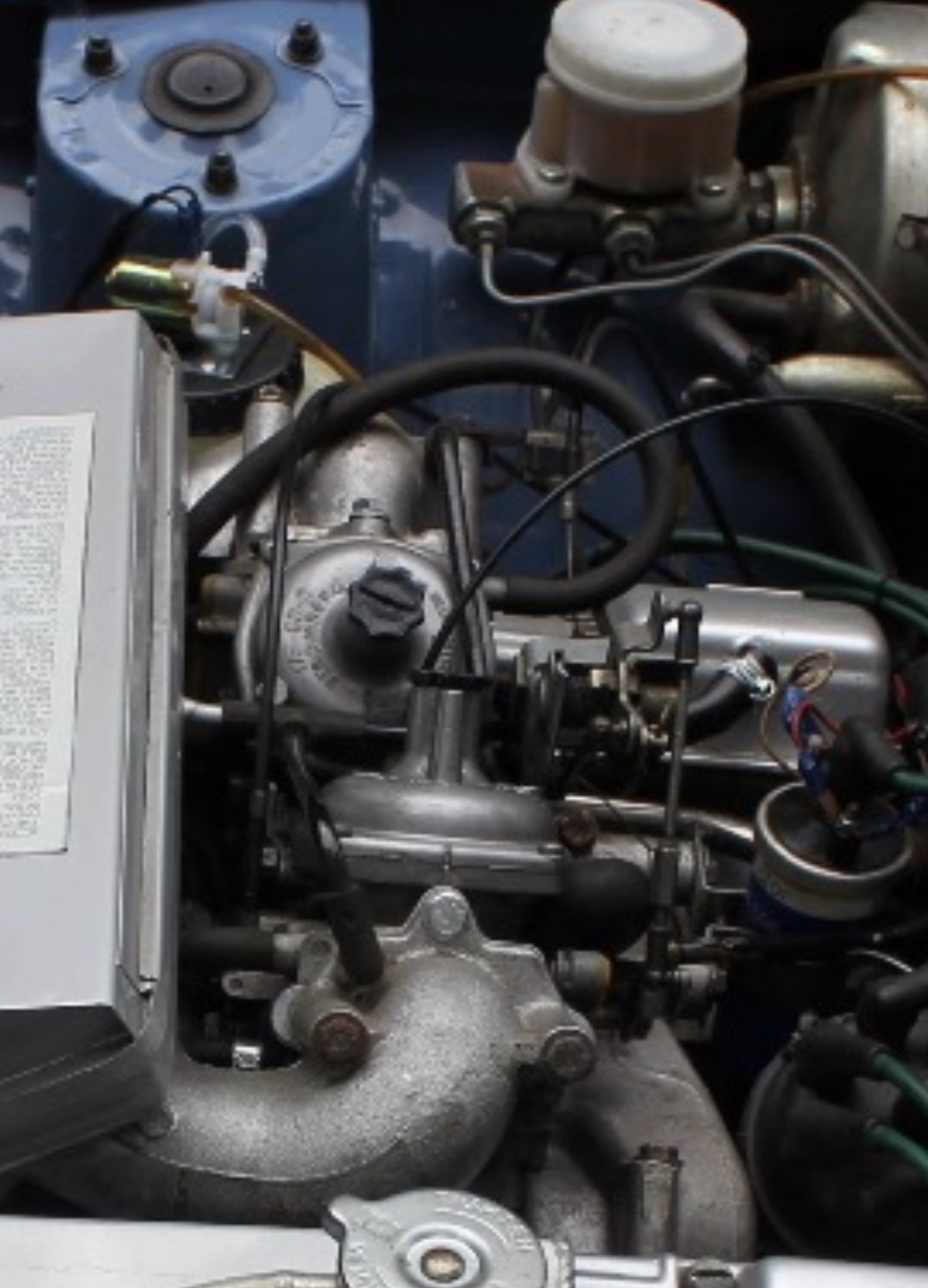
Open the throttle and manifold depression is fed, through a drilling in the air valve, to the chamber above it; the pressure difference lifts the air valve, and it rises exactly as far as the weight of air passing beneath it demands. As it lifts, the tapered needle hanging from it draws up out of the fixed jet, letting through more fuel in step with the air. That is the same self‑metering principle as the SU: airflow meters fuel, automatically.
The difference that defines it: the diaphragm
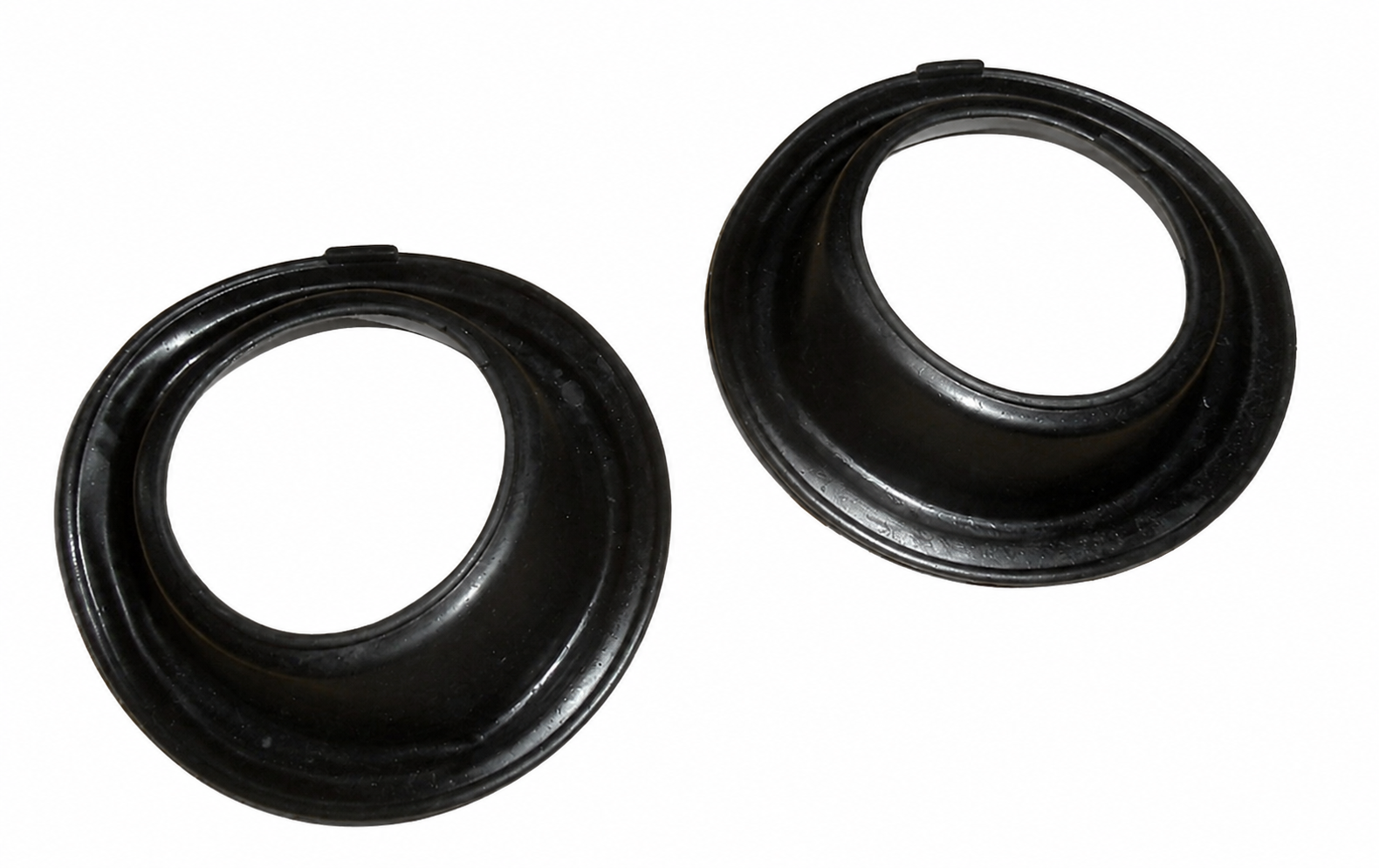
Here is where the Stromberg parts company with the SU. Where the SU seals its piston to the suction chamber with a precisely machined metal‑to‑metal fit, the Stromberg seals its air valve with a thin rubber diaphragm. It was a clever, cheaper idea, designed, as it happens, at Standard‑Triumph’s own Alford & Alder, but it comes with a catch: that diaphragm is the carburettor’s critical part. A pinhole, a tear, or a diaphragm gone hard with age brings rough running, fuel spitting from the vent, and a refusal to idle. The old hands have a saying worth taking to heart: every Stromberg diagnosis starts with the diaphragm.
See it in motion
The animation below walks through the Stromberg’s mechanism scene by scene, idle, opening the throttle, the float chamber, the drilled‑disc cold start, the temperature compensator, the overrun bypass valve, and finally the twin set‑up on the Stag V8. Use the controls to pause, slow it down, toggle the labels or jump between scenes.
Setting the mixture, and a warning
Mixture is set differently from an SU, too. Instead of a jet‑adjusting nut underneath, the Stromberg’s needle is raised or lowered within the air valve by an adjuster reached through the top of the dashpot, raising the needle richens, lowering it weakens. The warning that comes with it: turning that adjuster without holding the air‑valve hub still can twist and tear the diaphragm, which is exactly why Zenith made a special tool for the job. (Some later emission‑type Strombergs fix the needle and adjust an orifice at the base instead, check which yours is, and follow the manual.)
Two Stromberg tricks the SU hasn’t
The Stromberg carries a couple of extras. A temperature compensator bleeds a little extra air into the carburettor when the engine bay is hot, leaning off the mixture that would otherwise go over‑rich in traffic, a genuinely useful thing on a V8 that runs warm. And a bypass valve opens on the overrun to stop the mixture going rich when you lift off at speed. Cold starting is handled not by lowering the jet, as on an SU, but by a drilled disc turned by the choke cable, which feeds extra fuel for warm‑up.
Why the Stag has two, and the family it belongs to
The V8 runs twin Strombergs, the sought‑after 175 CD size, so the two banks breathe freely; the price, as with any multi‑carb set‑up, is that the pair must be balanced to draw equally, which the set‑up guide covers. And to place it in the family: the Stag’s Stromberg and the MG T‑Series’ SU are constant‑depression cousins that meter fuel with one self‑adjusting jet, while the AC Aceca’s Solex is the other kind entirely, a fixed venturi with its metering split across many fixed jets. Same goal, three routes to it.
The specialist
This guide is illustrated with thanks to Andrew at AG Classic Car Tuning, a North Yorkshire mobile specialist in the carburettor‑and‑distributor classics of the 1930s to 1990s, SU, Stromberg, Weber and Solex, who tunes these cars for a living.
Elsewhere in the guide