
Ownership / Rover V8 Conversion vs Original
Rover V8 Conversion vs the Original Triumph V8
Which engine should your Stag have, and does it still matter?
Some Stags have been re-engined with a Rover V8. Inspect a conversion's installation and records, and check the car's factory specification before deciding whether it meets your needs.
Background
Why Stags got converted
The Stag's reputation for overheating, warped heads and timing-chain trouble was at its worst during the 1980s and 1990s. Values were low, replacement engines were expensive to rebuild properly, and specialist knowledge was thinner on the ground than it is today. For many owners, the cheapest way to keep a Stag on the road was to lift the tired Triumph V8 out and drop something else in.
The transplants that turned up most often were:
- Rover 3.5-litre V8, by far the most popular. All-aluminium, light, torquey and, thanks to British Leyland already owning the Buick-derived design, plentiful and cheap.
- Ford Essex 3.0-litre V6, a cheap and rugged pushrod six with good torque, but heavier on the nose and less refined than the V8s.
- Buick 231 V6, the odd-fire American V6 related to the Rover V8 family. Rarer in the UK.
- Triumph 2.5-litre straight-six, the engine the Stag was originally designed around before the company committed to its own V8. A period-correct choice for owners who wanted to keep the car Triumph-powered without the V8's problems.
There is a real irony to the most common swap: British Leyland already owned the Rover V8, so the corporation was in effect competing with itself in its own showrooms. When later owners reached for a replacement engine, they were often reaching for another BL product.
The case for
The case for a Rover V8 conversion
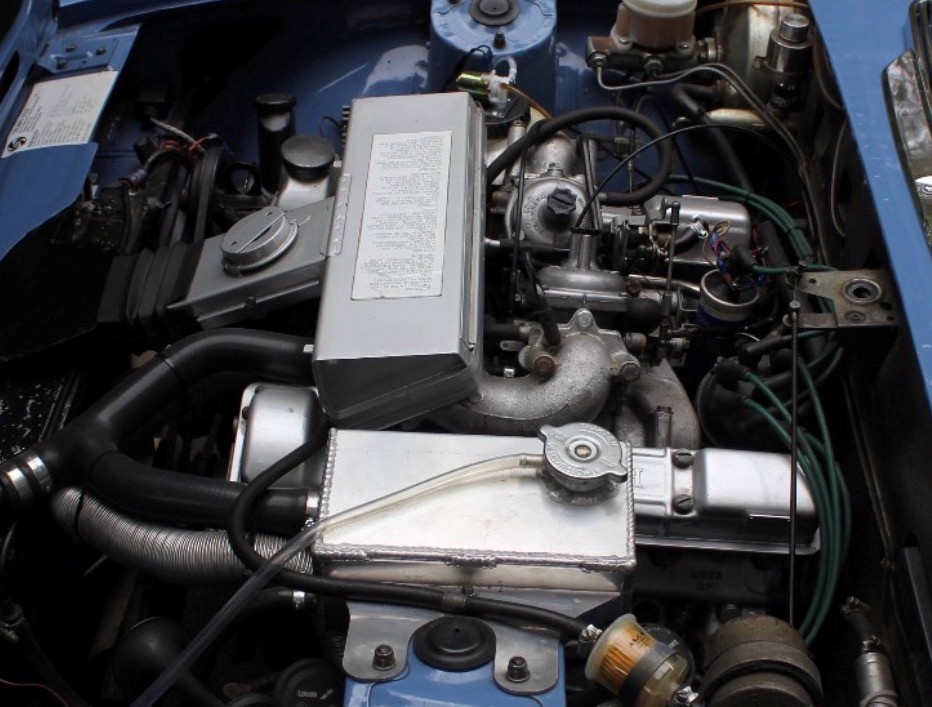
The Rover V8 is one of the most-used and best-understood engines in British classic motoring. It is light, all-aluminium construction saves meaningful weight over the iron-block Triumph, reliable, torquey, and superbly supported for parts and tuning at every level. Its cooling, ignition and fuelling weak points have been solved and documented over decades of hard use in Rover saloons, Range Rovers, TVRs, MGs and countless kit cars.
For a Stag owner, this means the historic reasons to fear the engine bay disappear. A properly-done Rover conversion sidesteps the Triumph V8's cooling margin, head-stud problem and timing-chain vulnerability entirely. It is usually cheaper to run and maintain, easier to find help for on the road, and, because a converted car costs less to buy in the first place, a genuine route to Stag ownership on a budget.
In short: a good Rover-powered Stag is a sensible, usable classic. That deserves saying plainly, because purists sometimes dismiss the idea out of hand.
The case against
The case for keeping the original Triumph V8
The Triumph V8 is the heart of the car. Its character, its distinctive off-beat sound, its willingness to rev, these are part of what a Stag is. Owners who have driven both a Triumph-engined and a Rover-engined Stag almost invariably describe the converted car as competent but somehow different: a very pleasant classic GT, but not unmistakably a Stag.
The technical argument for conversion has largely evaporated. The Stag V8's original faults are now fully solved: modern coolant chemistry, uprated radiators and electric fans deal with the cooling; correct assembly and regular servicing deal with the head studs; a proper timing-chain job with modern components deals with the chains. See the V8 Engine article and the Cooling Upgrades guide for the modern reliability package.
The work involved
What a good conversion involves
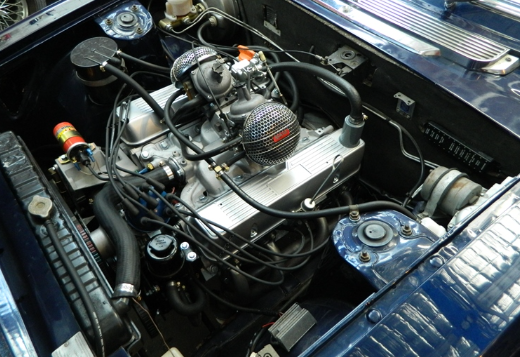
In general terms, this is a decision article, not a how-to, a Rover V8 conversion touches most of the car. Expect purpose-made engine mounts, a bellhousing suited to the chosen gearbox (a Rover SD1 five-speed is a popular match, and pairs well with the engine's torque), a revised cooling package to suit the new engine, tailored exhaust manifolds and downpipes, fuelling, carburettors or an SD1-style injection setup, and a rewired ignition circuit. The propshaft length usually needs adjusting to the new gearbox.
Two practical points matter for buyers. First, quality varies wildly: some conversions are engineered to a very high standard, others are cheap lash-ups. Second, reversing a conversion back to Triumph power later is expensive , it needs a sound Triumph V8, all the correct ancillaries, gearbox, mounts and cooling, plus the labour to fit them. Assume any conversion is effectively permanent when you decide what to pay.
At a glance
Comparison table
| Attribute | Original Triumph V8 | Rover V8 conversion |
|---|---|---|
| Character & sound | Distinctive, willing to rev; part of the car's identity | Torquey, well-loved V8 burble but not a Stag sound |
| Reliability (today) | Excellent when sorted with the modern cooling / stud / chain package | Excellent, long-proven, huge fleet history |
| Running cost | Higher parts cost; specialist support required | Cheap parts; understood by any competent workshop |
| Parts & tuning support | Good via Stag specialists; smaller aftermarket | Huge, the most-supported British V8 ever built |
Buying a converted car
Buying advice
Three practical rules cover most decisions:
- Inspect the quality of the conversion. Look at the engine mounts, the cooling package, the wiring loom, the exhaust routing and the paperwork. Ask when and by whom it was done, and whether the logbook reflects the change. A neat, documented conversion is a different proposition to a hurried one.
- Match the car to your goal. Decide whether factory specification or a documented conversion meets your needs.
A conversion changes factory specification and needs careful planning and documentation. See the Buying Guide for the wider inspection checklist.
The honest verdict
Verdict
Inspect either engine installation on its condition and records. Retaining the Triumph V8 preserves the factory engine specification; a conversion needs its own installation checks.
Common questions
FAQ
- Is a Rover V8 conversion good for a Triumph Stag?
- A well-executed Rover V8 conversion can make a very usable, usable Stag. The all-aluminium Rover unit is light, torquey and famously well supported for parts and tuning, and it sidesteps the Triumph V8's historic weak points around cooling and head studs. The important qualifier is 'well-executed' quality of mounts, cooling, wiring, fuelling and paperwork varies enormously between conversions. A good one drives beautifully; a poor one is a liability.
- What engines can be fitted to a Triumph Stag?
- The Rover 3.5-litre V8 (Buick-derived, all-aluminium) is by far the most common transplant. Others seen historically include the Ford Essex 3.0-litre V6, the Buick 231 V6, and the Triumph 2.5-litre straight-six, the engine the Stag was originally designed around before Triumph committed to its own V8. Each has trade-offs in weight, sound, complexity and reversibility.
- Is the original Triumph Stag V8 reliable now?
- Yes, when properly sorted. The original faults, marginal cooling, head-stud seizure, timing-chain wear, are now fully understood and have well-proven fixes. See the V8 Engine and Cooling Upgrades articles for the modern reliability package. A sorted Triumph V8 will run reliably for tens of thousands of miles; the historic reason to convert has largely gone.
Related reading