
History
Building the Stag at Speke: an engineer remembers
Every Triumph Stag body was built, painted and trimmed at Triumph's No. 2 plant at Speke, Liverpool, before being taken by road to Canley in Coventry for final assembly. John Barron worked there from 1974, first as an Industrial Engineer and then as a Production Engineer. Almost nothing has been published from inside the plant, so these are his recollections, in his own words, with short notes from the published record where they help.
The engineer
John came to Triumph from English Electric, where he had been a Work Study Engineer. He joined the Speke plant in November 1974 as an Industrial Engineer, "which is effectively a Work Study Engineer", and moved into Production Engineering in late 1975 or early 1976. His work was mostly on the TR7, but it also took in the TR6, the Dolomite and the Stag. After No. 2 plant closed, the Mini body assemblies were transferred to Liverpool while building modifications took place at Longbridge. He left Rover Triumph in 1982 to install the Ford Sierra at Ford's Struandale assembly plant in Port Elizabeth, South Africa.
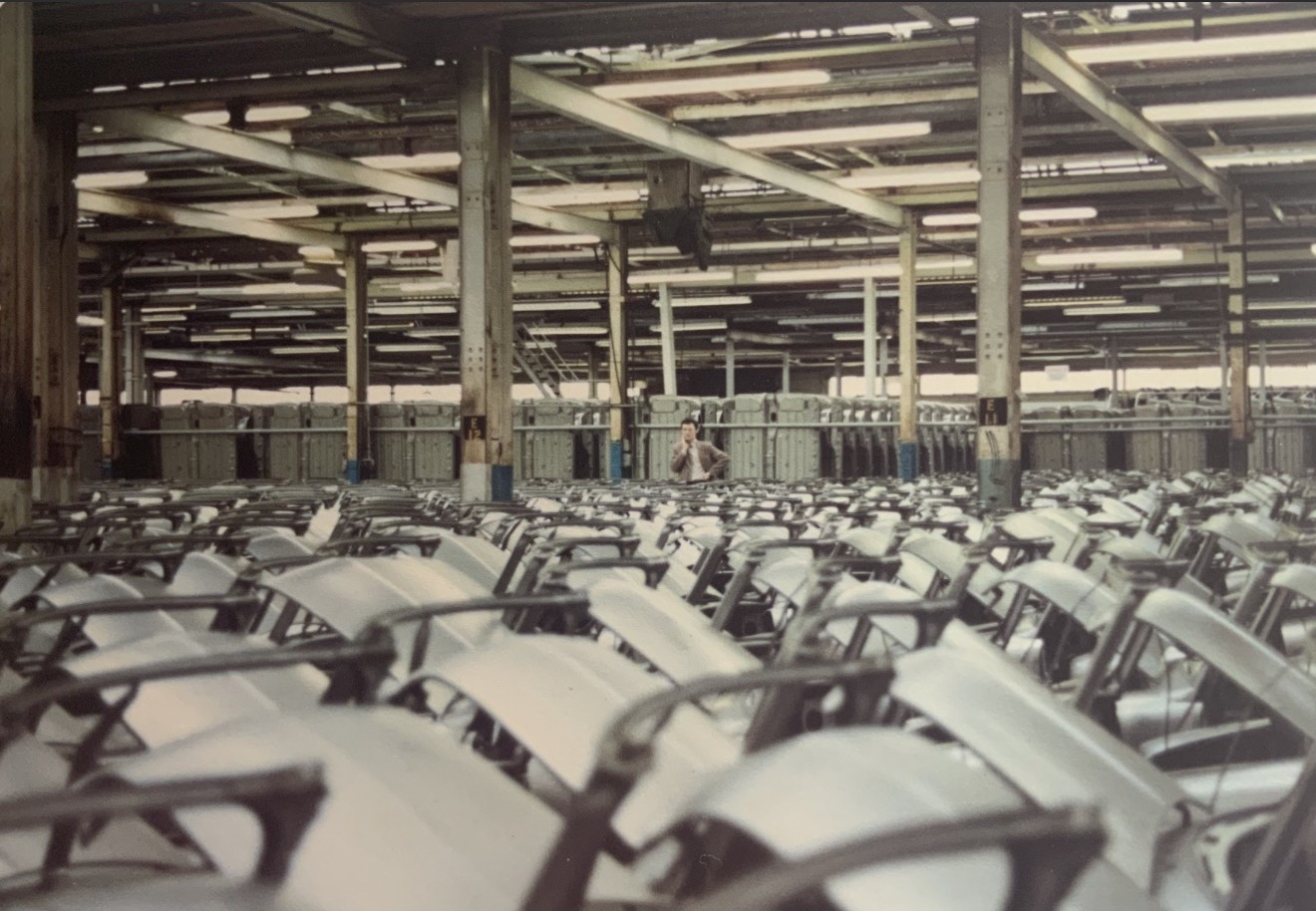
Two plants at Speke
Speke had two plants. No. 1 plant housed the press shop and built the Dolomite up to paint. No. 2 plant built the TR6, the TR7 and the Stag. As an Industrial Engineer John was based in No. 2 plant. As a Production Engineer he worked in both plants, with his office in No. 1 plant.
What Speke did, and what Canley did
The Stag is usually described as built at Canley. John's correction was the reason for this page:
"All that happened at Canley was that the car was dropped onto the running gear and sent to the selling garage. The whole body was made at Liverpool. It was built in Body in White, painted and Trimmed. All the sewing and trim parts were made at Liverpool, whilst other parts were sourced from companies like Lucas."
The published record agrees: AROnline's history of the Stag gives "bodies produced at Speke in Liverpool, and final assembly in Canley".
The trim deck
"The Trim decks were at high level and all the parts to be fitted were stored underneath so that they could be raised up to the trim deck at the correct place on the track where they were fitted."
The hardtop section
John was the first Industrial Engineer allowed to make a time study of the men at work, and he was given the Stag hardtop assembly, as the first section to be studied.
"To cut a long story short, I reduced the manning level from 12 to 6, with the obvious inquest into how I arrived at the figure."
Skids, lorries and the M6
The bodies went to Canley by road.
"All bodies were taken to Canley by road on the back of a flat wagon with two decks. The vehicle was canvas sided with a curved roof. The bodies were fitted with skids, that was our name for them but they looked like skis."
Each department had its own set of skids:
"The body shop had their own set of skids which came off for paint shop skids to be put on. After paint the Trim shop had their skids. These skids did not come off until the car reached their destination. The empty lorry returned with a supply of skids to be put on new bodies after paint."
"I believe there may have been up to six Stags or TR6s per lorry, 3 per deck I think but I am not sure. Other road users were not able to see the load on the lorry because the bodies were hidden from view, but the lorries were very frequent on the M6."
The TR6 and the crowbar
The TR6 travelled to Canley in the same manner as the Stag, and the more flexible floor of the TR6 had a curious consequence.
"The TR6 did not have the chassis fitted until it was dropped on the running gear, therefore in order to close the doors it was necessary to use a crowbar to lift the middle of the car to gently shut the door. After shutting and removing the crowbar, the doors could not be opened until they arrived at Canley and dropped on the chassis."
How many Stags
"While the TR7 build was approaching 3000 units a week the Stag production was only 26 units per week at one stage."
That low figure belongs to the Stag's later years, John says, and output was never steady: "There were periods of production and periods of none production." In the end the trim line was stopped and mothballed.
"The production of the Stag was obviously planned for greater numbers and a great deal of parts were stored under the trim deck."
Model years, not marks
The factory never spoke of a Mk1 or a Mk2.
"We have never worked on the assumption that there were a mark 1 or a mark 2. Any differences were referred to as model year. No car company calls their first car a model 1 because the astute purchaser would probably wait for model 2 to come out before buying one."
"The amount of stock stored under the trim deck far outweighed the number of cars produced. It was therefore possible for a later model year car to be fitted with a previous model year part in order to use up stock."
This matters to owners judging originality. A later Stag carrying an earlier part is not proof that the part has been swapped. The factory's own batches, the "sanctions", are set out in the originality guide.
No black, no metallics
"On one visit to the paint shop I became aware that we had never painted a black car."
Later he noticed a black TR7 for sale at a Liverpool garage.
"Out of curiosity, I pulled some rubber trim off the A post and found that there were signs of yellow paint. I discovered that the car had been resprayed at the garage in which it was for sale. You can then understand why there was an extra charge for black paint."
On metallic paint, his answer is equally clear: "No metallic colours were ever applied during the lifetime of number two factory to my knowledge."
The TR7
The TR7 was the plant's main work, and the 3,000 a week was its planned rate.
"The figure of 3000 per week was indeed a planned production level and although it was achieved momentarily a lesser number was usual. The production was slowly ramped up and eventually two shift working was brought in."
The early cars did not go straight to the showrooms.
"When the TR7 build commenced, the first completed cars were stored at the rear of the factory car park for assessment. After a long period and after 3000 engineering changes in a period of 6 months it was agreed to release the current production cars to the market. A slow process of bringing the stored cars up to the correct engineering specifications [followed] and finally, with too much work needed, the first 6 production cars were cut up and scrapped."
For scale, published histories give TR7 production of almost 33,000 for 1976. The No. 2 plant closed in 1978. The TR7's bodies then came from Pressed Steel Fisher at Swindon, with final assembly at Canley and, from 1980, at Rover's Solihull plant.
When No. 2 plant closed
John has one more memory of the end.
"When No. 2 plant closed, all the parts stock was crushed and sent for scrap. There were lorries removing heaps of parts."
Minis, and leaving Speke
Number One Plant was kept running for some years after that, because the Mini body sections were produced at Liverpool until 1982 while major plant reorganisations were taking place at Longbridge. The Dolomite came to an end there during that time. John was kept occupied with the intention of managing the return of the Mini production tools. Instead, he found another person to do his job and left for South Africa, to install the Ford Sierra at Port Elizabeth.
Photographs from John's collection. He has no photographs of the Stag line. These were all taken in 1982, when he had just bought an Olympus camera, and show the scale of Mini body production in No. 1 plant.
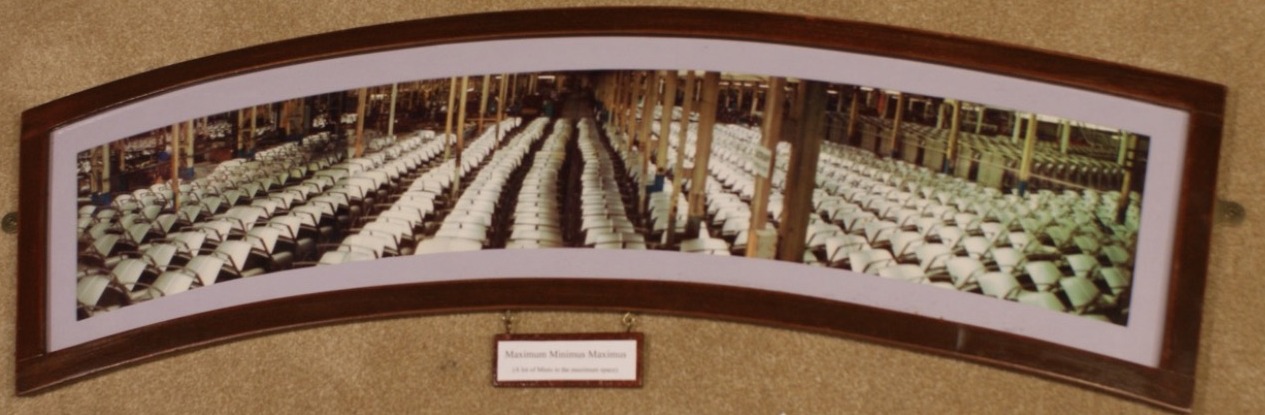
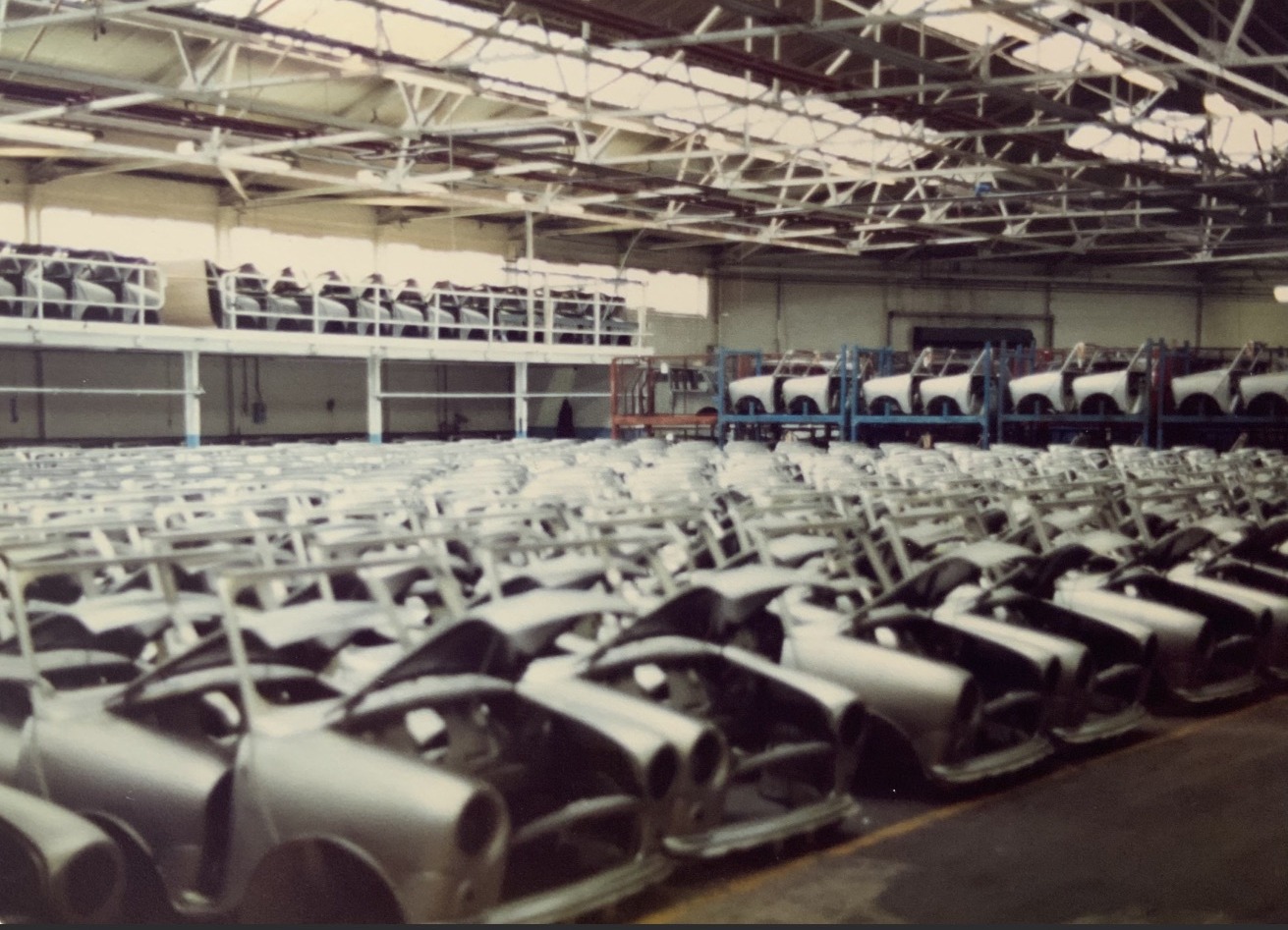
Recollections of John Barron, Industrial Engineer in Speke No. 2 plant and Production Engineer across both plants from 1974, given to the archive in October 2026 and lightly edited for clarity with his approval. Photographs © John Barron, reproduced with permission.