
What a restoration actually involves
One Stag, one workshop, twenty-one documents, October 2025 to June 2026.
Almost everything written about restoring a classic car is advice. What is missing is the record: what a workshop actually notices, what gets found when the car comes apart, and what turns out to be invisible from the outside however carefully you look. I had the documents for one car, so this page is that record.
KKH 295N is my own car. I bought it from Classic & Sportscar Centre of Malton in North Yorkshire, and its coachworks division, Malton Coachworks, carried out the work described here between October 2025 and June 2026. Those firms and this archive link to each other. No money has passed in either direction for any article, link or listing, and nothing on this page was shown to them for approval before it went up. The page is drawn from the workshop's own inspection report, estimates, job sheets and invoices. Costs are not published, at my request. Hours are, where the documents give them. This is one car, not every car, and the page is laid out so you can see exactly which parts of it rest on that one car and which do not.
The car that went in
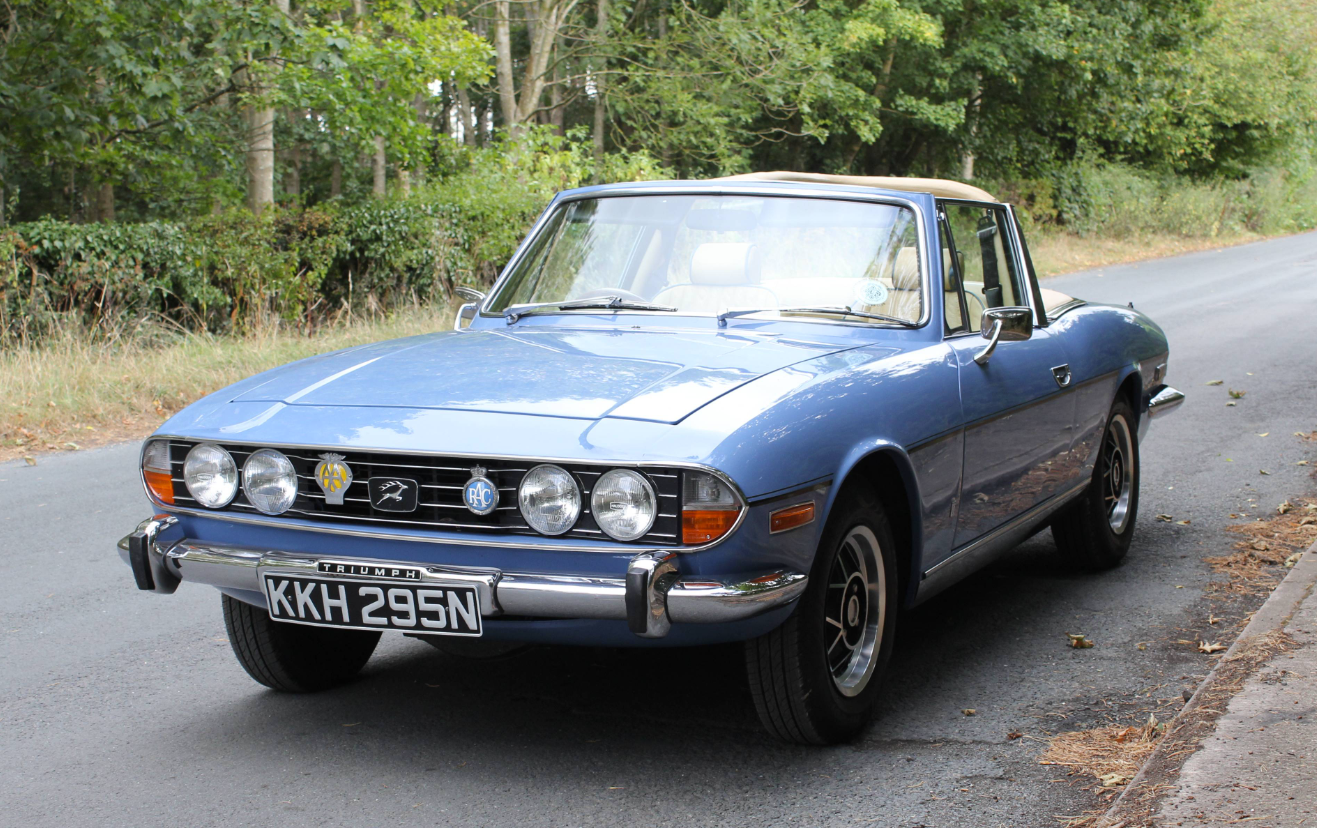
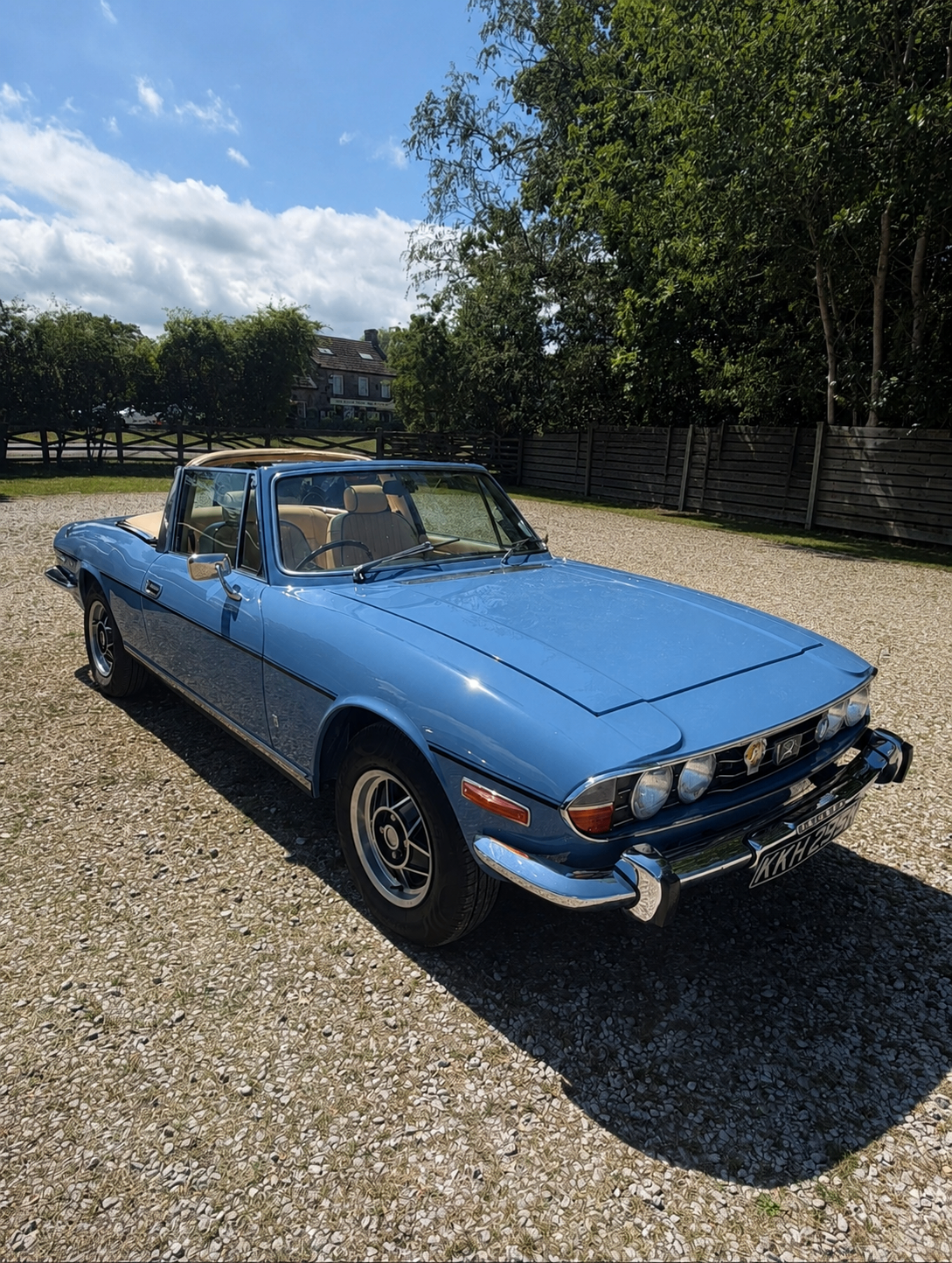
A 1974 Mk2 in French Blue, manual with overdrive on third and fourth, kept for decades and given a mechanical refresh in 2020. It went to Malton Coachworks on 22 October 2025 and was inspected the same day.
The inspection report is worth quoting, because it is the opposite of what a restoration case usually looks like:
The car presents and drives well... The underside is commensurate with a recently overhauled but used Stag and presents no major concerns... The paint and body are in good condition with the exception of a few localised areas where there is some corrosion or paint cracking... The paint thickness throughout the car is quite consistent apart from the doors which have had some restoration work carried out. The thickness of material is not excessive which itself paints a good picture, there isn't a great deal of filler present.
Malton Coachworks vehicle inspection report, 22 October 2025
That is a professional saying, on paper, that the car was sound. Which is precisely why it is the useful case. Anyone can tell you a rotten Stag will cost you. What nobody sets out is what a good one turns out to need.
What a professional notices
Nineteen findings, ten mechanical and nine on the body. Read them as a list of what somebody who does this for a living looks at on a car you would be pleased with.
Mechanical
A slight oil weep from the nearside rear driveshaft. A slight weep from the nearside of the steering rack. Engine bay wiring untidy above and below. The two front brake calipers mismatched, one newer than the other, both working. An oil leak near the filter. Carburettors sound but dirty. Engine bay fixtures, catches, clips and brackets degraded. A weak second gear synchromesh, with the note that the change "whilst positive needs to be a delicate one". Suspension bushes that "could feel tighter when on test drive". Steering that felt light on the road.
Body
Surface corrosion under the car, over earlier wax and paint, including on the steering and suspension components. Untidy paint finishes in the engine bay. Dented bumpers and corroded bumper irons. Corrosion on suspension, steering and braking components. Inconsistent door gaps. Flaking lower edges with corrosion underneath. Minor paint defects on the rear scuttle, rear quarters, scuttle, doors, wings and lower valances. Split door and boot rubbers. Pitted die cast door handles.
Two of those are worth pausing on, because no owner would find them. Bumper irons corrode behind chrome that still looks perfect. And die cast door handles pit from the inside out, so they look tired long before anything is obviously wrong.
And one thing is missing from the list, on a car whose reputation rests on it entirely. Nothing about cooling. No radiator, no header tank, no fan, no temperature. The cooling on this car had been sorted years before it ever went near a bodyshop, which is the normal position on a surviving Stag and is worth saying out loud, because the guides imply a rebuild is when you fix it.
One fault paid for everything else
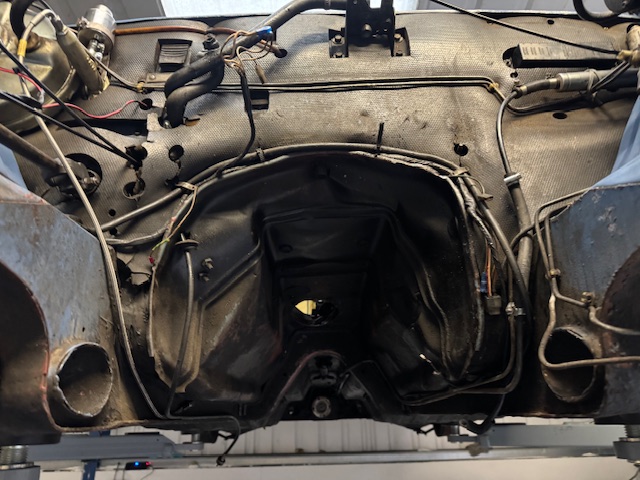
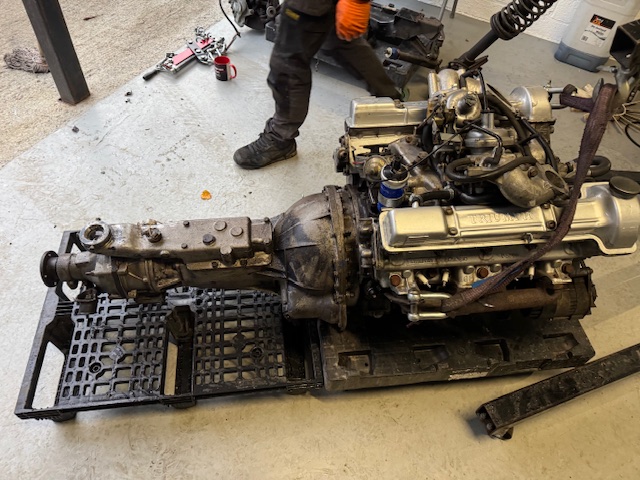
The finding that mattered was the synchro. Fixing it means the gearbox out, and on a Stag that means the engine out too.
And here is the thing the estimate says in its own words, three separate times:
- replace weeping seals whilst engine is out
- detail engine bay (based on engine been out)
- fit new bushes throughout when the arms are off for coating
That is the whole economics of restoration in nine words, twice. The expensive part of most jobs is not the job. It is getting to it. Once the engine is out and the suspension is off, a dozen operations that would each carry their own strip-down cost become nearly free.
Twenty priced operations came out of one worn synchromesh, and not one of them was gold-plating. It is not something I have seen set out plainly anywhere, and it is the single most useful thing on this page. If you are ever told that while the engine is out you may as well do the seals, that is not a workshop finding work. That is a workshop saving you money.
What was found once it was apart
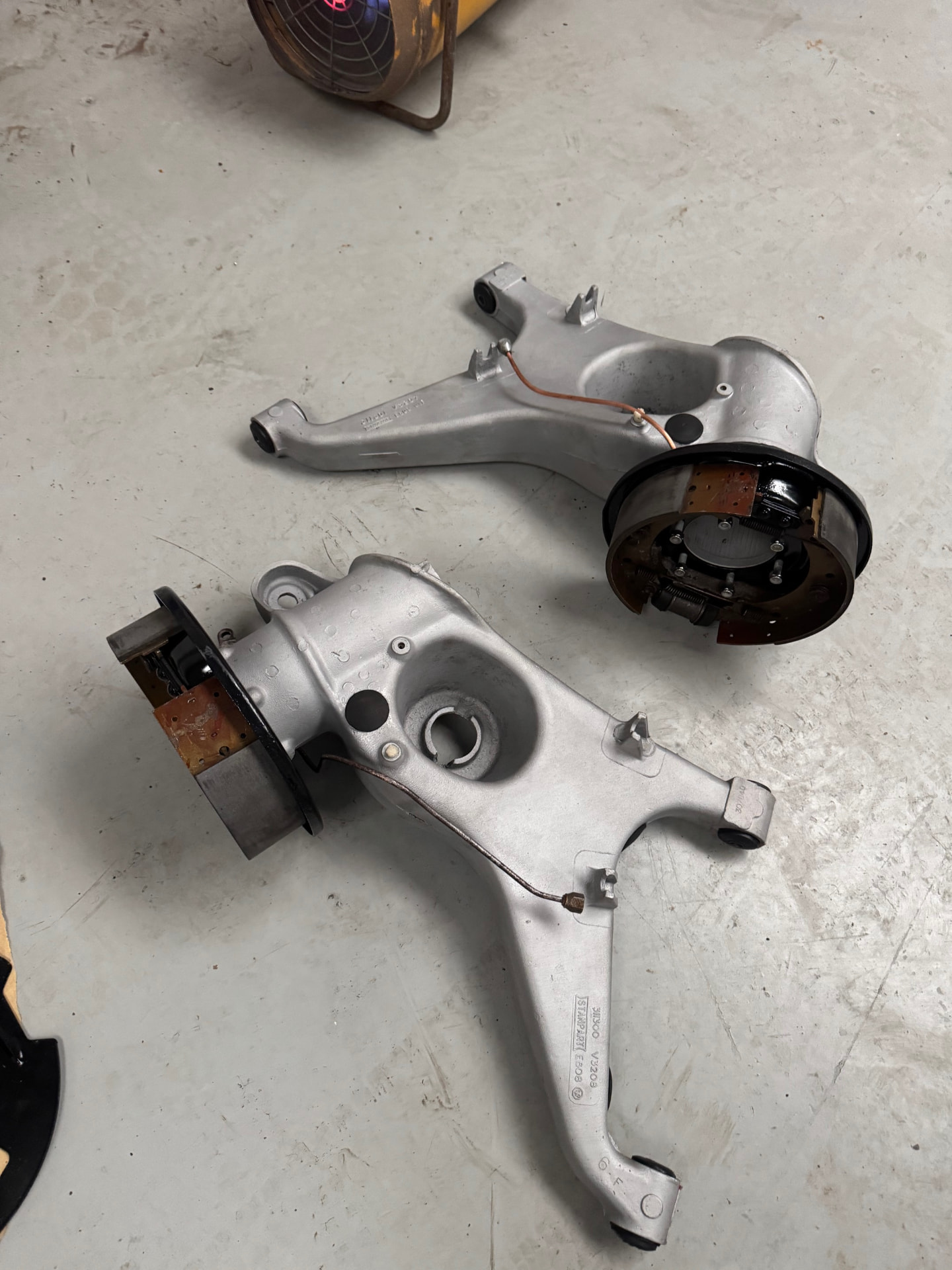
The estimate priced the suspension as "fit new bushes throughout when the arms are off for coating."
Bushes. Then the arms came off.
None of the following was in the original estimate:
- Suspension. Both front road springs and both rear road springs. Both front damper inserts and both rear shock absorbers. Both top strut mounts, with sleeves, thrust washers and gaiters. Both lower ball joints. Track arm bushes.
- Driveline. Both halfshaft assemblies including the hubs, with new dust shields. Both differential output oil seals. Both differential pinion oil seals and a back plate gasket. Gearbox mounting rubbers.
- Brakes. Both front wheel bearing kits. A rear wheel cylinder. Stainless disc dust shields. Twenty five feet of copper brake line, and fluid.
- Elsewhere. New fuel hose and clips. Exhaust clamps, a centre clamp and hanger kit, a mounting bracket. A rear crossmember fittings kit. A wiper motor strap and mounting rubber, found simply because the bay was open.
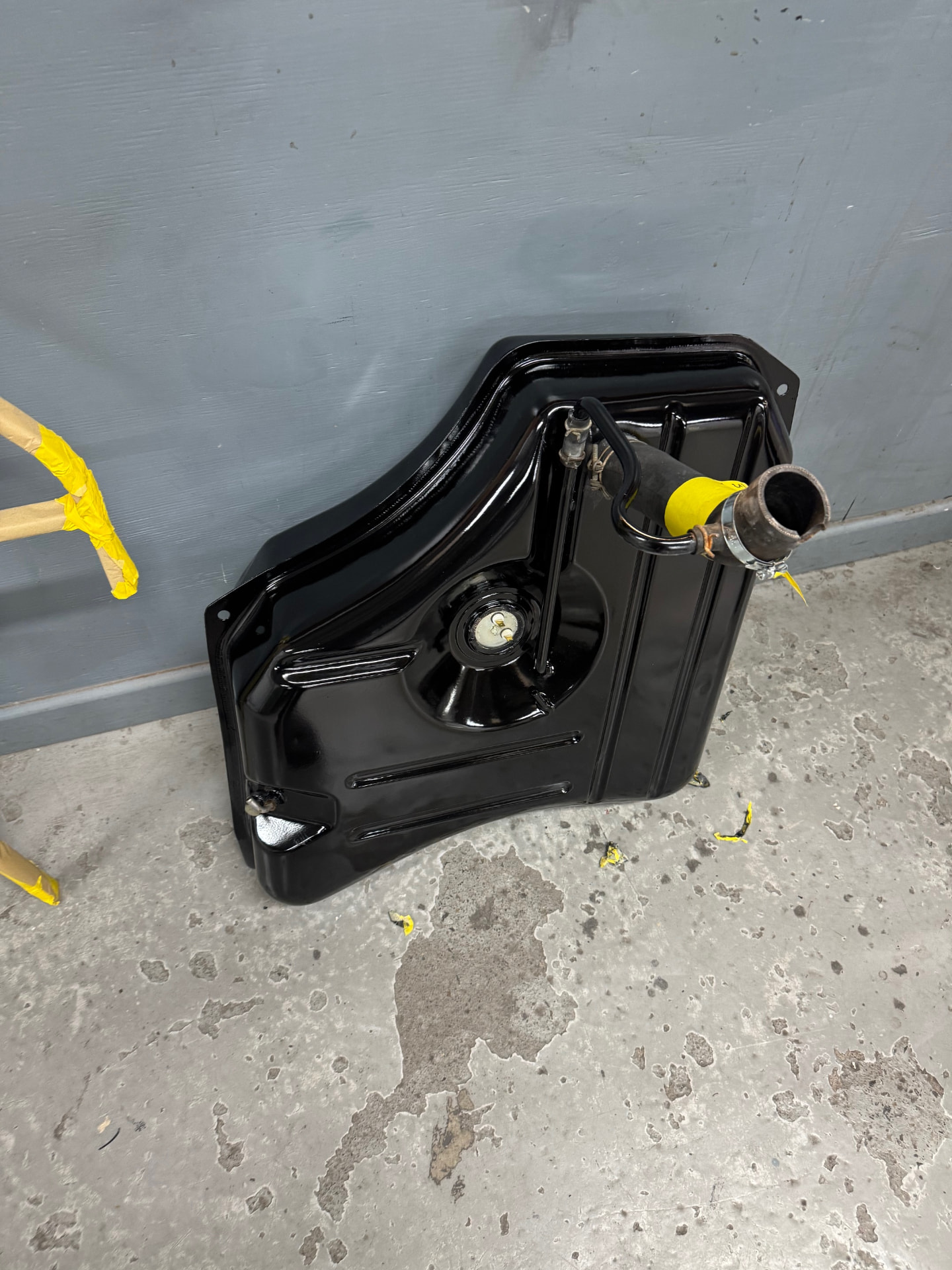
The fuel tank was taken out, stripped and coated at the same time. No invoice covers that work, so the photographs are the only record of it.
They gave me a huge amount of broken parts they had replaced, and I had no room to store them.
Now the part that matters. Every restoration guide, this archive's included, warns that you cannot price the job until you have stripped the structure. On this car the structure was sound and the overrun was entirely in the running gear. The received wisdom pointed at the wrong end of the car.
That is not an argument against the received wisdom. Rust is still what drowns projects. It is a warning that a car with a good shell is not therefore a car without surprises, and that suspension and driveline wear is invisible until the components are in your hand. Springs sag, dampers fade and halfshafts wear gradually enough that nobody notices from the driving seat. A car that tests well can still need all four corners.
A note on getting your old parts back
The standard advice is always to ask for them, as proof the work was done and so you can see for yourself what was wrong. That advice is right and nobody ever mentions the other half of it, which is that you then own a large quantity of scrap suspension and have to decide what to do with it. Ask for them, look at them, photograph them, and then decide. I did not photograph mine, which is why there is no picture in this section, and I would do that differently.
What bare metal actually means
The trade uses the phrase loosely and it means two different things depending on which half of the car is being discussed. On this car:
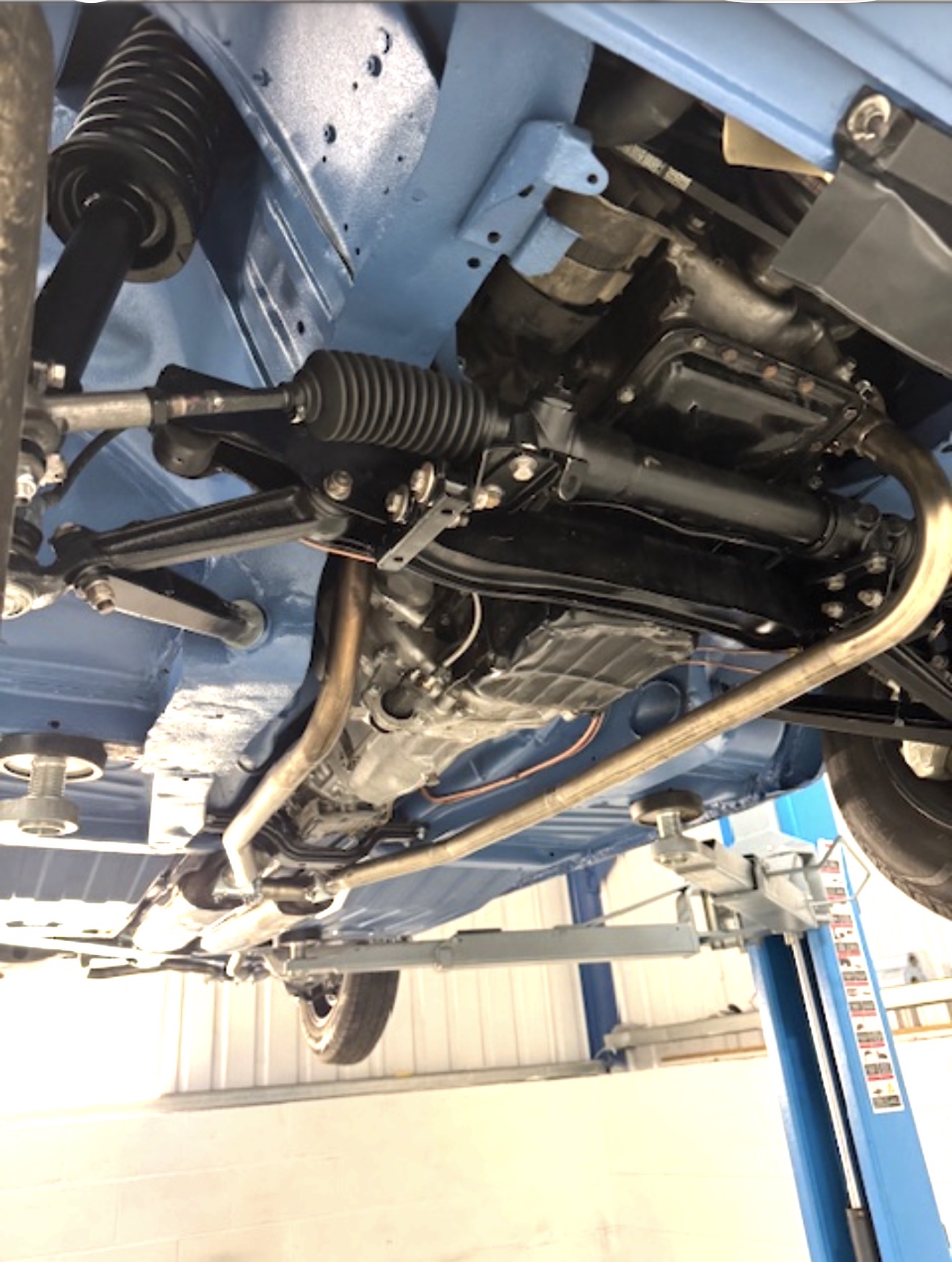
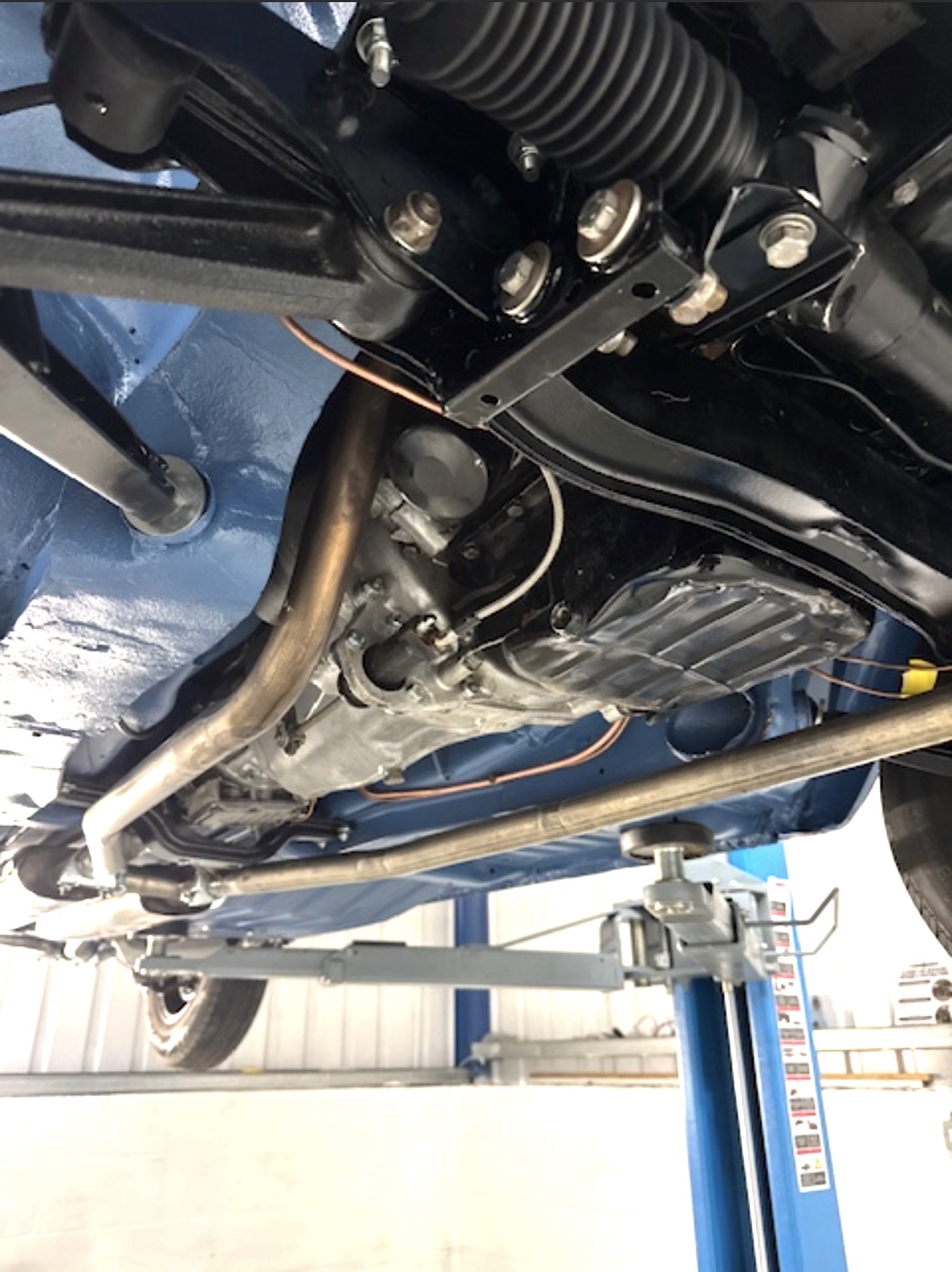
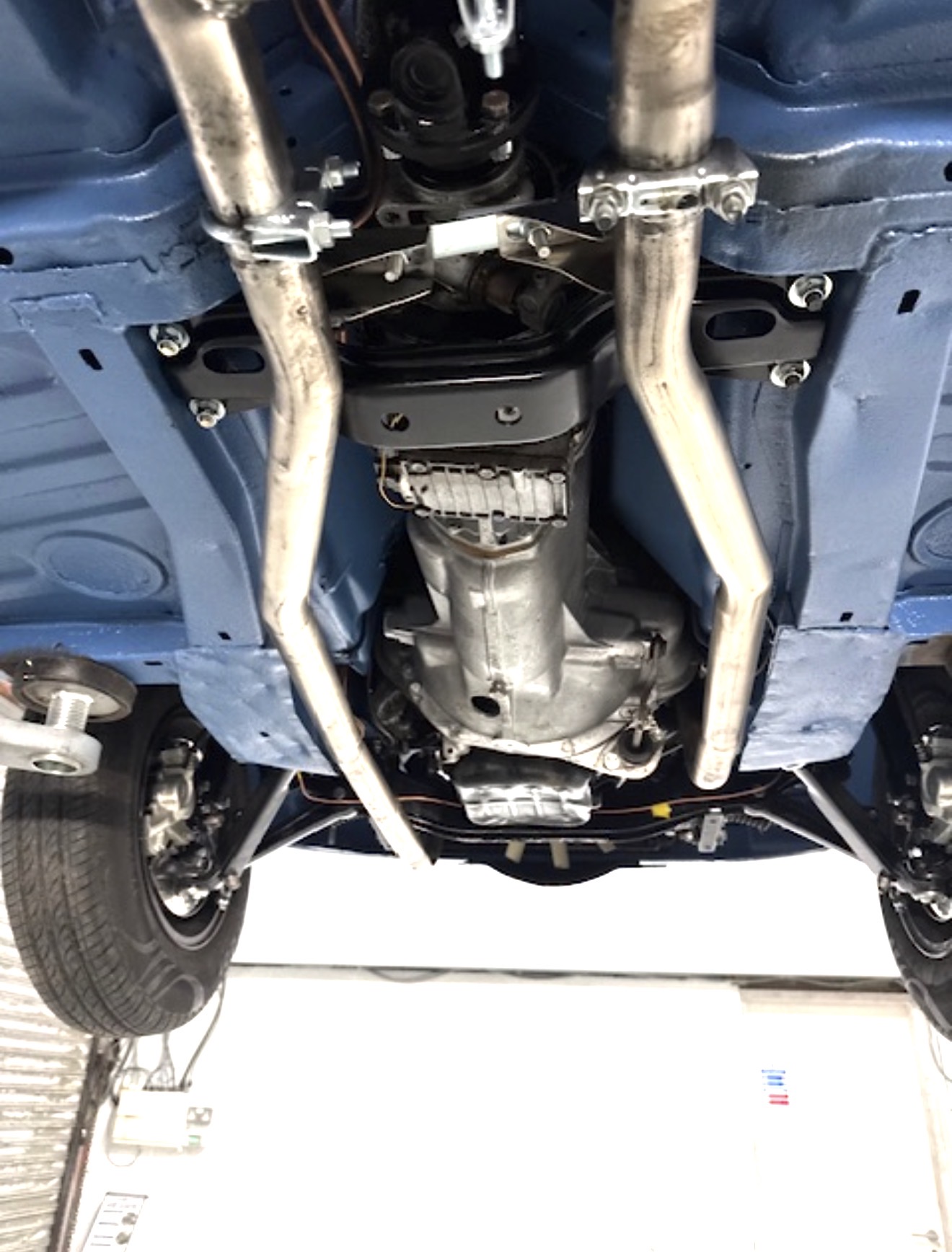
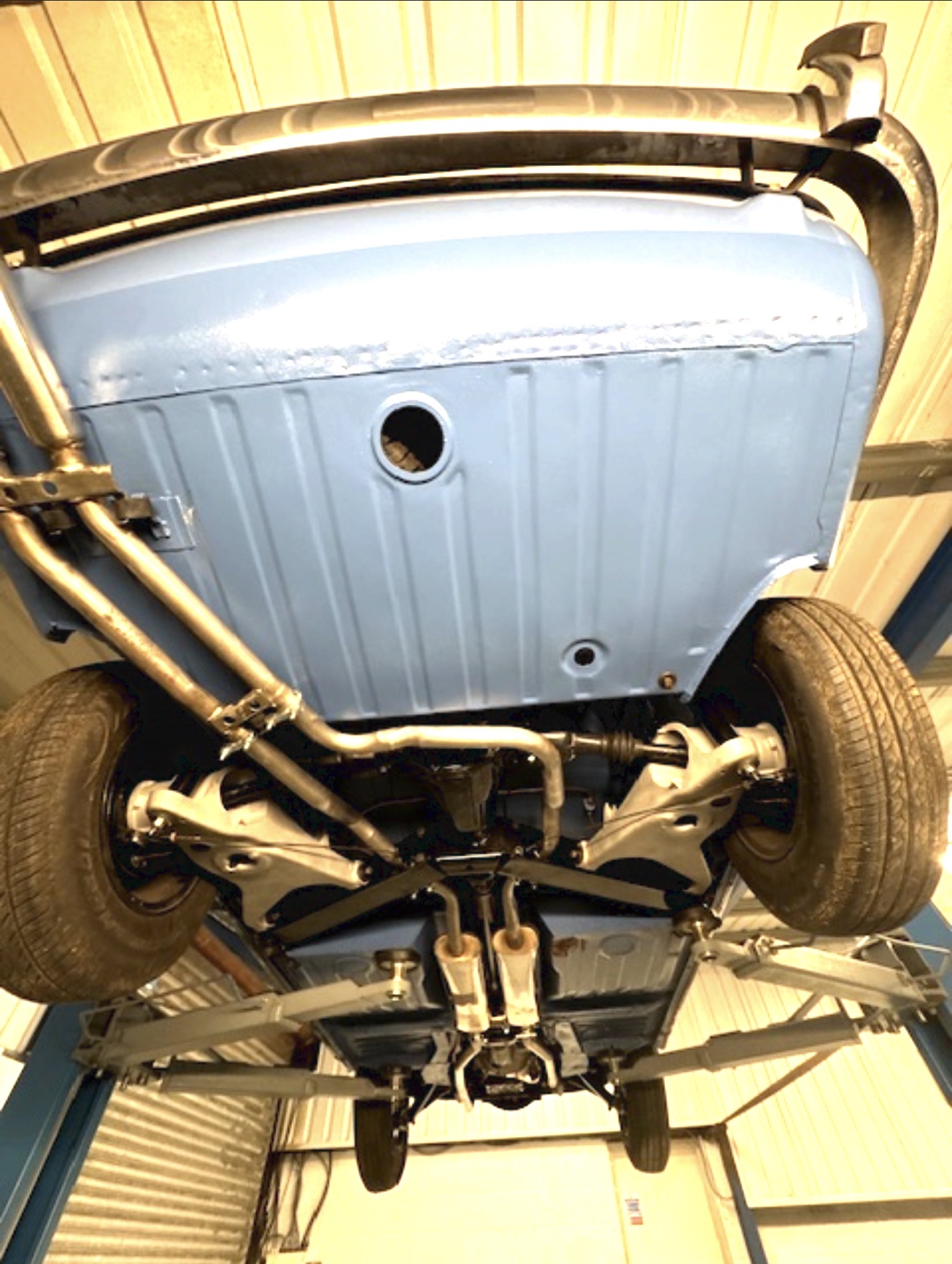
Underneath, it meant back to steel. Dry ice blasted and descaled, then worked mechanically, the materials invoice listing slitting discs, flap discs, grinding discs, abrasive belts and Scotch Brite. Rust converter applied. Then epoxy and a Raptor coating, which is a textured protective finish rather than body colour.
Above the waistline, it did not. The top half was not stripped. It was prepared and resprayed over sound original paint, which was the right call on a car whose paint thickness was consistent and which carried little filler. Stripping good paint to bare metal for the sake of the phrase would have been money burned.
So when an advertisement says bare metal restoration, the question worth asking is: which half, and why. A car described as bare metal underneath and resprayed above has had the right work done in the right places. A car described as bare metal throughout has either been very bad indeed or has had a great deal spent on it unnecessarily. Neither is a criticism. But they are different cars and the phrase does not distinguish them.
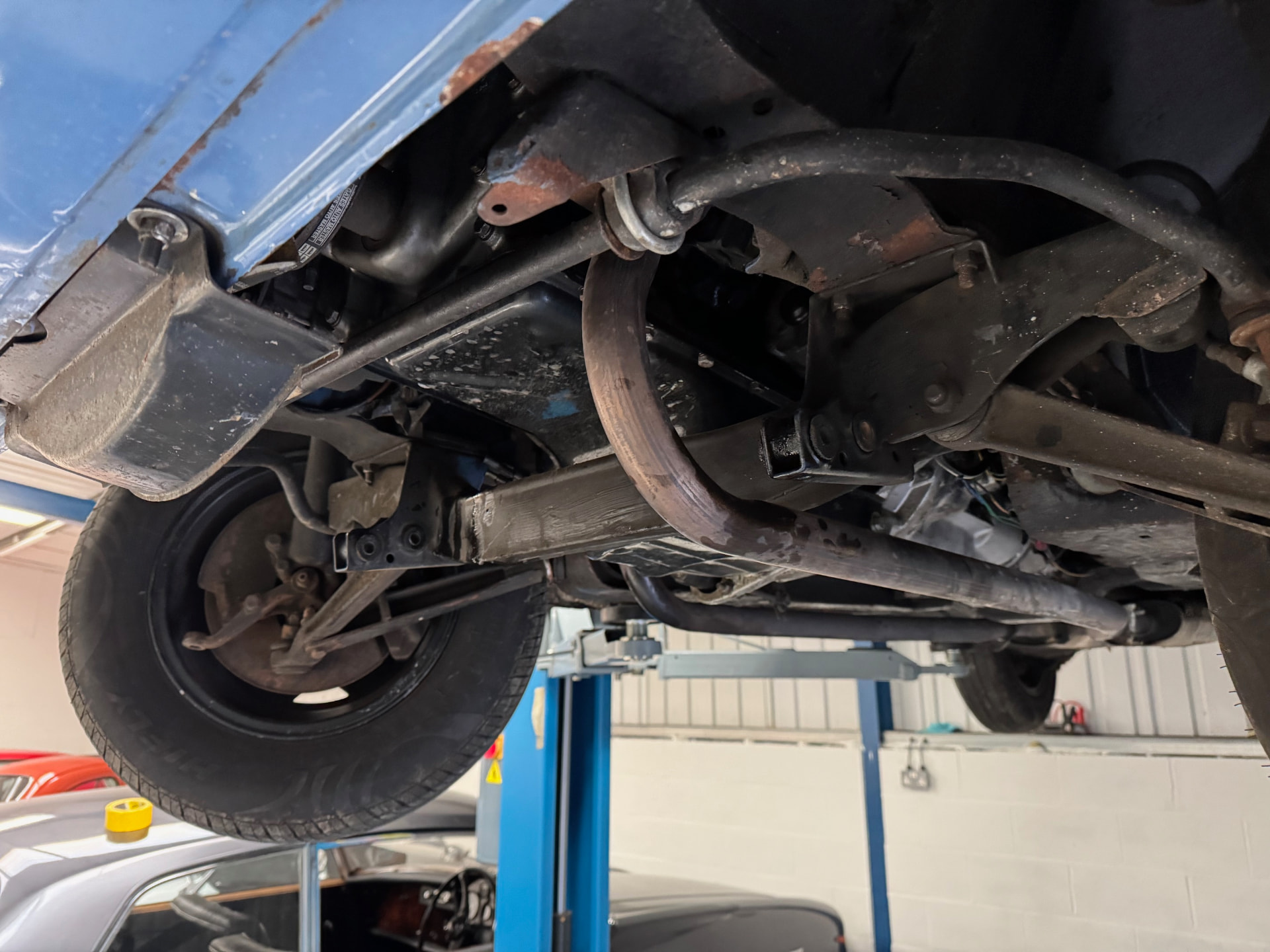
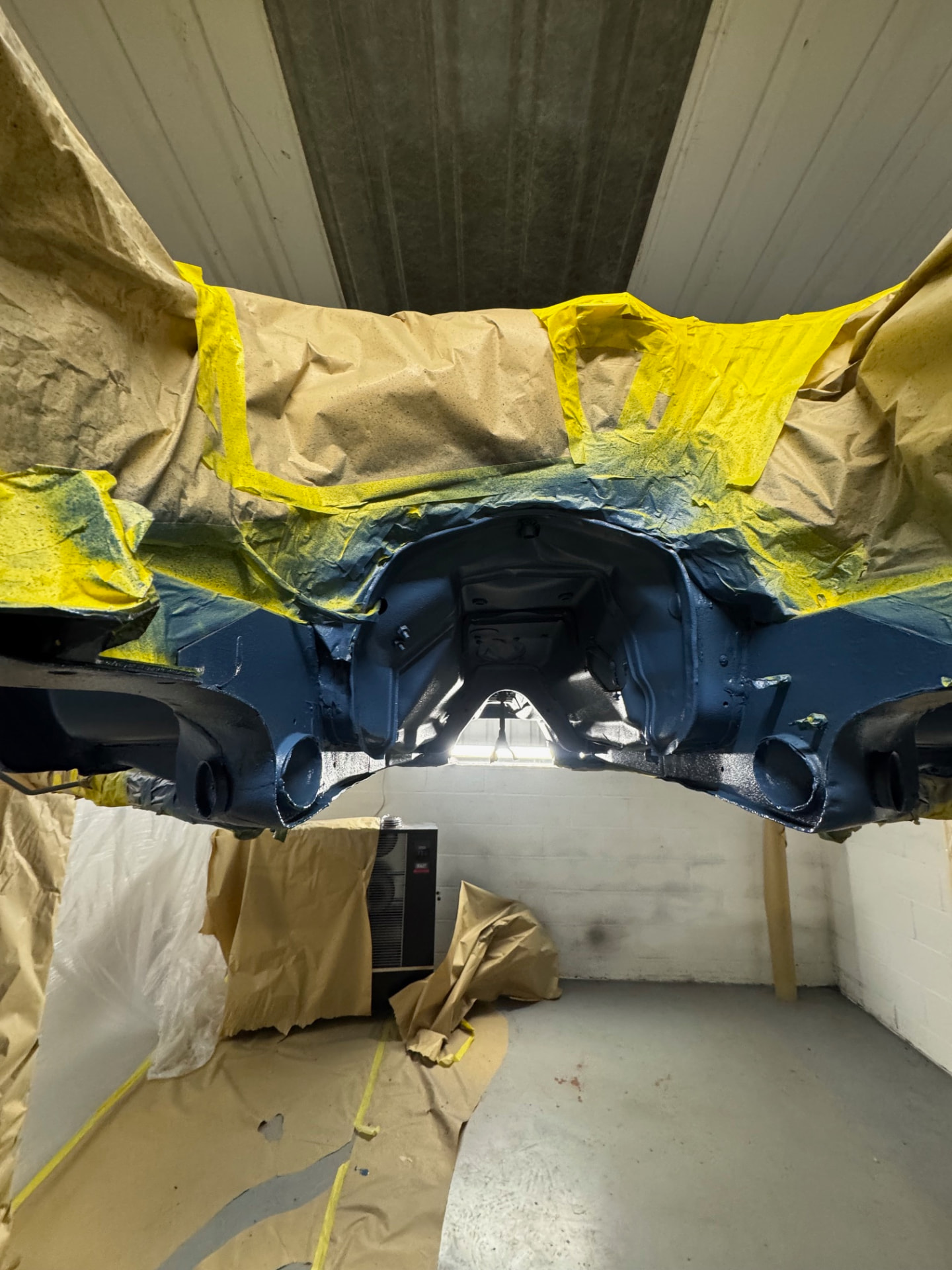
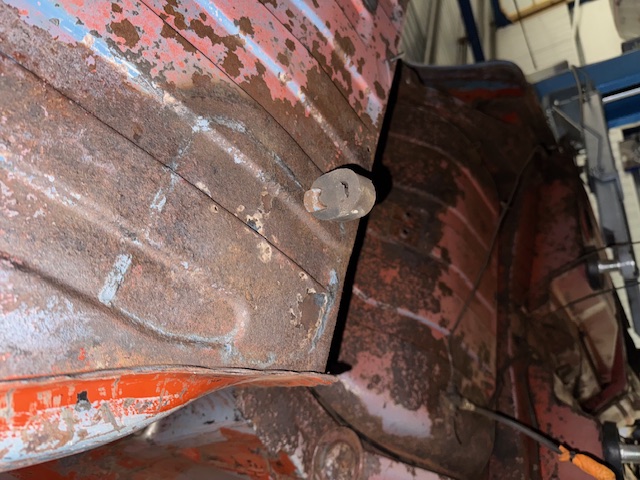
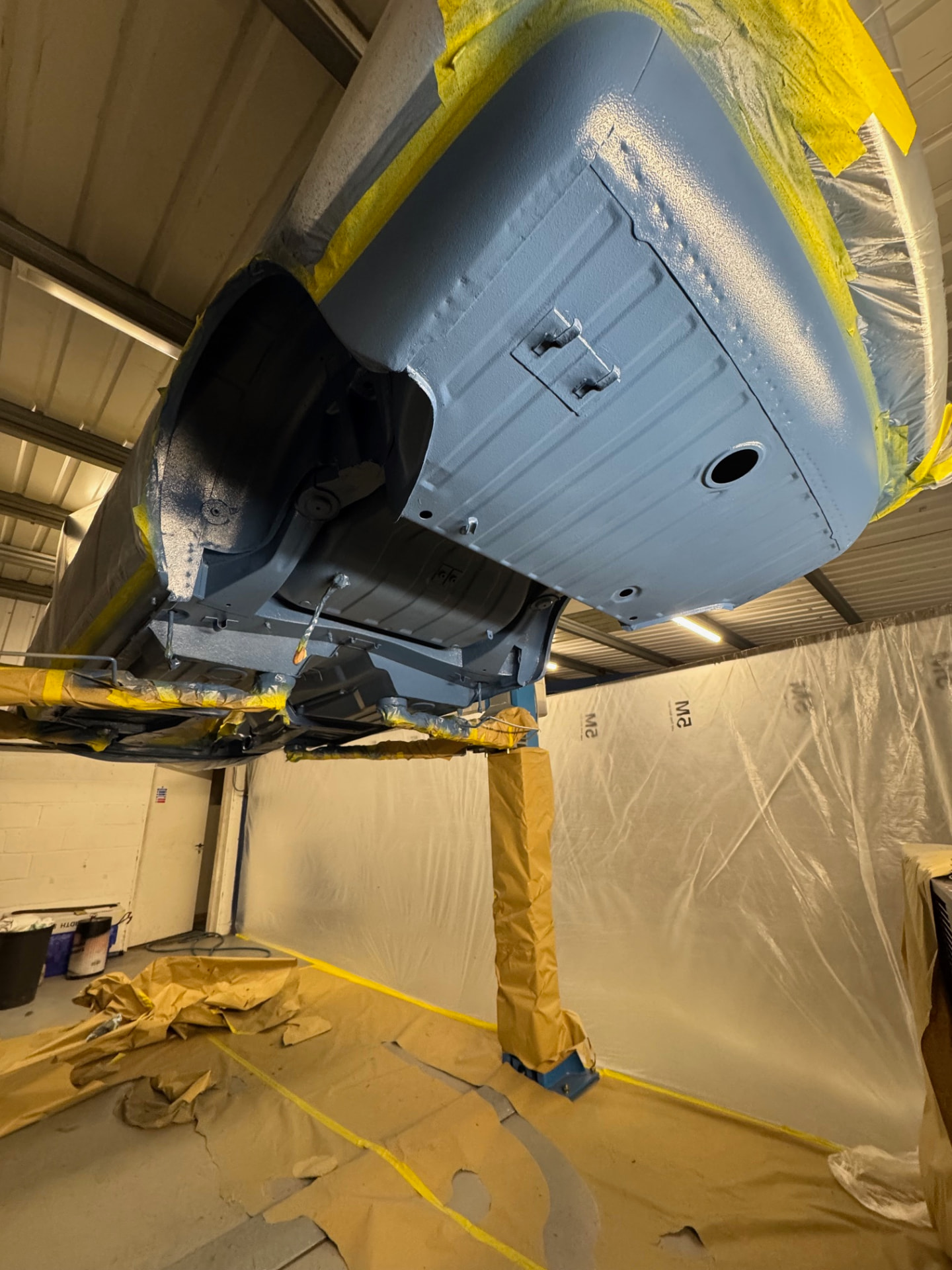
These three are the most important photographs on this page.
Sixty four and a half hours before any paint
One invoice, dated 19 December 2025, carries a single line and nothing else: prepare the body for paint, 64.5 hours.
Nearly two working weeks. On a car a professional had called good, with consistent paint thickness and little filler, before a drop of colour went on it.
If there is a figure on this page to remember, it is that one. Preparation is the part nobody budgets for, nobody photographs and nobody talks about, and it is where the quality of the finished paint is decided. A cheap respray is almost always a cheap preparation with normal paint on top.
Preparation is also the part nobody photographs, and this archive has no photograph of it either. What survives is the invoice.
What stopped the rebuild
The car went back together in February 2026, and the job sheet of the 10th records three things that had not been visible at any earlier point.
The brake valve. "Brake valve to be replaced, not allowing brakes to be bled." The pressure differential warning actuator, the PDWA, had seized. It is a known Triumph trap, it is invisible until you try to bleed the system, and it stops a rebuild dead at the last hurdle. A repair kit and a new bias valve switch went in. See brakes.
The overdrive. "Over drive unit to be replaced due to solenoid being fractured." A fractured solenoid on a unit that had shown nothing wrong at inspection, found only on reassembly. See overdrive.
The radio, rewired for a poor connection.
Both of the first two are the same lesson in different clothes. There are faults on these cars that no inspection finds, because they only reveal themselves when the system is put back under pressure or asked to work.
What we decided not to do
Two items were inspected, priced and deliberately left.
The bumpers. Recorded as dented with corroded irons and estimated for removal, repair and re-chroming. Not carried out.
The door handles. Recorded as pitted on both sides and prescribed for replacement. Judged unnecessary.
Every restoration involves this decision repeatedly and no guide has a section about it, which gives the impression that a proper job means doing everything on the list. It does not. A list of findings is a workshop telling you what it can see, not an instruction. Deciding what to leave, and being able to say why, is part of the job.
It was not finished when it came home
The car came back to its owner, and then in June 2026, three months later, it went in again. Sixty nine hours:
Strip down of vehicle. Attend to crack on rear scuttle, repaint rear quarter and scuttle. Strip nearside A pillar back, prep, paint and blend to match body. Strip driver's door back, prep, paint and blend to match body. Rebuild of vehicle.
Malton Coachworks invoice, work dated 9 June 2026
Paint, lacquer and abrasives from P40 through to P2000.
The crack on the rear scuttle had been on the original October inspection list. Whether the June work was remedial or newly arisen, the documents do not say and I am not going to guess in print.
What can be said is that the car went back, and that this is entirely normal and almost never admitted. A restoration does not end on the day you collect the car. There is a tail to it, and if you are budgeting time or money you should assume there will be one.
What this does and does not show
It shows what one workshop found on one good Stag, what it did about it, in what order, and over what period. It shows that the overrun came from the running gear rather than the structure. It shows that body preparation was the largest single block of recorded time on the job. And it shows that the work ran eight months rather than five.
It does not show what a restoration costs, because those figures are not published here and because the billing on this job was renegotiated partway through, so the money on the documents does not track the work in any simple way. It does not show what a rotten Stag needs, because this was not one. And it is not a complete account: a small number of invoices are missing, including the respray itself, and this page is written from what exists rather than claiming to be the whole file.
The documents
Vehicle inspection report and estimate, both 22 October 2025. Invoices and estimates dated 23 and 31 October, 28 November, 9, 10, 16 and 19 December 2025, 29 January 2026, and 19 June 2026. Job sheet of 10 February 2026. All by Malton Coachworks Ltd of Malton, North Yorkshire, and all in the owner's possession.
The inspection was carried out by the firm's Restoration Manager, who is not named here at his own preference.
The work was carried out by Malton Coachworks, Malton, North Yorkshire.
See also Restoration, how to plan one; KKH 295N, the car itself; Bodywork and rust; Overheating and cooling; and the Buying guide.