
A guest feature
A view of the Stag from Australia
By Blair Stonehouse, Triumph Stag Australia ·
Watch Blair's story
Blair's own words, read by an AI voice with his approval, introduced by Jon Cosson.
Made with The Stonehouse family. Watch more on their channel: @The_Stonehouse
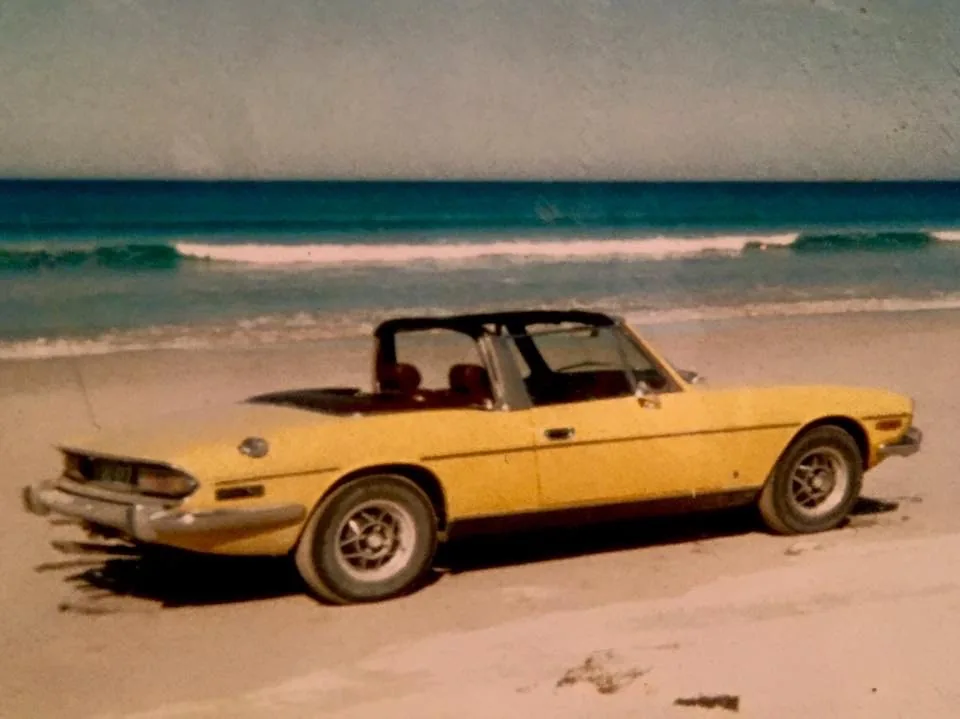
A guest feature from Triumph Stag Australia: one family's Stag, from Robe beach in 1981 to a wedding, a rally win and a stubborn head gasket, and what the Stag looks like from the other side of the world.
A Stag in the family
Most of what’s written about the Stag starts in Britain, which makes sense. It’s a British car, built for British roads and British weather. Seen from Australia it’s a slightly different car. It was a rarer, dearer import here, it lived in far more heat than Triumph ever planned for, and a surprising number of them are still on the road. We know that thanks to the late John Powell, who spent years tracking every Australian Stag he could find. His register now lives on at Triumph Stag Australia, and there’s more on it below.
Ours came into the family in about 1981. Dad bought a Holden 5.0-litre V8 HX LE Monaro in 1977, and I was brought home from hospital in it the following year. When I was very young I called it “Dad’s racing car”. For much of the time he had it, an International Scout, another big V8, was parked alongside. By the early ’80s he was on his second Scout. And he had to have a Stag. He said many times they were the prettiest car on the road. Ask him now and he keeps it simple: he saw them, he liked them, and it was a four-seat convertible. He bought ours at auction for AU$7,000, even with a knock in the engine. For a short while there were four cars in that household: the LE, the Scout, the Stag and my stepmother’s 1970 MG. Between them they had four kids and four two-door cars, which tells you everything you need to know about them. The LE and the MG didn’t stay long after the Scout and the Stag arrived.
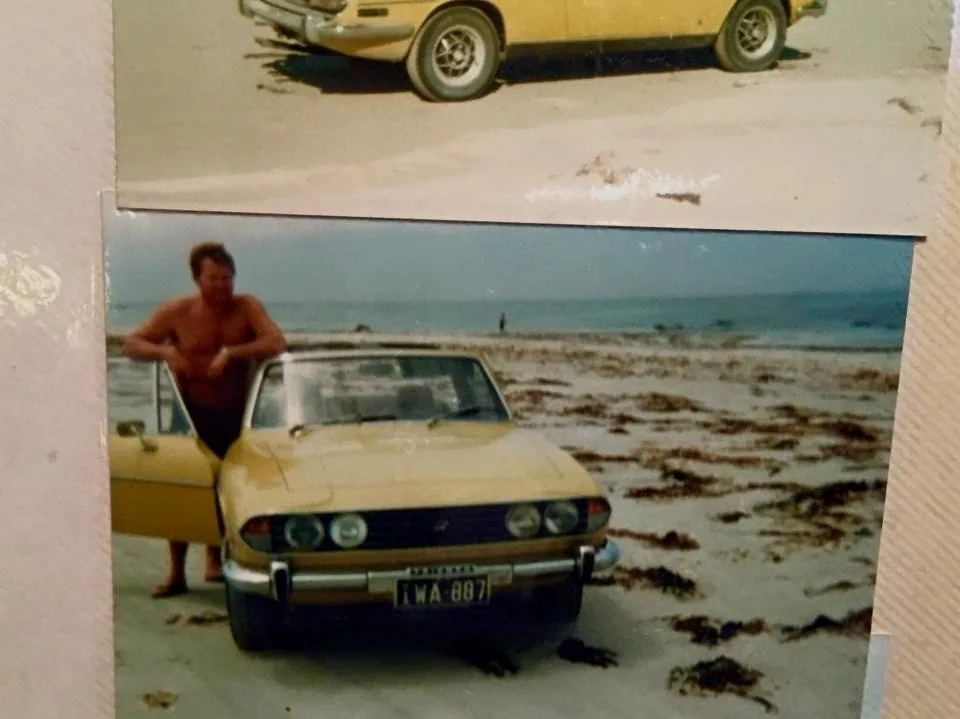
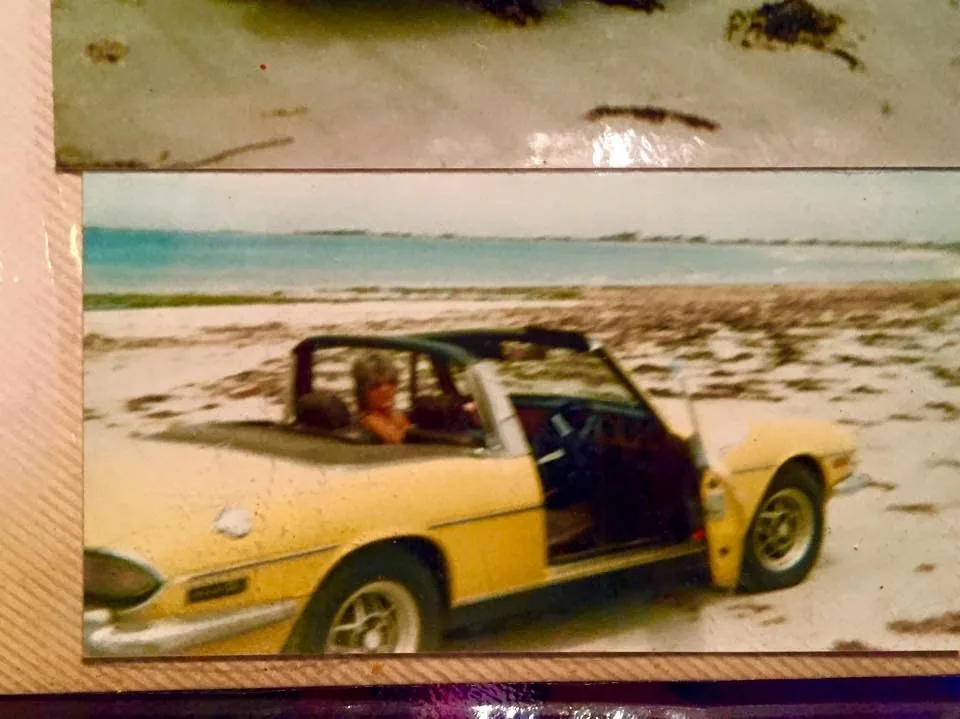
Dad had the engine rebuilt straight away, by a Croydon mechanic who had served his apprenticeship with Leyland in the UK. About 100,000 km later it needed another rebuild, and it had its share of cooling trouble along the way. A scrape in Croydon took out the driver’s side, so the whole car was repainted, colour-matched, Dad thinks, to a Ford yellow. After that he nursed it as a “fair-weather” car.
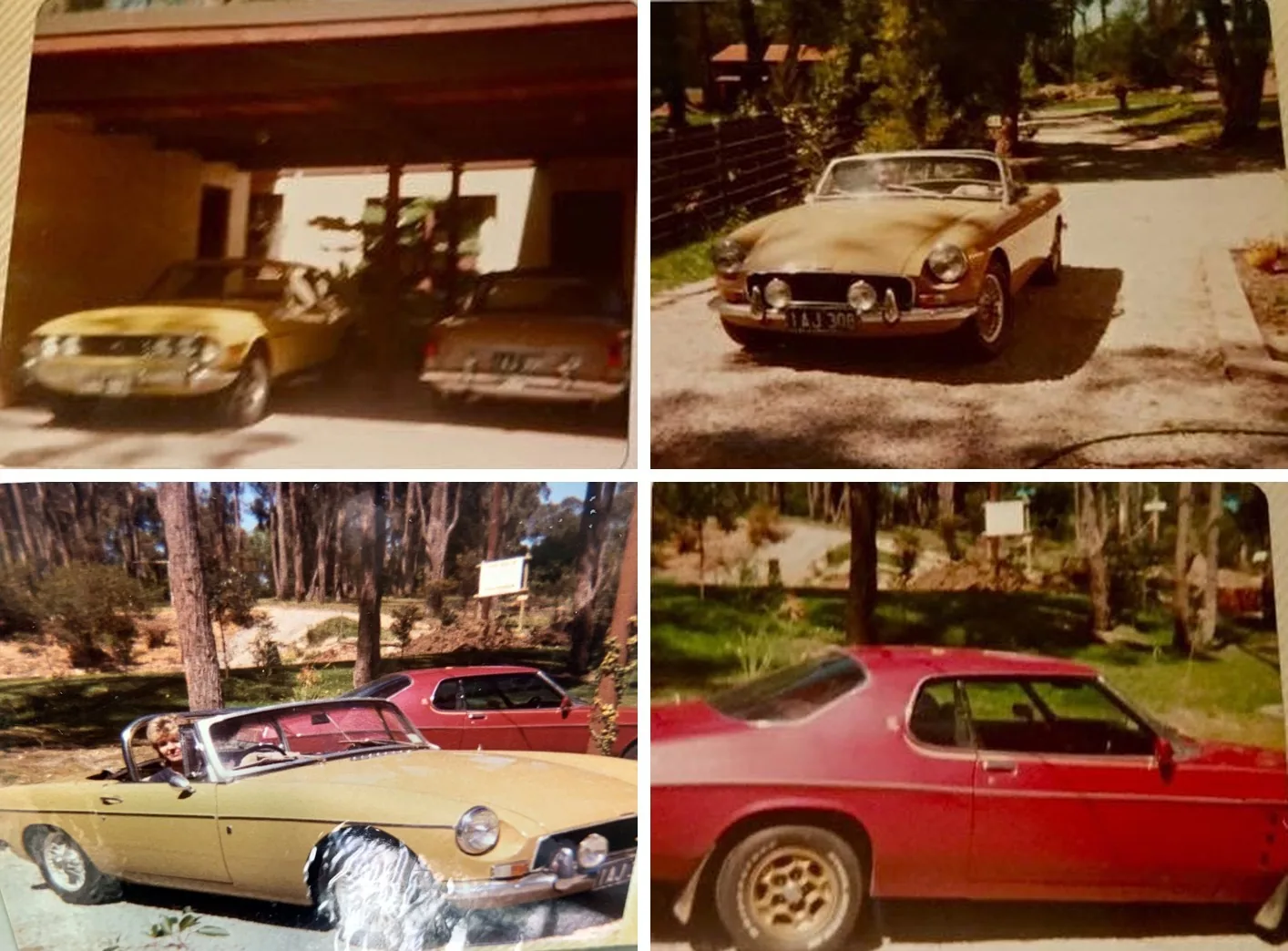
My first memory of it is from when I was four or five. We’d go to Dad’s for a weekend once a month, and he’d pick us up in it with the top down and the V8 singing. Growing up, I always liked the Stag, but if I’m honest I wished it was a Mustang. My stepmother had one before the MG, and as a kid I told them they should have kept it. These days I’m not so sure. A Mustang of that era is special, and an HX LE is an Aussie icon any red-blooded car nut would love to own. But I’m a bit of an oddball. I’ve always liked the odd one out more than the thing everyone else wants or has. As a young bloke I drove a Japanese-market quad-cam V8 while my mates had HSV ClubSports, Commodore SSs and Falcon XR8s, and even now I chose an FX50 for my wife over a Porsche Cayenne or a Jeep SRT8. The Stag has exactly that vibe.
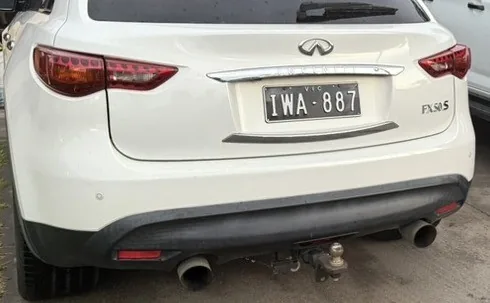
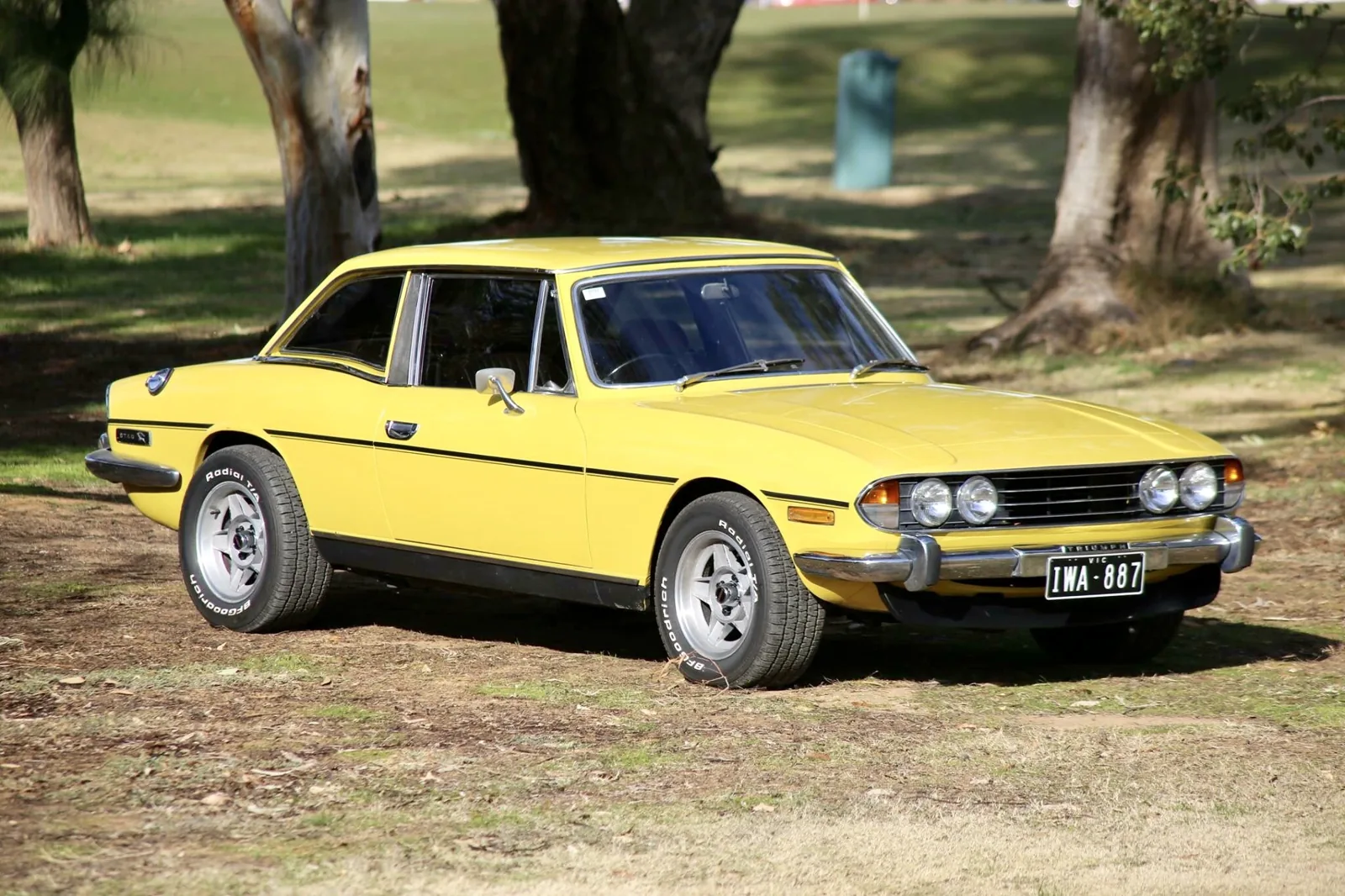
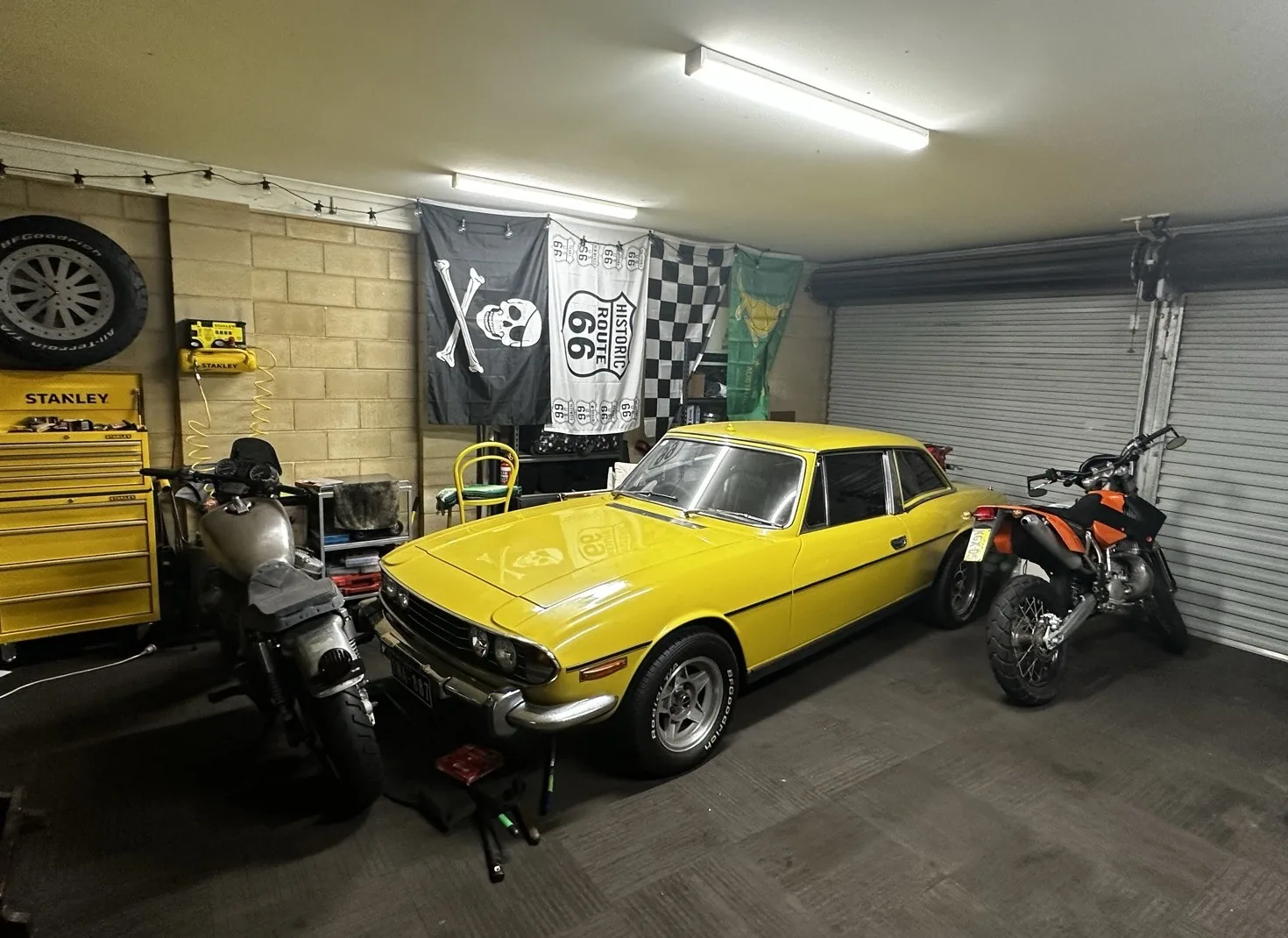
It’s a 1974 Mk2, originally Mimosa Yellow, an automatic with its matching-numbers 3.0 V8. Until recently it still wore the plates it was delivered with. They’re now on my wife’s Infiniti FX50, which has a staunch V8 of its own. Dad handed the Stag to me in 2015, in time to be our wedding car. I loved driving it so much that it was soon doing as many kilometres as my daily. When our first child arrived in 2017, I gave my own car to my wife, and from then until 2020 the Stag was my daily driver.

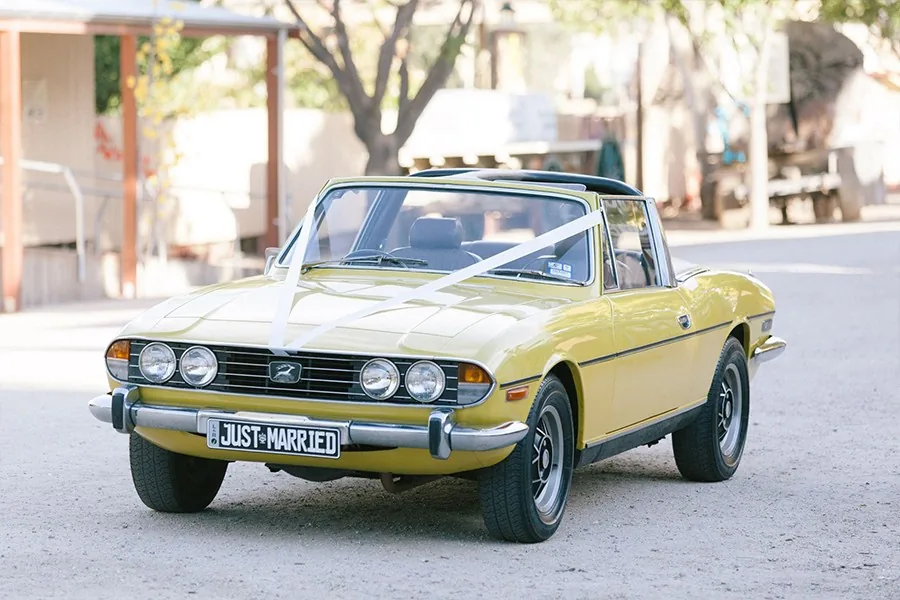
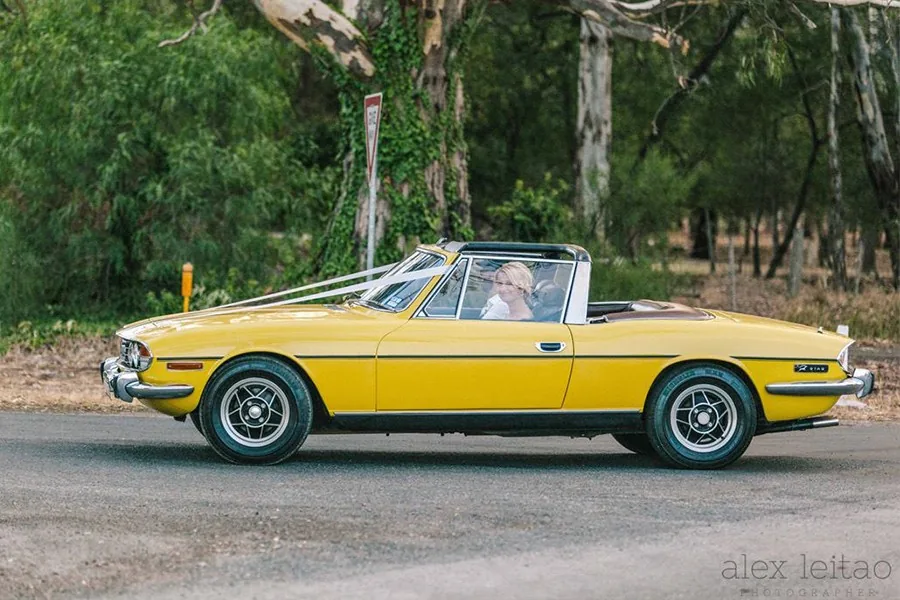

Dad’s advice when he handed it over was simple: it’s a “fair-weather” car, so sunny days only and no long trips. I didn’t listen. I drove it from Echuca/Moama to Melbourne and back every other week, in 35-degree heat, and once I trusted it I’d occasionally let it sing north of six thousand rpm, and it loved it. Looking back, I wonder whether I used up its last 30,000 km of hassle-free motoring.
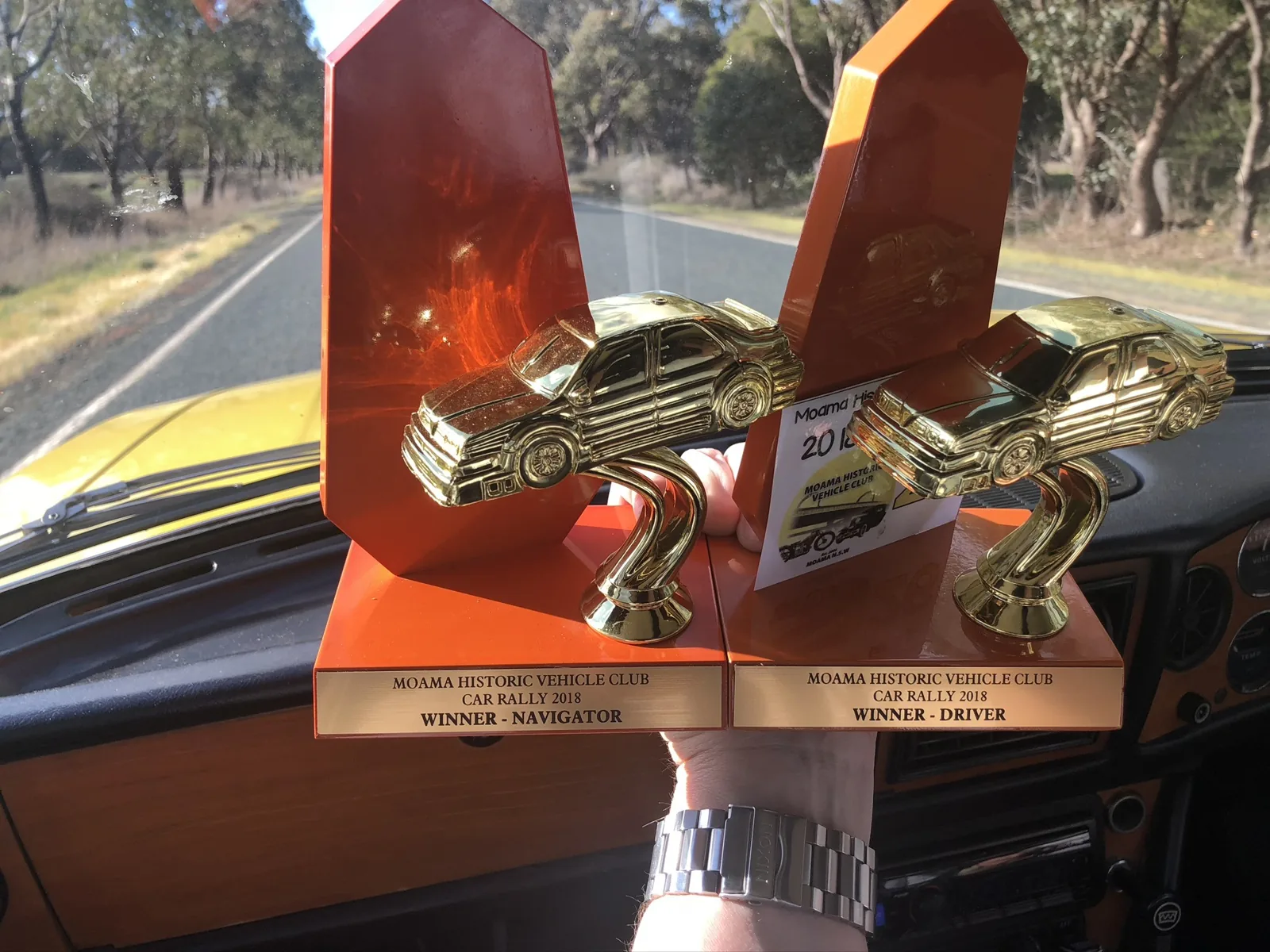
It wasn’t all commuting. In 2018 my wife and I entered the Moama Historic Vehicle Club’s car rally in it, me driving and her navigating, and we won.
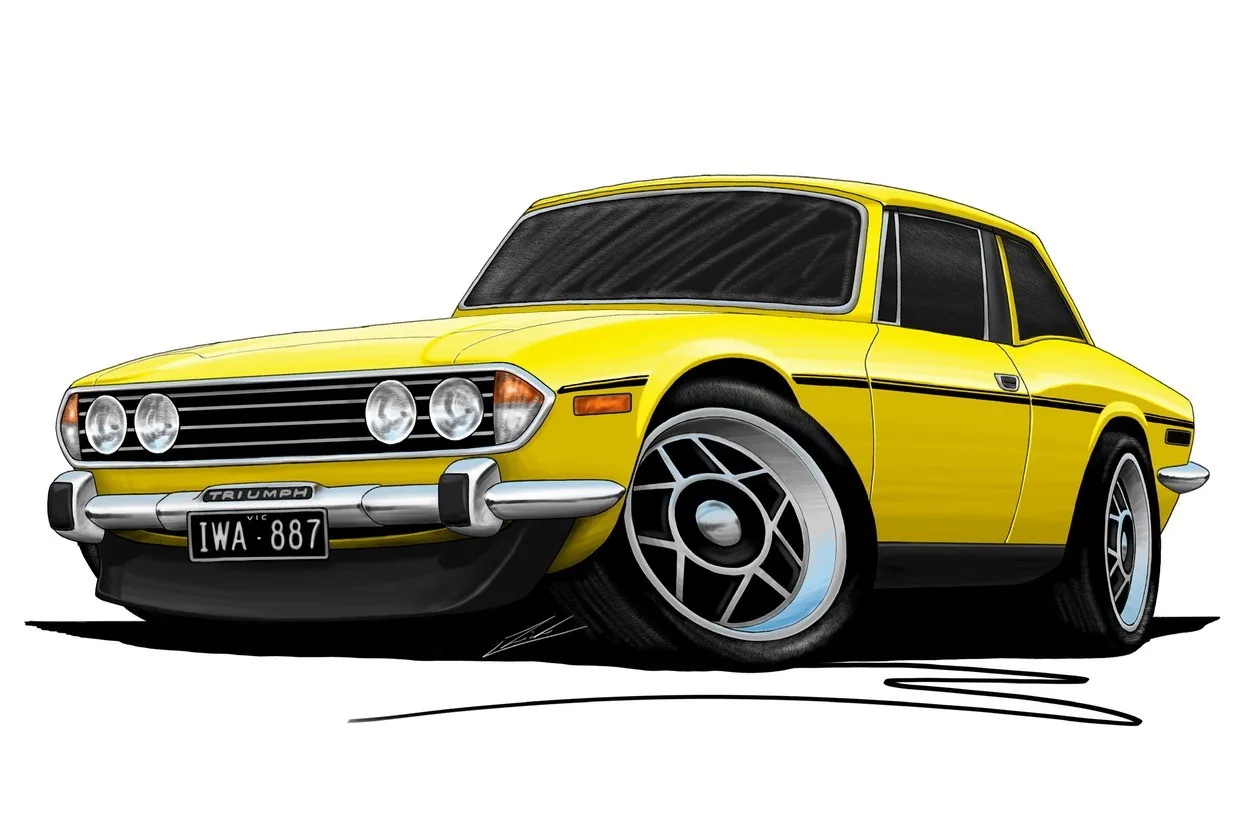

I’ve kept it close to how Dad left it, with a few changes of my own. In January 2018 the factory alloys made way for 14x7.5 Globe wheels, the same design only wider, on BF Goodrich T/As. I always meant to paint them in the factory colour scheme and never got around to it. I’ve added a TR6 chin spoiler, keyless entry with an alarm, a Bluetooth stereo and tint. Dad had already fitted HID headlights and a 12-vane water pump, and I believe the towbar came with the car. Every factory part that has come off, I’ve kept.
The interior is the original Chestnut. The hardtop stays on, because I prefer the look and it made sense on the highway and in the city. The original soft top is still in the car, but the frame is buggered. I never put it up, so it doesn’t bother me. I’ve got a spare frame to fix it when the budget and motivation allow.
Dear, rare and British
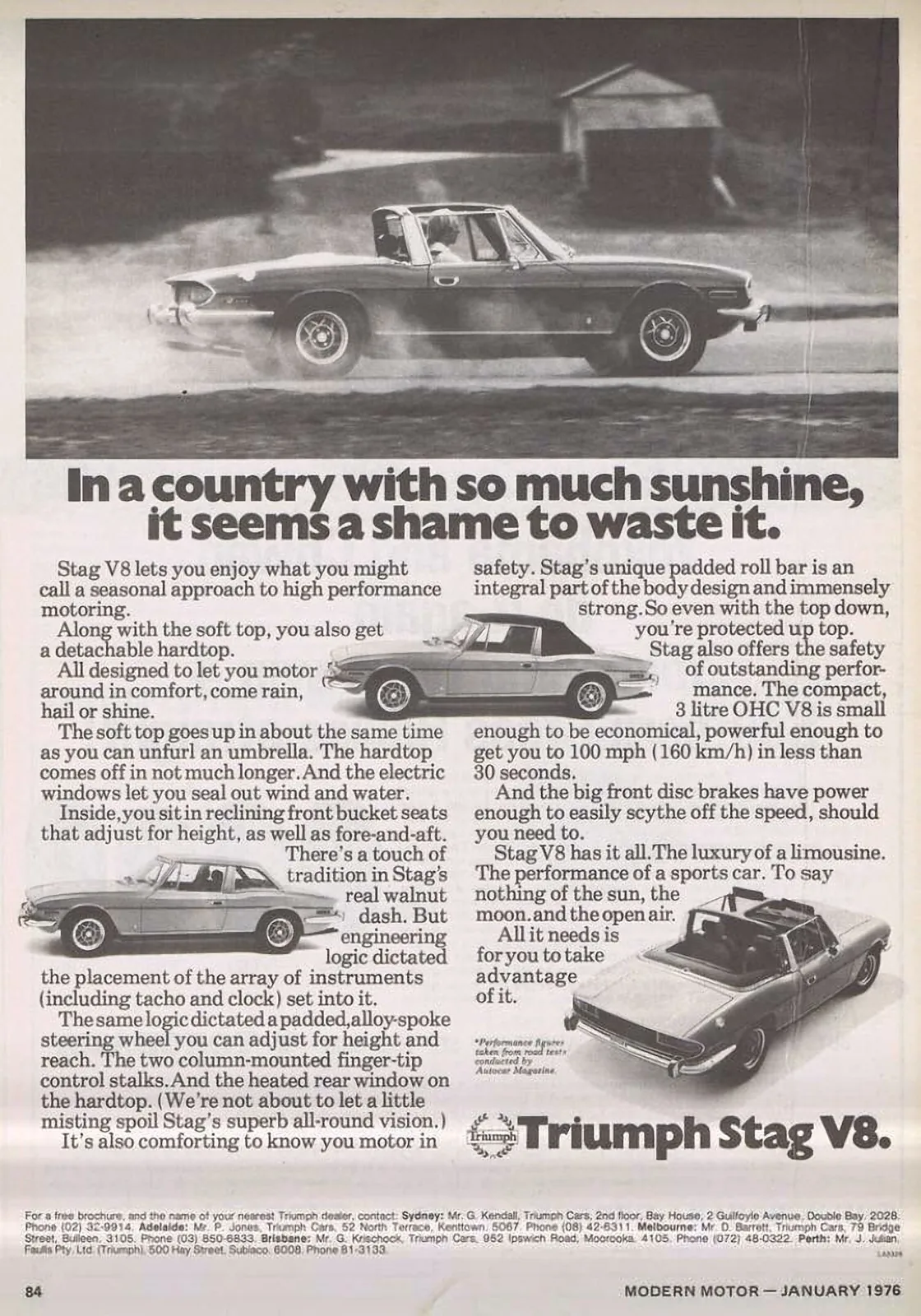
Stags reached Australia in the early 1970s, slowly at first because stock was short. Sources can’t agree on the year: Drive says 1971, Unique Cars 1972 and Shannons 1973. In all, 1,596 were sold new here, out of 8,120 exported and 25,939 built.
They weren’t cheap. When Stags arrived in 1972 they started at around AU$8,000, more than AU$100,000 (about £54,000) in today’s money, and prices only went up from there. When ours was new in 1974, Ford’s XB Falcon GT hardtop cost AU$5,316, about AU$55,000 (£29,000) today. Today it’s the other way round. 1974 XB GT hardtops have sold for six figures again and again: AU$121,000 (£63,000) at Shannons, AU$129,000 (£67,000) through a Sydney dealer and AU$172,500 (£90,000) at auction in 2023. Redbook’s private-sale guide puts a 1974 Stag at around AU$20,000 (£10,000).
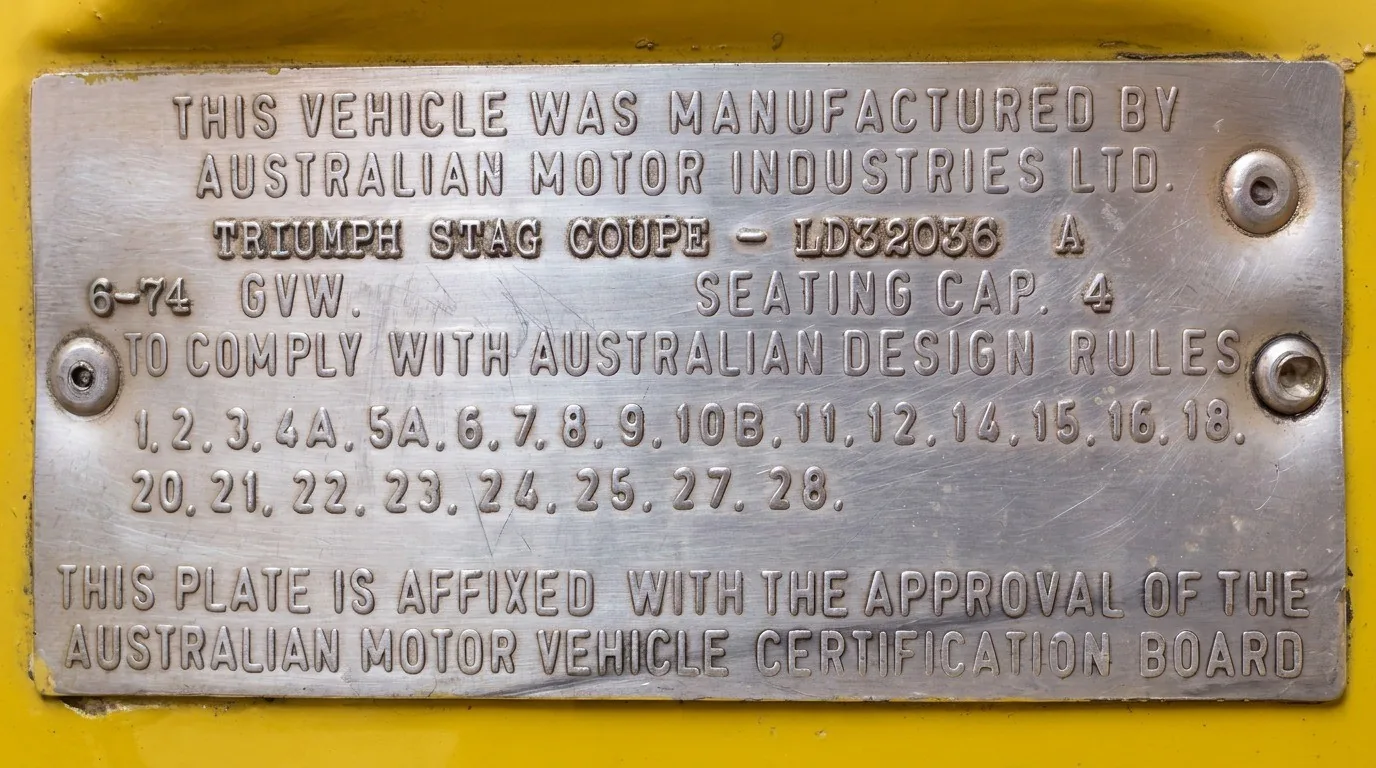
Early cars came with the soft top and steel Rostyle wheels. Mk2 cars like ours had the hardtop. Australian cars got power steering, electric windows and the wood-grain dash, and being right-hand drive there was nothing to convert. Each one also wears an Australian compliance plate under the bonnet. It repeats the commission number from the plate on the left-hand door pillar and gives the month and year the car was complied, which helps date a car when its paperwork is gone. John found the state registries can’t agree what a Stag is. VicRoads had 142 down as a Triumph Coupe, Western Australia listed 285 simply as “Triumph”, and South Australia had just 14 recorded as a Stag.
New, the Stag was an expensive British GT, and by the time it got here its engine already had a reputation. Unique Cars says local dealers were given no special service instructions. Now it’s one of the cheapest ways into a classic V8.
Being rare cuts both ways. You seldom see another one on the road, and people want to talk about it. But parts come from the UK, and the freight shows up on every invoice. In 2019 I ordered a wiper stalk and a windscreen seal from the UK: £117.95 of parts, and £45.87 to get them here. That’s nearly 40 per cent on top. The head gasket set I need now is AU$163.92 (£85), plus AU$28.03 (£15) shipping.
Pray it’s only a gasket
If the Stag’s cooling has a weak spot, Australia will find it. Ours found its limit during COVID. When the state border closed, it got stuck in the queue for the bridge between Moama and Echuca, and that was too much for it. After that, it wouldn’t stay cool, even on a mild day. Testing showed low compression in one cylinder and coolant in the valley. I’d hoped for an easy fix and replaced the water pump seal and the intake gaskets first, but that wasn’t it.
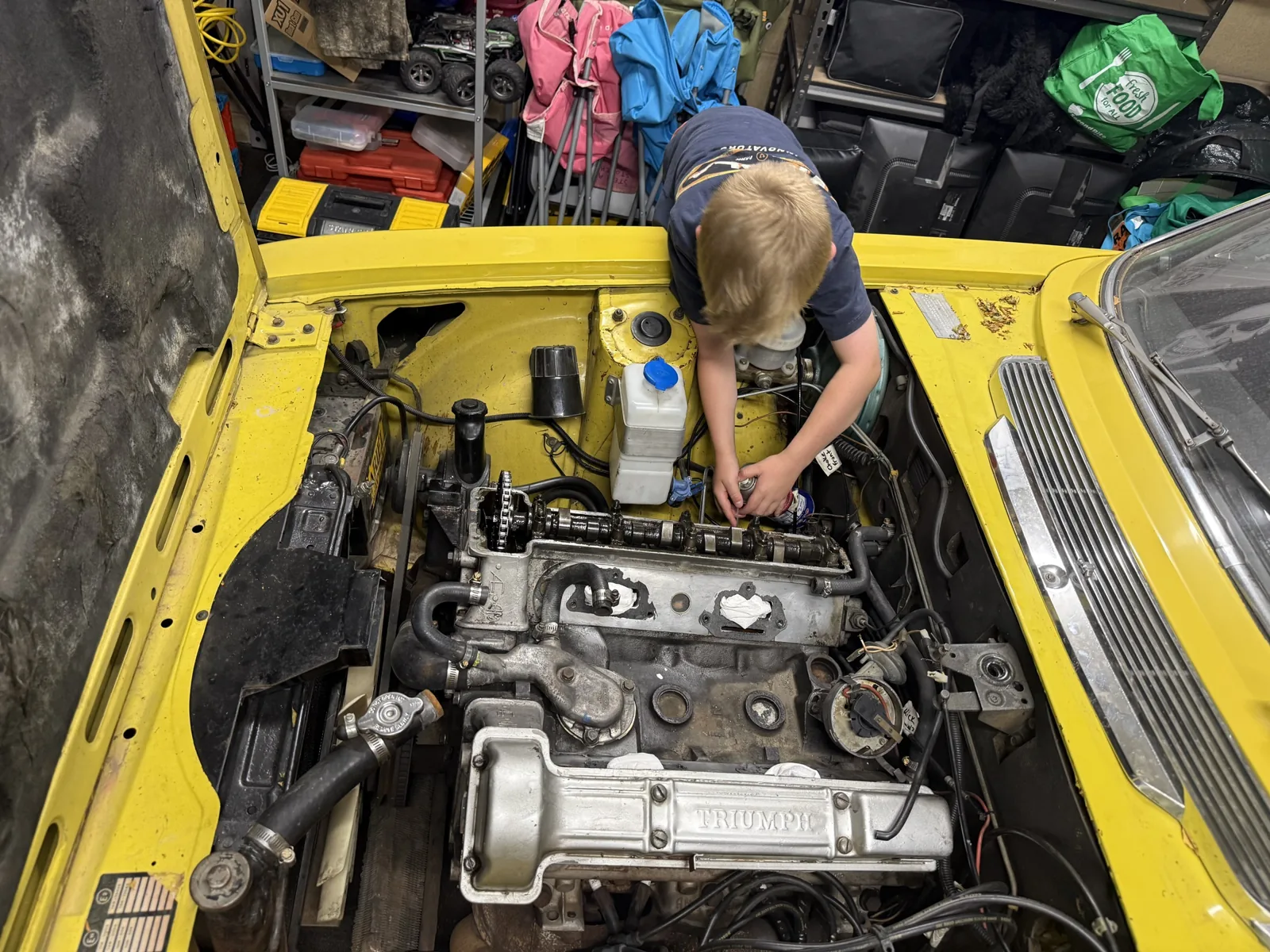
So I’m hoping, and praying, that it’s only a head gasket. The car has been sitting for five years now. It still ran and drove (until I started pulling it apart), but I didn’t dare take it out, so I cancelled the rego and stared at it. I’ll admit why. Pulling the heads off an overhead-cam V8 is a job you think about for a long time, and the longer you think about it, the longer it takes to start. With a young family, the fear of the cost played a part as well. The last Stag rebuild Richard at Fairfield Motors in Melbourne was involved in came to AU$10,000 (£5,200), and plenty of machine shops here won’t touch Stag heads.
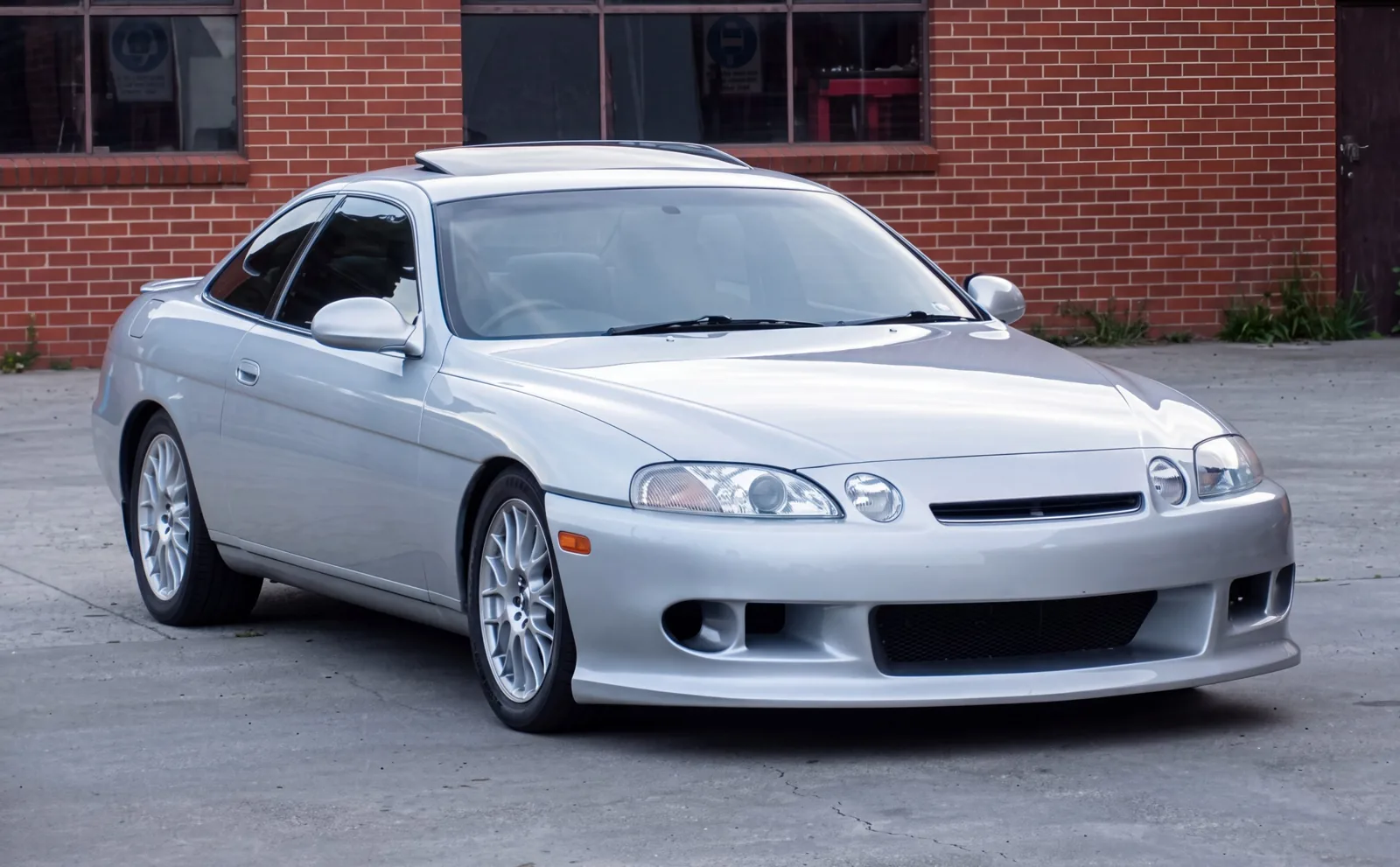
Half the head studs are angled, and overheating can seize them and warp the heads, so a gasket job can turn into something much bigger. That scared the life out of me, especially as a one-time fitter and turner, though I haven’t been on the tools since I moved into IT in the early 2000s. In 2024 I bought the special head stud extractor tool from the UK: £25.95, plus £15 to post it. A few months ago I loosened the head studs ready for removal, then stopped and stared at it again. I’m not too proud to say that if it’s a cracked head, given the cost and rarity of a replacement here, it may well end up with a Toyota 1UZ V8 in it. I love that motor. I had one in a Soarer (the Lexus SC400 outside Japan) when I was a young buck, and I still have its plates, SCV 840. Read it as SC V8 4.0. They’d suit a 1UZ Stag nicely, since Australian Stags are compliance plated as a “Stag Coupe”. But I’d hate to see yet another survivor not survive.
What I’d tell a new owner facing an Australian summer:
- Keep the coolant up. The water pump sits high in the engine, so even a small loss can leave it pumping air. A low-coolant alarm is cheap insurance, and the Chris Spain alloy header tank has one built in. On mine, Dad fitted a Volvo header tank, and I added a second filler on the radiator return hose to give the system a high fill point. It cut the air locks right down.
- Use inhibited coolant all year. Aluminium heads on an iron block need it.
- Watch the gauge, and stop early. Overheating is what warps heads and seizes studs. Pulling over at the first sign can save a head gasket job.
Plenty of owners gave up and swapped the engine. John Powell’s register shows the Leyland P76 4.4 V8, built here, was the most common replacement, in 90 cars. But in June 2021 about four in five cars whose engine was known still had their Triumph V8. The original can live with the heat if it’s looked after.
An ageing community
I joked with Nadine Powell, John’s daughter, that at 48 I was probably the youngest Stag owner in the country. She laughed and said not any more. She now has John’s own ’76 Mk2. But the joke has a point. The people who know these cars best are getting older, and over the next twenty years a lot of Stags will change hands, often to family who never chose them.
That’s where John’s register and Graeme Oxley’s email forum on the triumphstag.info website come in. John built the Australian National Triumph Stag Register over many years, as owners wrote in and he chased the state registration departments through Freedom of Information requests. By his last update, in December 2022, it listed 1,665 Stags. Of the 1,651 Australian cars on it, 991 were still registered: 60 per cent, up from 55.1 per cent in mid-2021, half a century on.
John was convinced the Stag was the best-surviving classic in the world, and Australia’s rate the best of all. Near the end he was sketching out an Australian Stag forum and a national get-together, but as a volunteer he worried about the cost and how to run it. In a way, Triumph Stag Australia is that forum.
I started the Stag Owners Website in 2016, and Triumph Stag Australia grew out of it. John’s register now lives on there with his family’s blessing, and with John’s files now with us, it will keep growing. Owners can look up their car by commission number, see what John recorded and claim it as theirs. We’re adding owner stories too. The aim is simple. When a younger owner inherits a Stag, or buys one as a cheap V8 classic, the help is already there.
Closing
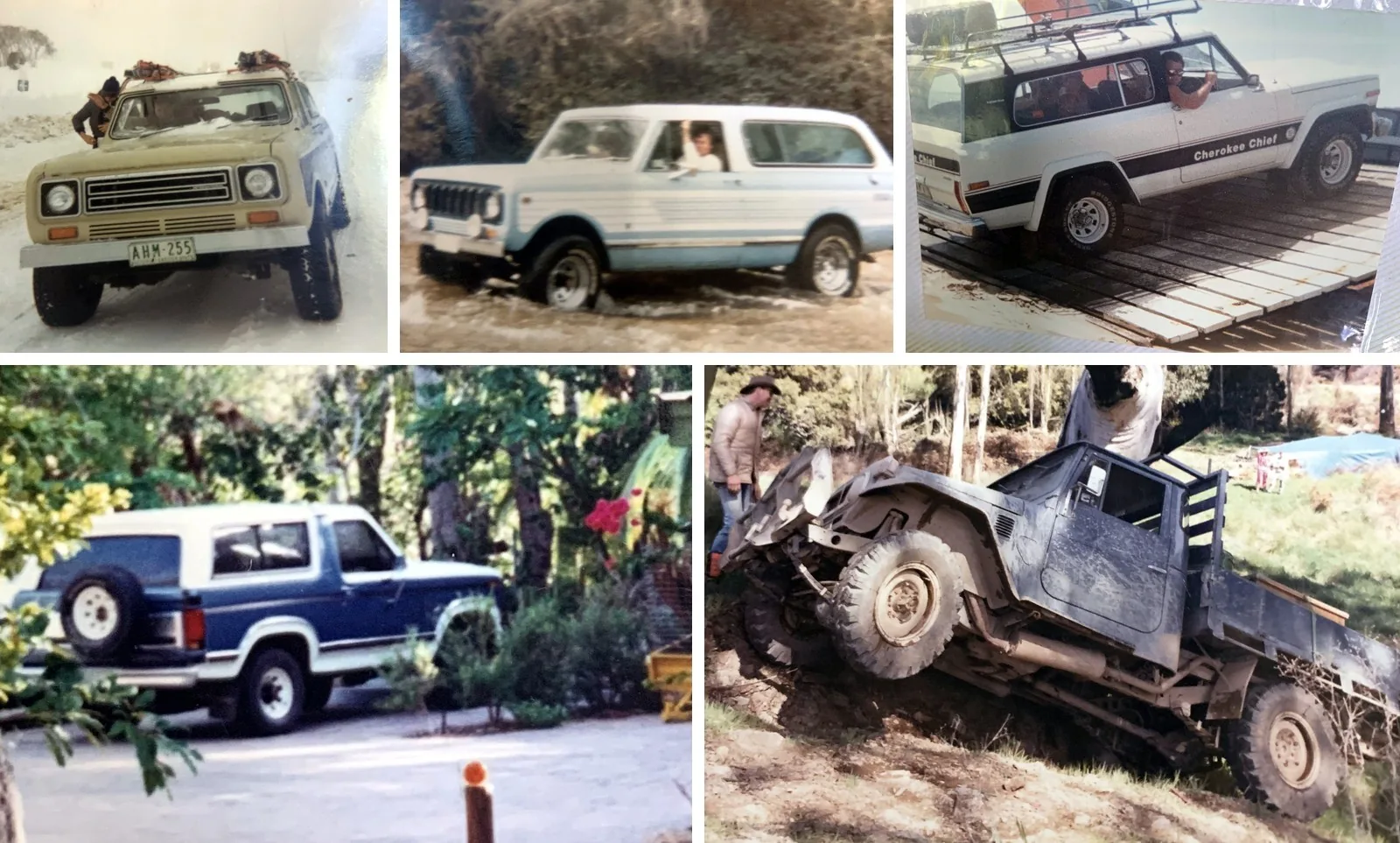
I have an illogical love of V8s. Yes, they deliver wonderful low-end torque and a smooth, flat power curve. But in reality their biggest selling point is that they turn copious amounts of fuel into sound. And oh, what a sound. There’s nothing like a crisp V8 lumpy at idle, or on song, wide open under load. I wonder where that came from. In the ’80s Dad’s fourbies ran to two International Scouts (the first with a 345 V8 and a Chrysler 727 auto), a 60 Series LandCruiser (that didn’t last six months, as it wasn’t a V8), an FJ40 tray-back with a 350 V8 and a TH400 auto, a 351 V8 Bronco and a Jeep Cherokee Chief with a worked 360 V8, which he reckons was the best thing he ever had. If any manufacturer sold a mid-sized ute here with a V8, I’d be driving one instead of the four-cylinder turbo diesel I bought last year.
I’m not alone. Australians have always loved the big V8s of that era. The Stag came to a country that already knew what a V8 should sound like, and it still found its people: four seats, a V8 and the roof off, on roads long enough to enjoy all three. The MG showed us how Britain did a small sports car. The Stag showed us how it did a V8.
If you know the story of a Stag that came to Australia, we’d love to hear it.
Blair Stonehouse owns a 1974 Triumph Stag and runs Triumph Stag Australia, home of John Powell’s Australian register.
Sources
- Stag history, Triumph Stag Australia: Australian specification, numbers sold, John Powell’s register figures, production and export figures (factory figures as published by The Stag Archive).
- Cooling, Triumph Stag Australia owners’ guide: the Chris Spain header tank.
- John Powell’s register analysis: engine swaps and surviving Triumph V8s, June 2021.
- John Powell’s register files: his December 2022 survival tally and his notes on how each state’s registry lists the Stag, held by Triumph Stag Australia.
- Triumph Stag, Unique Cars, October 2019: arrival in 1972, price from about AU$8,000, early soft-top cars, dealer service instructions.
- XB Falcon GT hardtop, Australian Muscle Car: price new, AU$5,316.
- 1974 Triumph Stag price guide, carsales/Redbook: current private-sale guide.
- inflationtool.com: today’s-money figures from Australian CPI (ABS), in 2025 dollars; pounds at about £0.52 to the Australian dollar (the 2026 average).
- 1974 XB GT hardtop results: Shannons, AU$121,000; Australian Muscle Car Sales, AU$129,000; auction, AU$172,500, March 2023.