
The Car / Export Models
The US Federal-Spec Triumph Stag
The Stag was sold new in the United States for only a short part of its production run in the early 1970s, in Federal specification with an LE-prefix engine, emissions equipment and US lighting. Many more have since been brought into the USA under the 25-year exemption, but most surviving American Stags are still original factory imports; the later arrivals were never built to Federal specification.
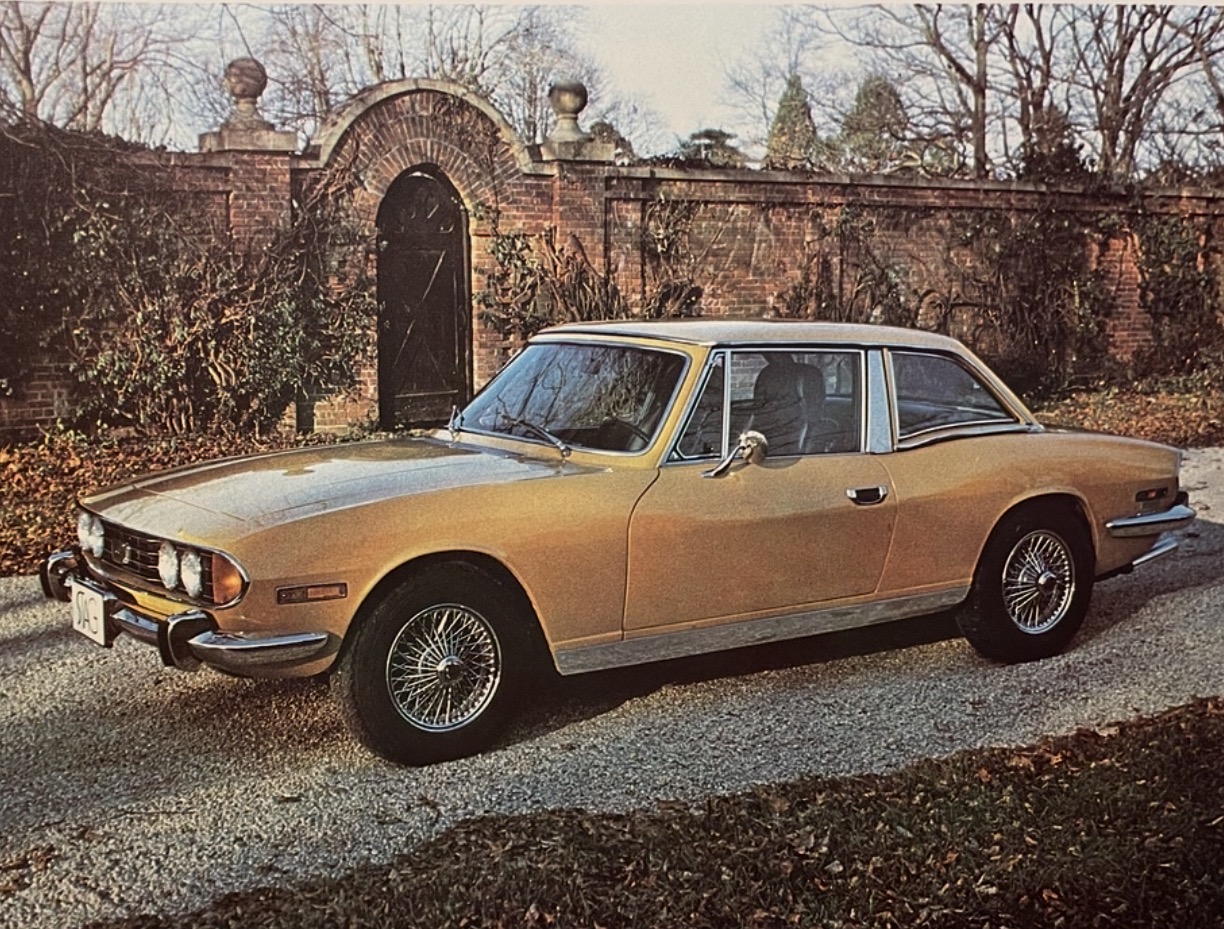
Triumph withdrew the Stag from the American market early. The reasons usually given are the ones the car is still known for, overheating and warranty trouble in a market that drove long distances in high ambient temperatures, with the engine already softened by emissions equipment. British Leyland's US dealer network handled the fallout badly, and the reputation the car earned in America has outlived the cars themselves. Our assessment of the Stag's reputation sets out what was genuinely wrong and what has since been engineered out.
This guide previously declined to publish an unverified US sales figure and said that the Triumph Stag Club of the Americas was the right place to ask. We asked them. Their editor, Terence McKillen, went to the records of the US distributor and documented the result. The archive can now publish a sourced figure: Jaguar Cars of Leonia, New Jersey, recorded 2,871 Stags sold in the USA.
The American introduction
The first USA chassis was LD2BW, a hand-built pre-production “off-tools” car used for publicity and brochure photography. It survives in restored form, is shown at public events, and is owned by an enthusiast in Illinois.
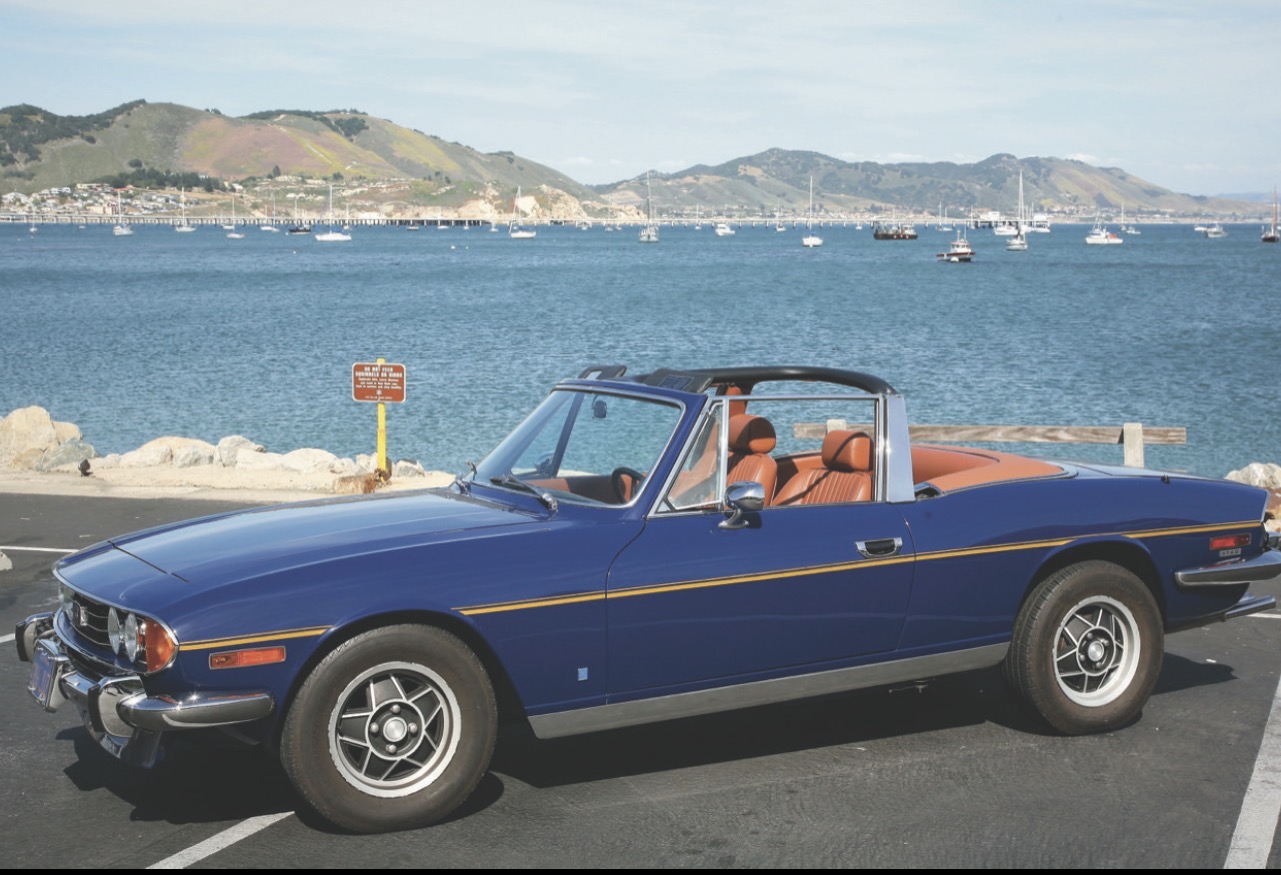
The press introduction took place at Palm Springs, California, on 26 March 1971, staged alongside the debut of the Jaguar V12 E-Type. The Stag was announced to the public in April 1971 and appeared at the New York Motor Show that month. By the end of April it was in showrooms nationwide.
The Palm Springs introduction was reported by John S. Radosta in the New York Times, 27 March 1971. The report is principally about the Jaguar, and the Stag’s American introduction occupies a single paragraph at its end.
Sales in the USA
These are the distributor's figures, supplied directly to this archive in September 2026 by the Triumph Stag Club of the Americas. Club editor Terence McKillen documented the research from the records of Jaguar Cars of Leonia, New Jersey.
| Year | Cars sold |
|---|---|
| 1971 | 552 |
| 1972 | 807 |
| 1973 | 1,100 |
| 1974 | 407 |
| 1975 | 5 |
| Total | 2,871 |
The 1974 and 1975 cars were 1973 models sold from remaining stock. Reliability problems and a high price made for slow sales. The contemporary report of the launch puts figures to the price. The Stag convertible was $5,525, and the model supplied with both a canvas top and a detachable hardtop was $5,773, in both cases at United States port of entry. At the same event the same afternoon, and from the same parent company, the Jaguar V12 E-Type was $6,950 for the convertible and $7,325 for the two-plus-two, likewise at United States ports of entry. That is a twelve-cylinder Jaguar for roughly $1,400 more than a Stag. In the summer of 1973 it was announced that the Stag would be withdrawn from the US market at the end of the 1973 model year.
The club's documentation cites, among other sources, Stag News, The Vintage Triumph, Michael Cook's Triumph Cars in America, British Leyland Motors press material and contemporary newspaper reports.
Canada and Federal cars delivered elsewhere
British Leyland Canada decided not to import the Stag after evaluating it and concluding that it would struggle to find buyers at the intended price. Despite that decision, one June 1972 Federal car, LE12620U, arrived by air freight from the factory in October 1972 as a personal export. It is owned and driven in Ontario.
The club documents at least three further Federal Stags built and delivered outside the USA, all as personal exports. The four Federal exports documented by the club as at September 2026 are listed below. Terence McKillen, the club's editor, documented the export cars.
- LE12620U
- June 1972. Arrived by air freight from the factory in October 1972 as a personal export. Now in Ontario.
- LE13072UBW
- June 1972. Shipped directly from the factory to Colombia, a personal export for an employee stationed at the United States Embassy. Now in Colombia.
- LE13344UBW
- August 1972. Delivered to its first owner, the then Ambassador of Canada to the Irish Republic. Now in Ontario.
- LE22116UBW
- Early 1973. A personal export for an employee stationed at the United States Embassy in New Zealand. Now in New Zealand.
These are the Federal exports documented so far, not a final list. Others almost certainly exist. If you own or know of a Federal-spec Stag delivered new outside the United States, please tell us, and we will pass the information to the Triumph Stag Club of the Americas, who hold the research.
How to tell a Federal car
The engine number is the check that settles it. Everything else can be swapped, removed or fitted retrospectively.
- Engine and commission prefixes
- Engine numbers carry LE on Federal cars and LF on cars for every other market. Commission numbers carry LE on Federal cars from about 1972; the earliest US cars carry LD.
- Side marker lights
- Amber front and red rear side markers on the wings, required by US lighting regulations and absent from home-market cars.
- Headlamps
- Round sealed-beam units to US regulation, rather than the European-pattern lamps.
- Instruments
- Speedometer calibrated in miles per hour with US-market lettering. Note that UK cars are also mph, so this alone proves nothing.
- Emissions equipment
- Additional air-injection and evaporative-loss control plumbing on the engine and around the fuel tank. Many surviving cars have had it removed.
- Transmission
- The great majority of Federal cars left the factory as Borg-Warner automatics with power steering and air conditioning fitted or offered.
- Exterior mirror
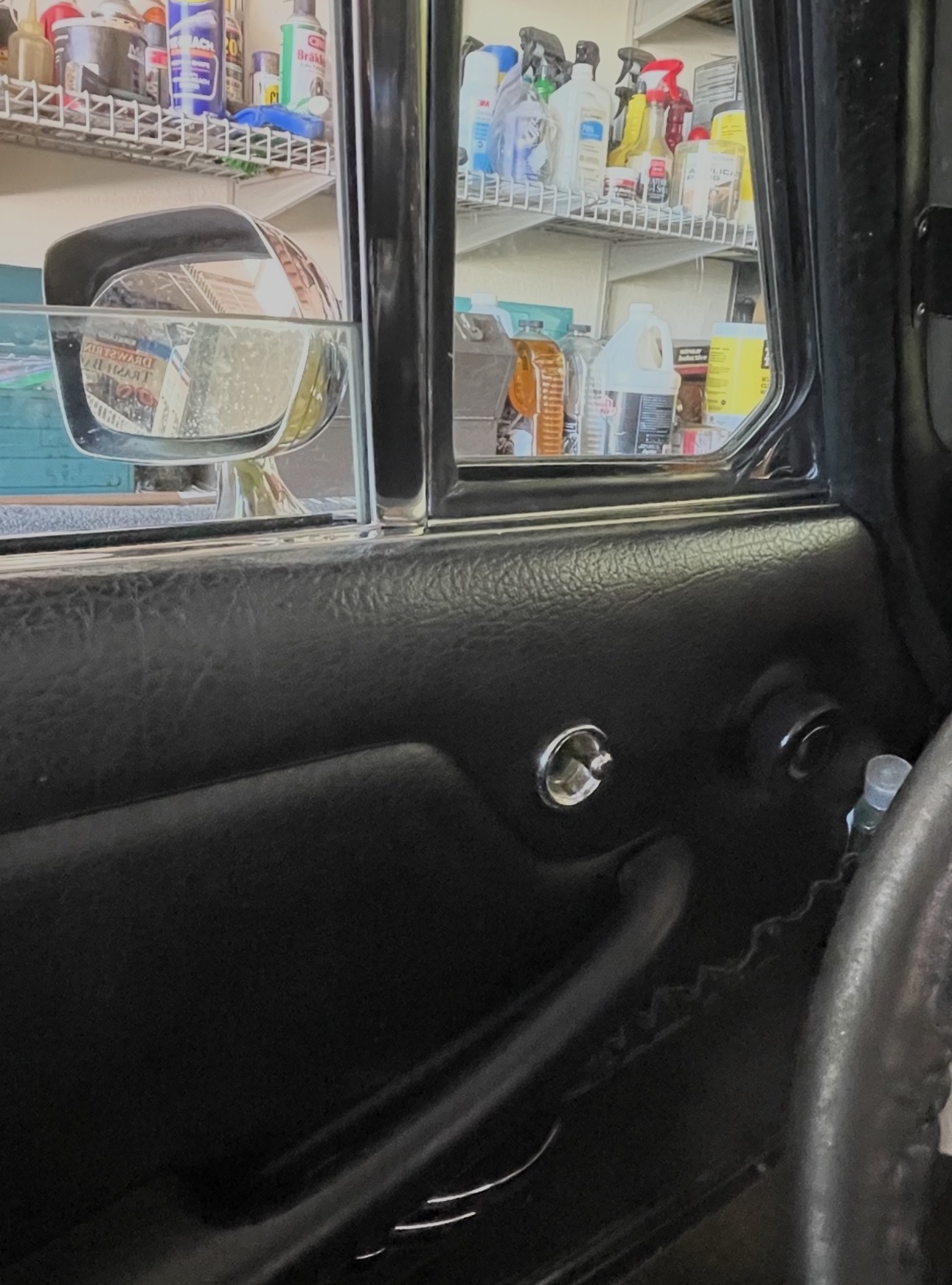
- A door mirror adjustable from inside the car, part number 821172, listed for the left side in the parts catalogue. No equivalent has been found on home-market or European left-hand-drive cars.
Federal cars from about 1972 carry the LE prefix on both commission and engine numbers; the earliest US cars carry LD. If you hold a documented changeover point, or a car whose commission and engine numbers narrow it, please tell us.
The mirror was identified for this archive in September 2026 by a Triumph Stag Club of the Americas contact, from part number 821172 on page 288 of the parts catalogue, where it is listed for the left side, and from checking the photograph galleries of the German, Dutch and Swiss Stag clubs, none of which showed the type on their left-hand-drive cars. That is strong evidence rather than proof. If you have this mirror on a non-Federal Stag, please tell us.
Where the stampings are, and how to read the serial that follows the prefix, is covered in full on the identification page.
Emissions equipment and what owners do with it
Federal cars left Canley with additional emissions control hardware that home-market cars never had. In practice, a large proportion of surviving Federal Stags have had some or all of it removed, and many have been converted to home-market carburettor and ignition settings over the past fifty years. That matters in two ways. First, a car advertised as “original Federal spec” often is not, look at what is actually bolted to the engine. Second, if your state has an inspection requirement that touches emissions equipment on a car of this age, a stripped engine bay can become your problem rather than the previous owner's.
Setting the carburettors and ignition correctly matters more on an American car than most, because heat is the Stag's standing weakness and a lean, retarded engine makes it worse. See setting up the Zenith-Strombergs and ignition timing. We do not publish US-specific carburettor needle or timing figures here; take them from the Federal supplement to the Workshop Manual for your car's engine number, not from a UK-spec table.
Running a Stag in the American climate
Arizona, Texas and Florida ask more of a Stag cooling system than Warwickshire ever did. The cooling system is the single component that decides whether the car is enjoyable or exasperating, and it is entirely fixable. Start with cooling upgrades, then starting in extreme heat for hot-start and vapour-lock behaviour, and before a long run before any distance drive.
Fuel is the other difference. US pump gasoline is rated by a different octane method than UK petrol, so an American number and a British number are not directly comparable, and ethanol content varies by state and by pump. Our notes on ethanol-blended fuel and fuel, oil and additives apply, with the caveat that the fuel grades named there are British.
Importing and titling a Stag in the USA
Outline only. Import rules and state requirements change; confirm the current position with US Customs and Border Protection and your own state agency before committing money.
01 · Age exemption
Every Stag was built between 1970 and 1977, so all of them are now well over 25 years old. That places them outside the NHTSA and EPA rules that apply to modern imports, which is why classic Stags can be brought into the United States without federalisation work.
02 · Customs paperwork
Import is handled through US Customs and Border Protection with the usual entry paperwork, plus the NHTSA and EPA declaration forms appropriate to a vehicle over 25 years old. Duty applies at the rate current at the time of entry.
03 · Evidence of identity
Bring the commission number, engine number and, ideally, a British Motor Industry Heritage Trust certificate. American titling clerks are used to a VIN in a modern format; a Heritage Certificate that ties the commission and engine numbers together saves a great deal of argument.
04 · State titling
Titling, registration and any inspection or emissions requirement are set state by state, not federally. Requirements for a 1970s import vary widely, check with your own state's motor vehicle agency before you buy, not after.
05 · Shipping
Container or roll-on/roll-off from a UK port. A soft-top car in a shared container wants proper bracing; if the hood is tired, ship it with a hard top fitted or the frame supported.
If you are buying from Britain to import, the buying guide and what a Stag costs are written around UK cars and UK money, which is exactly the market you will be shopping in. Add shipping, duty and the cost of putting right anything you could not inspect in person, an unseen car bought at long range is where most import stories go wrong.
American clubs and getting parts
The Triumph Stag Club of the Americas is the marque club for North American owners and the best first stop for Federal-specific questions, local knowledge and cars for sale. The Stag Owners Club in Britain accepts overseas members, and its Tooling Fund helps manufacturers make parts that are then sold through the normal suppliers.
Almost all Stag parts are made and stocked in the UK, and the established suppliers ship internationally. Ordering from Britain and paying the freight is normal practice for American owners rather than a last resort, see our parts and spares directory for who is strong on what, and the resources page for clubs, specialists and manuals. Consolidating one large order rather than several small ones is the single easiest way to cut the cost of shipping and handling.
Further reading
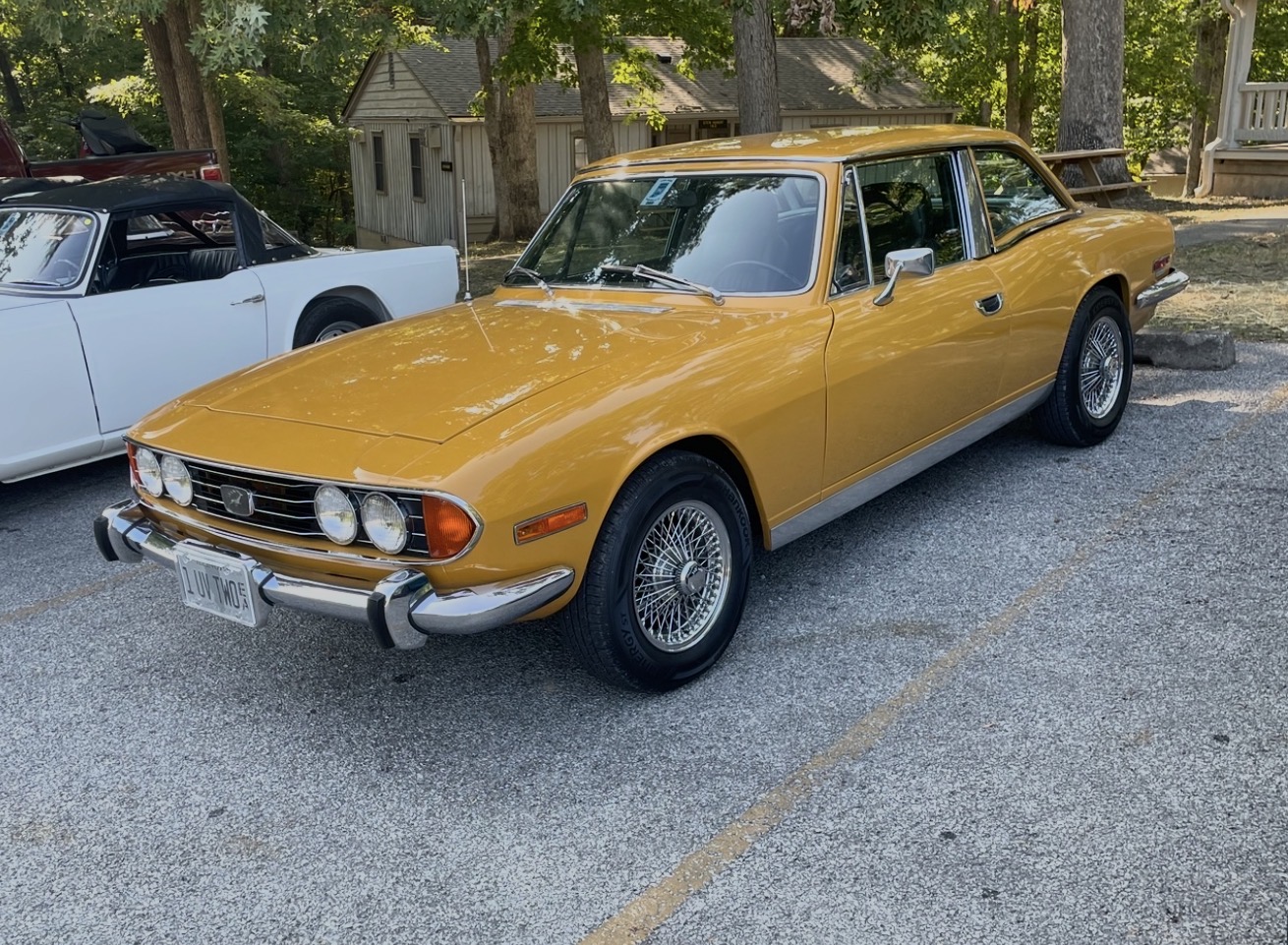
Original Triumph Stag by James Taylor covers the Federal cars alongside the home-market models and is the reference most often recommended by owners on both sides of the Atlantic for original specification questions. It is the book to check before trusting any general description, including this one.
Federal-specification details vary by build date within the American cars themselves. Verify your own car's specification from its commission and engine numbers, the Federal supplement to the Workshop Manual, and a Heritage Certificate, rather than from any general description, including this one.